Nov 3, 2025 | Car interior
Do you also suffer from crumbs between your car seats, a dusty dashboard or mysterious stains on your upholstery? You are not the only one. Many car owners pay a lot of attention to the outside of their car, but forget about the interior. While that is exactly where you spend every drive! A clean and fresh interior not only enhances your driving pleasure, but also keeps the value of your car at the same level. In this blog, I will give you practical tips on how to properly maintain the interior of your car.
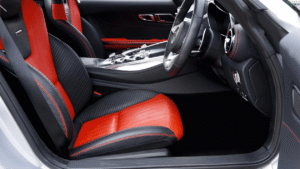
Why regular interior maintenance is important
The interior of your car is exposed to dust, dirt and all kinds of liquids on a daily basis. Think mud under your shoes, coffee stains and greasy fingerprints on the dashboard. To clean different surfaces, you can a special interior cleaner use, which is suitable for multiple materials. Dirt and bacteria accumulate, which is not only annoying for your nasal membranes, but also for your airways. Dust and allergens can cause breathing problems, especially in people who are sensitive. Moreover, dirt eventually corrodes materials. Leather chairs can discolour and plastic parts can become dull. Regular maintenance prevents this and keeps your car looking good for longer. A clean interior also helps maintain the value of your car. If you ever want to sell your car, a fresh interior makes a good impression on potential buyers.
Vacuuming: the basis of interior cleaning
Vacuuming is the first step towards a clean car interior. Ideally, do this weekly, or at least every fortnight. Dust and crumbs mainly collect between the seats, under the floor mats and in the cracks of the back seat. First take out the floor mats and pat them out well. Then thoroughly vacuum every nook and cranny of your car. Use different attachments for your hoover. A narrow brush is useful for air vents and small cracks, while a wider brush is suitable for the seats and floor. Don't forget the boot, where dirt also accumulates. Regular vacuuming will already keep most of the dirt out. It is a simple job that makes a lot of difference.
Keeping upholstery clean
Your car's upholstery requires special attention. Whether you have fabric or leather seats, both need their own approach. With fabric upholstery, it is important to tackle stains immediately. The longer a stain stays in, the harder it will be to get it out. Dab the stain gently with a damp cloth and use a car upholstery cleaner for stubborn stains. Do not rub too hard as you will only push the dirt deeper into the fabric. Leather upholstery requires a different approach. Leather is more sensitive to water and should be cleaned with gentle, appropriate products. Use a microfibre cloth and always work carefully. After cleaning, you can treat leather with a conditioner to keep it supple. Want to prevent stains? Then you can work preventively with a protective spray that repels liquids.
Dashboard and plastic parts care
The dashboard and other plastic parts attract a lot of dust. Wipe them regularly with a dry or slightly damp microfibre cloth. Do not use aggressive cleaning agents, as they can damage or dull the plastic. Be especially careful with displays and buttons. These are sensitive and can be damaged by too much moisture or rubbing too hard. Therefore, always work carefully and use a soft cloth. Plastic in the car can be discoloured by sunlight. A product with UV protection helps to counteract this and keeps your dashboard looking nice for longer. Spray it on a cloth and spread it evenly over the surface. This will keep your dashboard looking neat and prevent it from cracking due to drying out.
Cleaning windows inside
The inside of your car windows is often forgotten, but deserves as much attention as the outside. Deposits and haze collect on the inside due to wash-outs from the dashboard and other plastic parts. This can impair your visibility, especially when the sun is low or oncoming traffic with bright headlights. Clean the windows with a suitable glass cleaner and a clean microfibre cloth. Spray the cleaner on the cloth and not directly on the window, this way you avoid staining the dashboard. Polish in circular motions and work from top to bottom. Clear windows are not only more pleasant, but also safer. You can better see where you are driving and run less risk of unexpected situations.
Care tips for a fresh interior
Besides regular cleaning, here are a few handy tips to keep your interior fresh. Ventilate your car regularly by opening the windows, especially after a trip where you have carried a lot. Try to be careful with food and drink in the car. Crumbs and spilt liquids are the biggest culprits. Clean your floor mats separately, outside the car. Pat them out, vacuum them and wash them with soap and water if necessary. Plan a thorough cleaning at least once a year in which you tackle every nook and cranny. Does your car not smell fresh? Then use an odour remover instead of an air freshener. That only masks odours, while an odour remover tackles the source. These tips will help you keep your car's interior in top condition. A clean interior makes every drive that little bit more enjoyable!
Jun 1, 2022 | Car interior, Damage |
Help! I have a rattling sound in the car. Is something rattling or ticking in your car, but you don't know exactly where the sound is coming from? On this page we list possible causes of irritating noises in the car and how you can solve it.
Where does the car rattling sound come from?
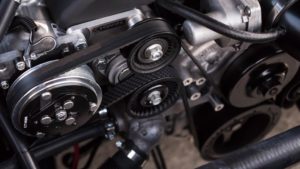 Rattling and ticking noises from the engine and chassis are annoying, sometimes dangerous - and solving the problem is often work for the garage. But before you panic, it is advisable to go through the car thoroughly and clean it up. Remove all loose objects in the car, boot. Also look under the seats, in the compartments and near the spare wheel. Is everything tidied up but can you still hear the irritating noise? Then we can take a closer look and start looking for many possible causes. We have divided the possible rattling, rattling and ticking noises by component. Hopefully this will put you on the right path to a solution.
Noise from drive belt
Metallic clicking: only shortly after starting - Possible cause: hydraulic tappets with insufficient oil pressure - Solution: not necessary if the noise disappears after a few seconds. If the clicking persists, a tappet is faulty; on to the workshop.
Grinding clutch noise: Audible when pedal is depressed - Possible cause: Defective thrust bearing - Solution: Replacement (workshop).
Rattling or rattling clutch: Only audible when idling - Possible cause: Broken drive plate torsion springs - Solution: Replace clutch immediately (workshop work).
Rattling gearbox: Unusual noise at idle, difficult to distinguish from clutch rattling - Possible cause: Large gear backlash, axial play of the shift bushing - Remedy: Noise depends on component tolerance and is usually harmless.
Knocking noise: audible and perceptible when load changes - Possible cause: loose or worn motor bearings - Solution: tighten or replace broken bearing.
Crying and singing: Only noticeable while driving - Possible cause: Worn bearings in transmission or differential - Solution: Replace. However, diagnosis is a workshop matter, as is repair.
Tapping: only audible when the bonnet is open - Possible cause: Working noise of the injection nozzles - Remedy: Not necessary.
Buzzing: Immediately after the ignition is switched on - Possible cause: Operating noise of the fuel pump - Remedy: Not necessary.
Noise from chassis and brakes
 Buzzing and roaring: noticeable in bends - Possible cause: wheel bearing on one side defective - Solution: first locate the defect. If it hums when cornering to the left, a wheel bearing on the right is probably affected; if it pops on the right side, damage to the left side must be assumed. Exact diagnosis: jack up the car and turn the steering wheel. With the other hand, grasp the control arm or support. If vibrations can be felt there, the culprit has been found. Exchange is a workshop affair!
Clatter in bends: only audible when driving fast, especially with varying load and on wet road surfaces - Possible cause: noises caused by the ESP control process starting up (the corresponding warning lamp comes on at the same time) - Remedy: avoid the limit range.
Creaking and rumbling: Noticeable in bends - Possible cause: The wheel-side joints on the drive shafts are defective - Solution: Replace the relevant drive shaft; Diagnosis and repair is a workshop business!
Grinding noise: Only audible when braking - Possible cause: Carrier plate of the worn brake pads rubs against the brake disc - Solution: Replace brake pads immediately, never continue driving! Often a new brake disc is also needed.
Rumbling: a constant companion on bad roads - Possible cause: usually faulty rubber on stabilisers, strut bearings or axle suspensions, shock absorbers themselves may also be affected. Diagnosis is a workshop matter! - Solution: replacement of affected components by a garage.
Squeaking noise from the brakes? We have written a separate blog for this. Click here for possible causes of squeaking brakes.
Disturbing noises in the interior
Rattling in the rear: audible at every pothole - Possible cause: tools, wheel nuts or other objects roll around in the spare wheel bin; the trough is a large resonance body, acts as an amplifier - Remedy: remove all loose objects; alternatively, wheel bolts or tools can be wrapped in rags or foam.
Creaking: heard when clutching - Possible cause: pedal hinges have dried out - Solution: Lubricate the hinges with silicone spray. Never use oil or grease as this will damage the plastic pedals.
Rattling in the dashboard: Usually only audible while driving, especially on bumpy roads - Possible cause: Cable harnesses hit ventilation ducts or other components - Solution: Cover cable with soft foam or secure with cable ties. With today's cars, with their complex electronics and built-in dashboards, this is usually a job for the workshop.
Creaking noises: Frequently occurs near plastic trim (doors, A, B, C pillars) - Possible cause: Plastic trim scrapes over paintwork - Solution: Line the contact points of the plastic parts with felt strips. - Alternative: Lubricate with silicone spray or wax, then the surfaces slide together more easily.
Squeaky seats: Regardless of passenger weight - Possible cause: backrest adjustment or other connecting parts without lubrication - Solution: lubricate backrest adjustment. But sometimes only complete disassembly with subsequent lubrication of all connection points helps (workshop work!).
Droning/vibrating door panels: Especially with bass-heavy music - Possible cause: The door speakers make the panels vibrate - Solution: Remove the door panels and check the speaker fixings. Disconnect the trim with foam mats (available at hobby shops) and fit with new locking clips.
Cracking noises: The dashboard and the centre console are particularly affected - Possible cause: Plastic caps rub against each other - Solution: Place felt strips underneath to prevent abrasive noises.
Exhaust noises
Rattling/rattling from below: Especially with varying load and when driving over potholes - Possible cause: Rubber bracket of the exhaust system cracked - Solution: Install new rubber bracket; only possible (pit/lift required).
Rattling and ringing from the centre of the car: audible both when accelerating and coasting, often depending on engine speed - Possible cause: defective catalytic converter (ceramic core broken) or heat shield plate cracked. - Also common: chambers of the front or rear silencer are shaken loose - Solution: knock off the exhaust from front to back with a fist. This makes it easy to expose the source of the noise (pit or lifting platform required). Replace faulty part.
Clinking or ringing: When engine is running, often audible also when vehicle is stationary - Possible cause: loose or broken clamps - Remedy: Visual check or ticking; Tighten loose clamp, replace broken parts.
Hissing, blowing sounds: Usually from around the engine compartment - Possible cause: Hairline cracks in the exhaust manifold - Solution: Replace the manifold (workshop).
Bodywork noise
Loud creaking: especially when driving over potholes - Possible cause: dry door locks - Solution: adhesive lubricant on the door handle and lock mechanism eliminates the creaking.
Clattering noises: usually only audible at higher speeds - Possible cause: Plastic covering on bumpers or floor covering has come loose and is clattering in the wind - Solution: Check that the relevant parts are tight and retighten if necessary.
Whistling or hissing: Especially audible near the A- and B-pillars - Possible cause: Wind noise caused by the doors hanging crookedly and no longer closing properly, or damaged door rubbers - Solution: Align the hinge plates of the doors with the A pillar (lots of experience required). - For professionals only: Carefully bend the window frame inwards when the window is down, so that the seals are tighter on the body and seal better.
Continuous creaking and squeaking: the noise comes mainly from the area around the doors and sunroof - Possible cause: dry and brittle seals on the doors and sunroof. Doors and roof lining act as large resonators that amplify the sound and make localisation difficult - Solution: lubricate all seals regularly with a silicone-based maintenance agent and keep them supple.
Flapping wipers: Occurs mainly in light rain - Possible cause: the wiper rubbers are worn - Solution: replace the wiper blades.
https://www.winparts.nl/blog/mijn-auto-maakt-een-ratelend-of-tikkend-geluid
May 26, 2022 | Car interior |
Do you drive a French-branded car, then chances are it is a Peugeot? If so, you will be able to agree that these cars offer a good driving experience and have a beautiful design. Especially the new models, the Peugeot 208 and 508 are very successful in our opinion! In this article, we will start with a piece of Peugeot history, then we will delve deeper into good car mats for this French brand. There is nothing more irritating than worn car mats. With older cars, such as youngtimers, you often have to deal with worn car mats. So if you have a nice Peugeot 407 that could use some new car mats, read on so you know what to look out for when buying new mats.
The History of Peugeot
The history of this French car manufacturer is a history of pioneering designs, technical breakthroughs and technological firsts. It is a story of remarkable motorsport successes and road racing cars.
Its history goes back more than 200 years when Pierre's family converted a flour mill into a steelworks. Jean-Pierre's two sons, Jean-Pierre II and Jean-Frederic founded PEUGEOT Freres which was a steel foundry.
The steel produced was used to make saw blades, watch springs and lightweight crinoline socks that revolutionised 19th century fashion.
Peugeot's first car clearly showed its origins in the bicycle and coachwork industries. In 1890, Armand Peugeot, Jean-Pierre's grandson, using bicycle expertise, built a lightweight tubular chassis and combined it with a Daimler two-cylinder engine to produce the first Peugeot car with a petrol engine. And so the first Peugeot was born and fortunately the outspoken lion is still among us.
Give your Peugeot a set of new mats of high quality
Are the current mats in your Peugeot worn out? Or do you simply want to upgrade the interior with stylish new car mats? Then in both cases you will be happy with the offer car mats Peugeot. The range of car mats is large. For each car model of the brand Peugeot there is a fitting set of car mats available. But not only the range of car mats is good. You will also appreciate the quality of the mats available. The mats are all made of the best materials. Therefore the quality is very good. In practice, the mats are even better in quality than the original Peugeot car mats. With a new set of car mats of high quality you really give your car an upgrade and the interior looks fresh again.
Which material do you choose?
The car mats available for Peugeot cars come in various designs. Diversity is obviously reflected in the shape and dimensions. After all, each car model has different dimensions. But even for each car model, you can choose from different types of car mats. The diversity of car mats in this case relates to the material of the mats. You can buy Peugeot car mats in different materials. Do you want to give the interior of your car an exclusive look? Then car mats made of velour might be a good option. On the other hand, are you looking for a set of car mats with high resilience? Do you need mats that can handle the necessary resistance? Then rubber car mats are a better choice.
Importance of a good set of car mats
The purchase of a new set of car mats can have different reasons. Some people simply want to upgrade the interior of the car. It is then about the look of the mats. But also the practical aspect should not be forgotten. It is very important to have a good set of car mats in your car. The mats protect your car against moisture and dirt. This can prevent rust and other forms of damage. In addition, the mats contribute to safety. The importance of a good set of car mats should never be underestimated.

 EN
EN  NL
NL  DE
DE