Feb 9, 2024 | Damage, Insurance
Paying for the damage yourself can sometimes be advantageous. Especially with minor damage, it is worth bearing the costs yourself and not calling in the insurance company. This will prevent you from deteriorating in claim-free years and preserve your discount (no-claim discount) on the premium. But when can this matter?
Car damage, to claim or not to claim?
An accident is in a small corner. A moment of inattention and the damage is done. There does not even have to be major accident damage to be balking at damage done. Whatever happens, it is always to be hoped that no harm has been done to people. This is the first priority that needs attention, everything else can be taken care of. Either through insurance or by paying for the damage yourself.
 To clarify whether it is worth paying for the damage yourself, it is wise to contact your insurer first in case of a claim. The insurer can calculate what effect claiming the damage will have on your claim-free years (and thus premium) and whether it is worth paying the damage yourself or billing via the insurer. If you report a claim, you can assume it will cost you around 5 claim-free years. This can have a big impact on your monthly premium.
Impact on insurance premium
Want to know what claiming the damage has on your insurance premium? On the website or in the policy you received from the insurance company, you can often find a table showing the premiums and discounts. Be well informed by your insurer. Of course, there are differences between insurers, so a general calculation is not possible. To give an example, let us take the following (small) claim:
You have sustained minor damage while parking. After visiting the garage, it turns out that it will cost 250.00 to have this repaired, is it smart to claim this on your all-risk insurance?
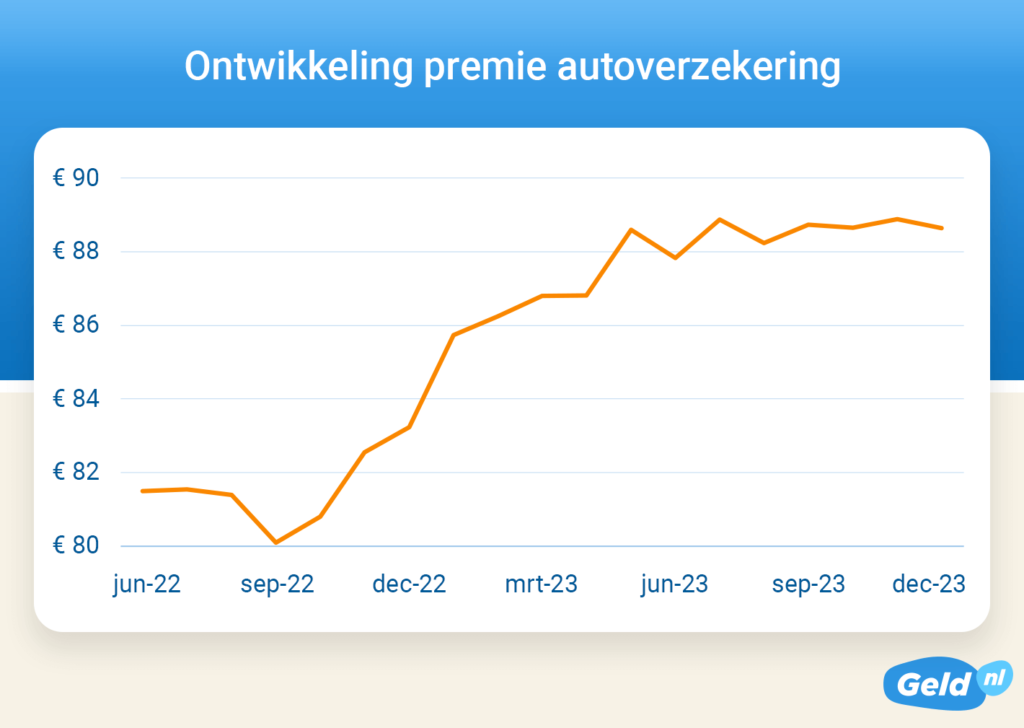
You have already accumulated quite a few claim-free years and you get 75% discount on your premium. This amounts to €52 per month, or €624 per year. If you claim the damage, you go back 5 claim-free years and so your discount will be reduced. You will now not get a 75% but only 62.50% discount, this makes the monthly premium go up to € 78 per month, or € 936 per year. That's an increase of €312 in the first year, so as you can see, that's more than if you pay the €250 claim yourself. So in this case, it is not wise to submit the claim to your insurer but pay it out of pocket.
This is a simple calculation example, but broadly indicates the importance of properly assessing the impact of a claim.
Own risk?
Also take into account the deductible. In some cases, the full costs will be reimbursed but there may also be a deductible which of course makes the calculation different. So check first whether there is a deductible and if so, how high it is before submitting a claim to your insurer.
Later still decide to pay for the damage yourself? Reverse the claim
Did you claim the damage with the insurer but later want to reverse it? This is because the costs were lower than you expected, for example, or because the claim had a big impact on your premium after all? This is possible. You can then contact your insurer and retrospectively take over the costs. To do this, contact your insurer and make sure you repay the compensation you received to the insurer again.
So, when do claim damages from the insurer?
Roughly speaking, it is best to claim the car damage from your insurer as soon as:
- the damage caused is not your fault
- the cost of the repair is so high that you cannot (or do not want to) pay for it yourself
- you have a large number of claim-free years, and that the effect on the discount is minimal
- if you have taken out no-claims protection. With a no-claim-protector, it is possible to claim one claim with the car insurance policy per policy year while keeping the premium discount.
And it's best to pay for the damage yourself when:
- the costs are on the low side and you are perfectly capable of paying for this yourself
- the repair costs are as high as the excess
- where the cost of repair is less than the increase in premium if you did claim the damage
How much will the repair cost?
Of course, it is important to first determine what the cost will be. Whether you have sustained damage at the local Albert Heijn and want to know what the cost for can damage are, or have you just returned from a holiday at Lake Garda and are looking for repair costs for hail damage repair? It is important to know how much you will spend on repairing the damage before you can make an informed decision. Remember to first check which garages are affiliated with your insurer. You can ask the garage or call your insurer to avoid surprises.
Feb 8, 2024 | Insurance
Imagine, you drive your car through the car wash and after your car is all shiny again, you notice there is a scratch in your car. Who is liable for this damage, the car wash or you? And what should you do to get the settlement right? When is the...
When is the car wash responsible?
If damage occurs to your car at the car wash and it is not your fault, the owner of the car wash often has to fix it. This happens, for example, if the car wash is not working properly or if you are given wrong instructions. The owner has to make sure everything works safely. Also, if an employee accidentally damages your car, for example when drying it, the car wash is responsible. If this happens, you can ask the car wash to pay for the damage. If you get into trouble with this, legal expenses insurance can help.
As a driver, when are you responsible?
 Sometimes, as a driver, you are responsible for damage yourself. This is the case if you don't do what the car wash says, or if you don't prepare your car properly. For example, if you don't fold the mirrors. Then you have to pay for the damage yourself. It is important that you do what is required and pay attention to what is not allowed. So always pay close attention to the instructions and signs in the car wash. This helps to avoid problems.
What does your car insurance cover?
Do you have damage to your car due to the car wash, but it is your own fault? Then your car insurance will only reimburse the cost if you have all-risk insurance. All-risk insurance, the most comprehensive insurance, covers damage to other vehicles as well as your own car. However, it is important to read your policy terms carefully to be sure of the coverage. Moreover, you may have to deal with deductibles.
Claim damage or pay for it yourself?
In case of car wash damage, it is not always smart to claim damages. According to www.geld.nl claiming damage affects your claim-free years and no-claim discount, leading to a higher premium. If you have many claim-free years and a high no-claim discount, it may be more financially advantageous to pay for small claims yourself. This prevents an increase in the insurance premium. So, especially for small claims, consider whether to claim the damage or pay for it yourself.
Feb 7, 2024 | Insurance
Are you looking for all-risk car insurance with the best price? Then we recommend looking at the car insurance from OHRA. An affordable premium and fully insure your car without unnecessary hassle; do you have a claim? Then report it simply and quickly via the app.
Differences between car insurance policies
Taking out a new car insurance policy starts with finding the type of cover, which best suits your situation. Do you use the car daily, or only sporadically? Do you drive your car in big cities, or mainly on quiet roads? Do you drive the car to holiday destinations outside the Netherlands, or only in your own country? These are questions you can ask yourself, to determine whether third-party insurance is sufficient for you.
Here is a brief explanation of the differences between car insurance policies!
- The Third-party insurance is the most basic car insurance and is compulsory for everyone if you take your car on the road. The Third-party insurance Compensates damage you cause to persons or property with your car. Additional cover varies by insurer.
- WA+ (limited casco) covers more damage. Besides the compulsory Civil Liability, WA Plus car insurance covers a large number of items. An excellent choice if it is not an immediate problem for you to pay the repair costs yourself.
- The name all risk says it all, all the risk will be covered. With All-Risk car insurance (WA full casco), you have the most comprehensive car insurance. Almost all damages to your own car will be covered, even if you are at fault. And you are insured for damage you cause to others. Breakdown abroad? No worries. You get immediate help. Without fuss.
And what about the extras?
Would you like more security? Then one of our additional covers might be for you. You can choose one or more additional covers for your car, your passengers and yourself. You decide what you insure.
 There are also several additional coverages you can select, such as:
- accidents occupants, whoever is liable for the damage, thanks to this additional cover the insurer pays a fixed amount.
- damage occupants, damages can go a long way for the driver and occupants. Suppose you are unable to ply your trade after an accident. The additional Occupant Damage cover will then compensate the actual damages of the driver and passengers if you have a car accident, even if you yourself are liable for the damage. This cover is especially interesting for drivers, as passengers are often also compensated for their damages on the third-party cover.
- legal aid, who is at fault in a road accident? Often that is not clear. And then try to get compensation for damages if you had no insurance. For all these tricky cases, you can count on professional legal help with this additional cover.
- breakdown assistance so you are back on the road as soon as possible.
Other discounts?
If you take out car insurance with OHRA, there are also various discounts available. There is the no-claim discount; the more damage-free years, the more no-claim discount. Fair enough! And do you have a second car (or motorbike) that you want to insure? Then you will benefit from the same no-claim discount as for your first car. Keep reading on the OHRA website to learn more about the possible discounts and additional options.
When do you choose which insurance?
In the first place, everyone has to decide this for themselves, but there are of course guidelines. Usually, you insure a new car all-risk for the first 0-5 years. This is because the purchase value and daily value are high and repairing or replacing a damage or vehicle is expensive. After five years, it becomes a different story, because cars depreciate quickly. So suppose your car is still worth 5000 euros after five years, it is probably not wise to insure it for a few thousand euros a year. Of course, make sure you have a buffer to be able to replace or repair the car in case of an accident. In fact, the same goes for third-party and third-party insurance; if your car is really getting on in age (15 years +) and is not a real exotic, third-party insurance is often the wisest choice. If you do cause damage then, the other party's damage is covered and you can buy yourself another car for a few thousand euros.
Good luck picking the right insurance for your car!
Jan 26, 2024 | Various
That a car consists of very many parts that are all indispensable should be obvious. Understanding the different parts of a car and their functions is important if you want to know what exactly is going on in your car. In this article, we will take you on a journey under the bonnet and beyond, covering the essential car parts explain that ensure the car can drive smoothly.
The engine: the heart of the vehicle
Cylinder block and pistons: The engine's cylinder block contains precisely machined cylinders where controlled explosions can take place. Pistons, securely mounted in these cylinders by piston rings, move up and down in a rhythmic manner, using the energy generated by the combustion process. This mechanical energy is the driving force that sets the wheels in motion.
Crankshaft and camshaft: The crankshaft, a rotating shaft connected to the pistons, converts linear piston motion into rotational force and transfers it to the transmission where it can be controlled.
Meanwhile, the camshaft controls the precise timing of the engine's valves, orchestrating the inflow of air and fuel and the outflow of exhaust gases, ensuring optimum performance. It is connected to the crankshaft from its placement in the cylinder head via a timing belt or chain, keeping the two synchronised for reliable performance.
Cylinder head and valves: The cylinder head is located on top of the cylinder block and houses the intake and exhaust valves. These valves open and close at certain times to control the flow of air and fuel to the cylinders and the emission of exhaust gases, maintaining the delicate balance needed for efficient combustion.
Intake and exhaust manifolds: The intake manifold directs a precisely metered mixture of air and fuel to the cylinders, while the exhaust manifold expels spent exhaust gases. These components are essential to ensure that the engine receives the right air-fuel mixture and can efficiently expel waste gases. Gases flow into and out of the engine block through carefully machined channels when the respective valves are open. Then the valves are closed to keep the combustion process in the cylinder.
Power train and transmission
Transmission: All internal combustion engine vehicles have one of three transmission types installed, connected to the rear of the crankshaft. Regardless of the type, the purpose of this highly complex mechanical system is to enable control over the direction and speed of the vehicle through gear changes.
- An automatic transmission, this consists of a complex system of planetary gear sets, hydraulic torque converters and a series of clutches and belts. These components work together to seamlessly manage gear selection and respond to factors such as speed, load and throttle input.
- A manual gearbox, includes a series of gears, a clutch and a gear lever. The driver manually selects and shifts gears by using the clutch to disengage and re-engage engine power, giving precise control over vehicle speed and power. This design promotes a more involved driving experience for true car enthusiasts.
- Instead of fixed gears, a continuously variable transmission (CVT) uses a belt or chain system that smoothly and continuously adjusts the gear ratio, allowing infinite gear ratios. This design optimises fuel consumption and ensures seamless acceleration, resulting in a smooth and responsive driving experience.
Differential and driveshaft: A differential is designed with a series of gears and pinions in a housing. It distributes power from the engine to the wheels, allowing them to turn at different speeds during cornering. This design enables precise control, improves stability and traction, and prevents excessive wear on tyres and driveline components.
The driveshaft transfers power from the transmission to the differential and then to the wheels. At one or more points on the driveshaft, there are u-joints that allow movement across two axles while maintaining axle rigidity. On all-wheel drive vehicles, one drive shaft runs from the transfer case to the front differential and another to the rear differential.
Clutch: In a manual gearbox, the clutch acts as the crucial link between the engine and the transmission. It consists of a friction disc that is pressed against a flywheel using a pressure plate. When the driver depresses the clutch pedal, the engine is disconnected from the transmission, allowing smooth gear changes. This design provides precise control over power transmission and gear selection.
A torque converter is a key component of an automatic transmission. Its design includes an impeller, a turbine and a stator, all housed in a sealed unit filled with transmission fluid. As the engine crankshaft rotates, the torque converter transfers power to the transmission, while allowing the engine to idle without stalling. This design ensures smooth and flexible power delivery, enhancing driving comfort.
Fuel and ignition systems
Fuel injection system: Modern cars use a fuel injection system that delivers precise amounts of fuel directly to each cylinder. Each fuel injector has a nozzle that sprays pressurised fuel directly into the engine's intake manifold or combustion chamber. This precise delivery ensures optimum air-fuel mixing for efficient combustion, improving power and fuel efficiency and reducing emissions.
A fuel pump delivers fuel from the tank under pressure to the engine's fuel rail to constantly feed the fuel injectors. Any fuel that is not used is circulated back to the fuel tank through a return line.
Spark plugs and ignition coils: Spark plugs serve as an ignition source and create a high-voltage spark that ignites the air-fuel mixture in the cylinders. It has a cylindrical body with an electrode at one end. When voltage is applied, it generates an electric spark across the gap between the electrode and the centre conductor. This spark ignites the air-fuel mixture in the engine's cylinders, triggering combustion.
An ignition coil consists of two wire coils around an iron core. When activated by the vehicle's ignition system, it temporarily stores and then quickly releases electrical energy. This high-voltage pulse produces a spark at the spark plug, igniting the air-fuel mixture in the engine cylinder, ensuring efficient combustion and operation of the engine.
Throttle body and air intake system: The throttle body is a component of an engine's air intake system. It features a butterfly valve that controls the amount of air entering the engine. When the driver depresses the throttle, the throttle body opens, allowing more air to mix with the fuel, for more engine power and acceleration.
The air intake system is designed to provide consistent and filtered airflow to the engine. It typically includes an air filter, which removes contaminants, and air intake ducts that direct the clean air through the intake manifold into the engine's combustion chamber.
Cooling and lubrication
Radiator and cooling fans: The radiator is a heat exchanger used to remove heat from the coolant in the cooling system to prevent your vehicle's engine from overheating. Hot coolant is passed through the radiator, where the coolant can exchange heat with passing air.
For general radiator maintenance, check the coolant level at least twice a year. Replacing a radiator can take most of the day, but is a good DIY job.
Cooling fans draw air through the radiator core and over the engine to remove as much heat as possible. The fans can be mechanical if it is an older car, but most are now electric fan motors. The fan is activated when the engine temperature reaches a certain point and then helps maintain a healthy operating temperature.
Oil pump and oil filter: The engine oil pump is designed to circulate oil through the engine. It usually consists of gears or a rotor that sucks oil from the oil sump and forces it through the engine's lubrication system. This constant flow of oil reduces friction between moving parts, ensuring smooth engine operation and long life.
An engine oil filter is a cylinder designed to trap contaminants from the engine oil as it circulates. The design includes a porous medium that allows oil to pass through and trap particles such as dirt and metal debris. This ensures clean and well-lubricated engine components, extending engine life and performance.
Water pump and hoses: A water pump is typically a belt-driven or electric device designed to circulate coolant through the engine to maintain optimum operating temperatures. It consists of an impeller that rotates, creating a coolant flow through the engine and radiator.
Hoses, made of reinforced natural and synthetic rubber and other flexible materials, transport engine coolant between components under the bonnet, such as the thermostat housing, heater core and radiator.
Electric system
The battery stores energy in chemical form so that it can be released as electricity to run your vehicle's electrical components. Other terms you may come across are:
- Battery terminal: A means of connecting the battery to the vehicle's electrical system. The three types of battery terminals are post or top, side and L.
- Battery capacity: The energy output of a battery, measured in amps/hour.
- Group size: Group size is exactly what it sounds like: battery size.
- AGM: This stands for absorbent glass mat, a design where sulphuric acid is absorbed by a fibreglass mat, making the battery spill-resistant and better retaining the charge.
The alternator is an electricity-generating device that converts mechanical energy into electrical energy in the form of alternating current. It is used to supply power to the car's electrical system along with the battery. The alternator also charges the battery using mechanical energy generated by the movement of vehicle parts.
If you notice that the battery is not working and seems swollen, it could be that the alternator has an incorrect voltage and has overcharged the battery.
Starter motor and solenoid: An engine starter motor is a compact and powerful electric motor designed to turn the engine's crankshaft. When the ignition key is turned, a small gear, a pinion, engages with the engine's flywheel. The starter motor then rotates, cranking the engine to initiate the combustion process and start the vehicle.
The engine start solenoid is an electromechanical switch placed between the battery and the starter motor. When the ignition key is turned, it receives an electrical signal. The design of the solenoid includes a plunger that moves, connecting the battery to the starter motor, allowing a high current to flow and engage the engine, starting the engine to start the vehicle.
Wiring harness and fuses: Wire harnesses connect all electrical components, allowing them to communicate and function harmoniously. They are made of wire of different thicknesses, depending on the current load and other factors. Fuses protect the electrical system by interrupting the circuit in case of electrical overload.
Suspension and steering
Shock absorbers and struts: Shock absorbers and struts are essential components of a vehicle's suspension system, designed to control ride comfort and stability. Shock absorbers typically consist of a cylinder containing hydraulic fluid with a piston rod inside. Spring struts combine the shock absorber with a coil spring.
When a vehicle encounters bumps or irregularities in the road, shock absorbers and struts dampen the resulting vertical movement by forcing hydraulic fluid through small passages. This hydraulic resistance converts kinetic energy into heat, effectively reducing the impact felt by the vehicle and its occupants. Well-designed shock absorbers and struts provide a smoother, more controlled and comfortable ride, improving the overall handling and safety of the vehicle.
Wishbones and bushings: Wishbones, usually in the shape of a wishbone, connect the wheel assembly to the vehicle chassis at two points for firm positioning in the wheel well. A ball joint attaches the steering knuckle to the chassis, maintaining the vertical position of the steering wheel while driving over bumps and valleys.
Bushings, made of rubber or polyurethane, sit in the mounting points of the wishbones and isolate them from vibrations. They allow controlled movements and minimise shocks caused by the road surface, ensuring stability, precise steering and ride comfort.
Power steering: A power steering pump is designed with a rotary or gear mechanism and is usually driven by the winding belt of the engine. When the driver turns the wheel, the pump pressurises the hydraulic fluid, creating force to turn the wheels. This design improves steering ease and responsiveness, especially at low speeds and during parking manoeuvres.
A power steering gear, also known as a steering box, contains a series of gears and a rack and pinion mechanism. When the driver turns the wheel, the gear converts this rotational movement into a linear movement and transfers it to the wheels via tie rods. Hydraulic pressure from the power steering pump supports this process, making steering smoother and more manageable. This design improves driver control and reduces steering effort, especially in tight manoeuvres.
Braking system
Brake pads and rotors: When the driver brakes, the brake pads, usually made of friction materials such as ceramic or composite, clamp onto the brake discs, which are metal discs connected to the wheel hub. The friction generated between the brake pads and rotors converts kinetic energy into heat, causing the vehicle to slow down. This design ensures effective and controlled braking, requiring regular maintenance to ensure optimal performance and safety.
Calipers and master cylinder: Calipers are essentially hydraulic clamps. When the driver applies the brakes, the brake fluid pressure forces the pistons of the caliper to press the brake pads against the rotor, creating friction and slowing down the vehicle. It ensures precise and controlled braking, converts kinetic energy into heat and stops the vehicle safely.
A master cylinder consists of a cylindrical chamber and a piston assembly. When the driver depresses the brake pedal, it moves the piston, which pressurises the brake fluid in the chamber. This hydraulic pressure is transmitted through the brake lines to the brake calipers, triggering the braking process by pressing the brake pads against the rotors, thus slowing down the vehicle safely and effectively.
Brake lines and ABS module: Brake lines are usually made of steel or flexible rubber and are essential for transferring brake fluid from the master cylinder to the calipers or wheel cylinders. When the driver brakes, the hydraulic pressure within the lines ensures that this force is distributed evenly to all four wheels, allowing controlled and balanced braking, contributing to vehicle safety and stability.
The Anti-lock Braking System (ABS) module monitors the speed of each wheel. When a wheel lock is detected during hard braking or on slippery surfaces, the module temporarily releases and reapplies brake pressure, preventing skidding. This design ensures stable, controlled stops on slippery surfaces, enhancing driver safety.
Exhaust system
Catalyst: A catalytic converter is an emission control device in the exhaust system of a vehicle. It contains a ceramic substrate coated with precious metals such as platinum, palladium and rhodium. As exhaust gases pass through, these metals facilitate chemical reactions that convert harmful pollutants such as carbon monoxide and nitrogen oxides into less harmful compounds such as carbon dioxide and water. This significantly reduces exhaust emissions, making vehicles more environmentally friendly.
Exhaust: A muffler, the cylindrical or oval part of the exhaust system you see under the rear of a car, consists of a series of chambers and baffles. As exhaust gases pass through, the design disperses sound energy by reflecting and absorbing it. This process reduces noise levels, providing a quieter and more comfortable driving experience, while also safely directing exhaust gases out of the vehicle.
A resonator is typically a straight pipe or chamber designed to accurately tune the sound frequencies generated by the engine. It works by reflecting sound waves back into the exhaust, eliminating specific sound frequencies. This design contributes to a more refined and pleasant exhaust sound and minimises unwanted noise.
Oxygen sensors: Oxygen sensors, mounted in the exhaust manifold, inverter or exhaust pipe, consist of a ceramic element covered with special materials. They detect the oxygen level in the exhaust gases and transmit this data to the engine's computer. By monitoring the oxygen level, the engine can adjust the air-fuel mixture for optimum combustion, improving performance, fuel consumption and emission control.
Wheels and tyres
Tyre types: cars can be fitted with different types of tyres to meet specific driving needs.
- Summer tyres, with their smooth and shallow tread, offer excellent traction on dry roads, but are less effective in wet or snowy conditions.
- Four-season (all-season) tyres have a moderate tread depth, offering balanced performance in a variety of weather conditions.
- Winter tyres, designed with deep, aggressive tread patterns and a flexible rubber compound, excel in snow and ice.
- Performance tyres prioritise grip and handling, while touring tyres emphasise a smooth, comfortable ride.
- Off-road or truck tyres have a robust, deep tread for adventures on rough terrain.
The choice depends on driving conditions and personal preferences.
Wheel construction: Wheel construction has a significant impact on the performance and aesthetics of a vehicle. Wheels can be made of steel or lightweight alloys, with designs ranging from simple to complex. Alloy wheels are preferred for their lower weight and improved appearance, while steel wheels are more durable and budget-friendly. Wheel design plays a role in vehicle styling, and different wheel sizes can affect handling and ride quality.
Tyre pressure monitoring system: This system keeps you informed of tyre pressures and ensures that they remain at the correct pressure for safety and fuel consumption, ultimately extending the life of the tyres. Each tyre has a sensor inside, usually attached to the valve stem, that detects the pressure and transmits it to a module connected to the vehicle using radio frequency identification or RFID. When the pressure is outside a predetermined threshold, a light on the dashboard is activated.

 EN
EN  NL
NL  DE
DE