Sep 19, 2022 | Insurance |
A car is an expensive possession for many people. You have worked hard for it and saved for it for a long time, and then of course you want to enjoy it for as long as possible. To achieve this, it is important to take good care of your car. A good start is already if you neatly follow all traffic rules and drive safely.
These 3 tips make all the difference
Have you also noticed that some people need a new car every time after just a few years, while others keep driving the same car endlessly? To a large extent, this is down to the owner and driver of the car. A car can run well for ten to 15 years, but you need to follow the tips below.
Always drive a well-maintained car
With a car that is professionally maintained, you run much less risk of damage. The tyres are inflated, the engine runs smoothly and there are no technical defects that could cause danger. If you then take care to top up fluids like oil and coolant yourself in between servicing, you've got it all together. The next time you reluctantly make that appointment for a check-up, also think that this way you can drive your car longer.
Always obey traffic rules everywhere
A car accident happens quickly and usually involves a lot of damage. Of course, you cannot influence how other drivers behave in traffic, but you can set a good example yourself. Respecting the rules at all times reduces the likelihood of an accident due to your own fault and, consequently, damages you have to pay.
Park your car in a safe place
To park your car, it is good to put some effort into picking a good spot. A spot where there is little chance of damage from a vehicle hitting your car and a spot that is not so dark and secluded that it attracts car thieves. Another good idea is to make use of a protective cover if your car is left outside.
So what if things do go wrong?
You can never completely rule out damage. However, you can make sure that in case of a breakdown you can always go to a good garage and that in case of an accident you are covered by a legal expenses insurance and passenger insurance in addition to your basic insurance. Do you have those things taken care of just fine? Then you are already saving yourself a lot of worries.
Sep 15, 2022 | Timing belt, Maintenance and polishing |
Does a MINI have a timing chain or timing belt? A question we often get. In the Mini engine, a timing chain is used to ensure that the camshaft and crankshaft are connected. This applies to all Mini models such as the Mini Countryman, Mini Paceman and Mini Cooper. The timing chain ensures that the processes in the engine run at the right time and connect perfectly.
Timing chain Mini
Since Minis are equipped with a timing chain, you don't need to calculate the cost of replacing the timing belt. However, the tension in the timing chain can diminish over time, so you should have the part checked regularly if you do a lot of mileage.
Want to know more about how it works, advantages, disadvantages and how to replace the timing chain? Then you can continue reading here.
Aug 31, 2022 | Buying advice |
The average person spends a lot of time in their car. Whether it is commuting to work, running errands or taking a trip, we spend a lot of time behind the wheel. So it is important to make sure we have a car that suits our needs and budget. But what is the best way to finance a car? You basically have three options, renting, leasing or buying. In this article, you will read more about the pros and cons of these options.

Differences between leasing and renting a car
This is what you need to know about renting and leasing a car so you can make a good decision.
The pros and cons of renting a car.
There are a number of advantages to renting a car, including:
- You can drive a new or different car every month. This is ideal if you want to change cars often or try out a new model before buying.
- Renting generally requires less commitment as you are not responsible for the full purchase price of the vehicle.
- It is easier to get out from under a rental agreement if necessary. You can often rent a car for as little as 1 day. After that, you are not stuck with anything. This is unlike a leased car.
Of course, there are also some drawbacks to renting a car, including:
- You will never own the car, so you will always have to make payments unlike financial leasing or ownership.
- The monthly payments are higher than if you were to lease or finance a car.
- If you have bad credit, it can be difficult to qualify for a rental agreement or if you are under 21. In many cases, the cost then goes up because the rental company has to take out additional cover.
If you choose the a company specialising in car rental there are of course other options. Always check the conditions regarding the maximum number of kilometres per day or weekend. This will avoid any surprises afterwards. Autopallas is very transparent about this, for example.
The pros and cons of leasing a car.
The advantages of leasing a car
Leasing a car has a number of potential advantages over renting or buying a car. For instance, monthly lease terms are usually lower than the monthly loan terms you would have to pay if you were financing the purchase of a car. Moreover, leasing usually requires little or no down payment, while borrowing usually requires a substantial down payment. In addition, you can use your savings for other purposes.
Another potential advantage of leasing is that you can drive a newer car more often than if you bought it yourself. With a typical lease term of just two or three years, you can trade in your old lease for a new one and get behind the wheel of the latest model every few years. Of course, you could also do this when you rent or buy a car, but the cost will almost always be higher due to the rental price or depreciation on the car.
The disadvantages of leasing a car
While leasing a car has some potential benefits, there are also some drawbacks. First, at the end of your lease period, you have to return the car to the dealer or pay a final instalment.
Another disadvantage of leasing is that there are usually strict mileage limits - usually between 10,000 and 20,0000 kilometres per year. If you exceed this limit, you have to pay an extra fee per kilometre driven. This can add up quickly if you drive a lot or make regular long trips. Moreover, leased cars must be returned in good condition; otherwise, you'll get an extra bill for this.
The pros and cons of buying a car
When you buy a car, you own it immediately and do not have to deal with monthly instalments or rental premiums. There are no final instalments either, so you know where you stand. Furthermore, you are not tied to certain terms, if you like your car, you can drive it all the way. Of course, there are disadvantages too; although buying a car is often the cheapest option in the long run, you may be surprised by maintenance costs and the purchase price can take a bite out of your savings account.
Cars depreciate a lot especially in the first few years, which is why it is not wise to sell the car after two years. With leasing or renting, of course, you don't suffer from this.
Conclusion
If you are unsure between renting, leasing or buying a car, it is important to weigh up the pros and cons of each option. Renting a car can be a good option if you only need a car for a short period or if you don't want to be tied into a long-term contract. However, leasing a car can also offer advantages if you intend to keep the car for a longer period and the same applies to buying, if you intend to drive the same car for 10 years then buying is probably the most economical choice.
Aug 29, 2022 | Insurance |
If you stay in the Netherlands for more than 4 months, it is important to register in the Basic Registration of Persons (BRP). If you move to the Netherlands from Eastern or Central Europe, for example, and take your car with you, you will no longer be allowed to drive a car with an international registration number from then on. If you go to study or are temporarily seconded to the Netherlands, this may be slightly different. Read below what the rules are for registration in your situation.
Registered in the Netherlands
Are you registered in the Netherlands because you are going to live here permanently? Then you are not allowed to drive a car with international registration plates. In this case, you should immediately transfer the registration plate to a Dutch one, and take out a new car insurance in the Netherlands. This can be done for example at Polisa insurance. Polisa.nl is there especially for Eastern and Central Europeans in the Netherlands. For example, you can count on service in your own language here, and claim-free years from your home country are carried over to insurance in the Netherlands, giving you extra discounts.
 Exceptions in this situation are if you use the car for a maximum of two weeks in the Netherlands, or if you drive your employer's car with an employer exemption, for example.
Not registered in the Netherlands
Are you not yet registered in the Netherlands but in the Netherlands for a longer period of time? Then it is necessary to transfer your car to a Dutch number plate and Dutch insurance after six months. A Car insurance at Polisa also offers benefits in this case. For instance, with insurance at Polisa.co.uk, you can count on roadside assistance at home and abroad.
Studying in the Netherlands
If you are studying in the Netherlands from Eastern or Central Europe, this will initially only be temporary. Therefore, when you are a student, you will be allowed to drive your own car with original registration number in the Netherlands for your entire study period. Students automatically have an exemption based on international law. However, it is important that the course is recognised.
If you are going to work in the Netherlands besides studying, you do need to transfer the car's registration number and take out insurance in the Netherlands.
Seconded to the Netherlands
If you are seconded to the Netherlands, this will also be a temporary move. On secondment, you have an exemption based on international law. Throughout the posting period, you are therefore allowed to drive your own car in the Netherlands.
Of course, besides these four general situations, there are a lot of exceptions. Whether and when exactly you should transfer your car's registration plate therefore partly depends on your personal situation. In general; if you stay in the Netherlands for longer than six months, transfer your registration.
Aug 29, 2022 | Buying advice |
If you are looking for an electric scooter, you might feel overwhelmed by all the options. How do you know which one is right for you? In this blog post, we will give you some things to consider that will help you choose the perfect electric scooter.
Electric scooter: plug-in or battery?
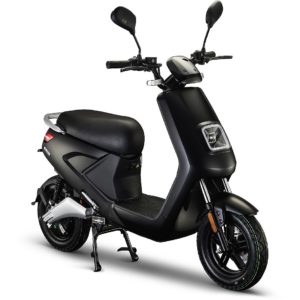 There are two main types of power sources for electric scooters: battery-powered and plug-in. Battery-powered scooters are more convenient because you, don't have to worry about finding a place to plug the scooter in. In many cases, the battery is removable so you can easily recharge it at home. However, they tend to be less powerful than plug-in scooters and have a shorter range. Plug-in scooters require you to find a place to charge them, but they are usually more powerful and have a longer range. Ultimately, it is up to you to decide which type of power source is right for you.
Compare prices electric scooters
When looking for an electric scooter, it is important to compare prices. There are many different scooters on the market, and they all have different price tags. You want to make sure you get the best value for your money. To do this, you need to compare the prices of different electric scooters. Fortunately, there are comparison sites that compare the different electric scooters Compare.
There are a few things to look out for when comparing prices. First, you need to decide what type of scooter you want. There are two main types of electric scooters: stand-up and sit-up. Stand-up scooters tend to be more expensive than sitting models. This is because they are usually made of higher-quality materials and they have more features.
Secondly, you need to think about the features you want. Some electric scooters have extra features, such as lights and storage baskets. If these features are important to you, you should include them in the price comparison. However, if you don't care about these extras, you can save money by choosing a basic model.
Finally, you need to decide where to buy an electric scooter. You can find them from many different providers, both online and offline. Prices of electric scooters can vary considerably depending on the shop, so it is important to look around before making a final decision.
What size do you need?
Obviously, you should choose a scooter that suits you in terms of size. The scooter should be big enough to ride comfortably, but not so big that it is difficult to handle. You can usually find the dimensions of the scooter in the product description.
Speed and power
Most electric scooters come in two versions, either 25 kilometres per hour or 45 kilometres per hour. There is also a difference in the number of watts the Electric scooter has. So check this carefully before buying a scooter. When buying a scooter at 25 kilometres per hour, an 800-watt motor is often sufficient. However, when buying a 45-kilometre-per-hour scooter, we recommend you get an engine of at least 1200 watts.
Electric scooter range
The range, i.e. the distance you can drive with a full one, is often smaller than that of a petrol scooter. This means you can cover fewer kilometres with a full battery than on a full fuel tank filled with petrol. A fuel (petrol) scooter that consumes 1:40 and has a tank capacity of 5 litres can cover a distance of around 200 km. Many e-scooters have a standard battery pack where you can get around 80 kilometres. However, the battery pack can often be expanded and enlarged, giving you a longer range. As the costs per kilometre are much lower than for petrol, as are the maintenance costs, you can still save a lot at the bottom line, and an e-scooter with a battery upgrade doesn't even have to be more expensive.
Consider the weight capacity
Another important factor to consider is the carrying capacity of the scooter. Make sure you choose a scooter that is suitable for your weight, as well as any additional weight of cargo or passengers. The carrying capacity is usually also mentioned in the product description.
What features are important to you?
There are several features available on electric scooters, so it is important to consider which ones are most important to you before making a purchase. Some common features include lights, horn, storage basket and folding mechanism. If you plan to use your scooter for commuting, features like lights and horn may be more important to you than if you only use it for small rides around the neighbourhood.
Warranty?
When buying an electric scooter, it is important to check the warranty before making your purchase. Most reputable brands offer some kind of warranty on their products. This means that if something goes wrong with your scooter within a certain period of time, the company will repair or replace it for free. Warranties range in length from one year to five years or more. So make sure you read the fine print before making your purchase.
Read reviews
Another important thing to do before buying an electric scooter is to read reviews. You can find reviews online from other customers who have bought the same or similar scooters. This can be a great way to get an idea of what others think of a particular model. It is also a good way to see if there are common problems with a particular type of scooter. Reading reviews can help you make an informed decision and avoid potential problems down the road.
Take a test drive
When choosing an electric scooter, comfort should be one of the top priorities. Make sure the seat is comfortable and adjustable so you can find the perfect position for yourself. The handlebars should also be adjustable so you can adjust them to your liking. And finally, make sure the scooter is lightweight and easy to manoeuvre - you don't want driving to be awkward!
Once you have found a few potential candidates, it is time to take them for a test drive! This is the best way to get an idea of how they drive and how comfortable they are. If possible, try out different models from different brands to get a better idea of what's on offer.
Conclusion electric scooter
Choosing an electric scooter involves a lot. With so many options on the market, it can be difficult to know where to start. But if you keep a few key factors in mind, you can narrow down your choices and find the perfect scooter. Consider which features are most important to you and find a scooter that fits them. Once you've considered all these factors, it's time to compare prices and check reviews. Compare models from different brands and find one that fits your budget.

 EN
EN  NL
NL  DE
DE