Jun 15, 2023 | Financial |
Want to lease a car but have no idea how much the monthly lease cost will be? In this article, we look at leasing costs, how you can easily calculate them using a calculation tool and how you can lease financially as an entrepreneur. We also look at the possibility of financial leasing without submitting annual figures.
Calculate lease costs
Do you have your eye on a car you want to lease and are curious about what the monthly costs will be? The following website has a handy lease calculator which helps you calculate monthly costs.
The data you need for the calculation are:
- Purchase value of the car
- Lease amount
- Duration in months
- Value of final instalment
After filling in the details, you can send the application and will receive a quote within one working day.
Financial lease, what exactly is it?
Financial lease, also known as business lease, is a form of financing that allows companies to purchase business assets without direct acquisition costs. With financial lease, the car is financed by a leasing company. The company enters into a lease contract that lays down the terms and the payment structure.
 With financial leasing, you become the legal owner of the car during the lease period. You pay monthly lease payments to the leasing company over an agreed period. At the end of the lease period, you can choose to take over the car by making a final payment, which is often a symbolic amount.
Some benefits of financial leasing:
- No large initial investment: Financial leasing allows companies to purchase assets without having to pay large sums immediately. This helps companies maintain liquidity and spread costs over a longer period.
- Tax benefits: With financial leasing, the company can often benefit from tax breaks. Lease payments can usually be deducted as business expenses, reducing taxable profits.
- Possibility of financing 100%: In many cases, companies can finance the full purchase value, including VAT, with financial leasing. This means no own contribution is required.
- Flexibility: Financial leasing allows companies to tailor the lease to their specific needs. The lease period can be tailored to the expected lifetime of the asset, and additional options such as maintenance contracts can be included.
- Possibility of ownership: At the end of the lease period, the company usually has the option to take over the asset for a symbolic price. This means the company can eventually become the owner of the asset.
It is important to note that financial leasing also comes with obligations. The company is responsible for maintenance, insurance and any depreciation of the asset during the lease period. It is advisable to read the terms and conditions of the lease contract carefully and, if necessary, seek advice from a financial expert before entering into a financial lease agreement.
Lease without annual figures?
Are you a start-up and do not yet have annual figures but still want to lease? That doesn't have to be a problem!
There is practically no difference between leasing a car without annual figures and financial leasing. The car is used as collateral so providing figures is not necessary. The application for leasing without figures is also virtually the same.
A financial lease without annual figures you can apply for it through the website Autokan, for example. Of course, you do need to be registered with the Chamber of Commerce as a company. Furthermore, there is a limit on the purchase value of the lease car. In the case of a lease without annual figures, this amount may not exceed €50,000.
Jun 15, 2023 | Various |
Who doesn't dream of owning a Porsche? In any case, our hearts always beat a little faster when we see one driving by. Porsche is of course known as a leading car brand in the field of luxury sports cars and the brand continues to strive for technical excellence, high-quality performance and a unique driving experience for car enthusiasts around the world.
Buying a 2nd-hand or new Porsche?
If you have the luxury of having a Porsche used or buy new then you can make good use of the Porsche finder. This is a convenient and complete search platform for both new and used cars.
Of some popular models, we have listed a few more benefits. We can't wait to see you driving by soon!
Featured, the Porsche 911

- Iconic sports car: The Porsche 911 is an iconic sports car that has achieved worldwide fame. It is a symbol of speed, performance and elegance. It is a true driver's car.
- Outstanding driving performance: The 911 is known for its excellent driving performance. It features powerful engines, precise steering and excellent road handling, providing an exhilarating and dynamic driving experience.
- Timeless design: The design of the 911 is timeless and recognisable. It has a unique and streamlined design that has remained true to its original style over the years.
The Panamera:

- Sports performance in a limousine: The Porsche Panamera offers sports car performance combined with the comfort and luxury of a limousine. It has powerful engines and advanced chassis and suspension systems, making driving dynamic and exciting.
- Luxurious interior: The interior of the Panamera is stylish and refined, with high-quality materials and exquisite craftsmanship. It also offers advanced technologies and comfort features, including premium audio systems, advanced driver assistance systems and comfortable seating.
- Space and comfort: Although the Panamera has a sporty appearance, it still offers plenty of space and comfort for passengers. Both front and rear passengers enjoy ample leg and headroom, making long journeys pleasant.
Cayenne:

- Sporty performance: Despite its SUV body style, the Porsche Cayenne offers excellent sporty performance. It features powerful engines and advanced suspension technologies, making it a pleasure to drive.
- Luxury and comfort: The Cayenne has a high-quality interior with luxurious materials and advanced technologies. It also offers comfortable seating and high-quality finishes that contribute to a luxurious driving experience.
- Versatility: The Cayenne is spacious inside and offers ample seating for passengers. It also has a generous luggage space, which is useful for carrying cargo or large items. Moreover, it offers off-road capabilities, making it suitable for adventurous drives.
Taycan:

- Electric drive: The Taycan is Porsche's first fully electric car and offers impressive performance with fast acceleration and responsive handling. It also contributes to lower environmental impact due to the lack of emissions while driving.
- Stylish and modern design: The Taycan has a sleek and sporty design, combining signature Porsche styling with modern elements. The interior is luxurious and offers advanced technologies.
- Fast-charging options: The Taycan offers support for fast charging options, meaning you can quickly charge the battery and achieve significant driving range with minimal waiting time.
Featured, the Macan:

- Sporty driving experience: The Macan is a compact SUV known for its sporty driving characteristics. It offers good roadholding and responsive handling, making it fun to drive.
- Luxurious interior: The interior of the Macan is well designed, with high-quality materials and craftsmanship. It also offers advanced features and technologies that enhance driving comfort and convenience.
- Versatility and practicality: As an SUV, the Macan offers ample space for passengers and cargo. It also has off-road capabilities, making it suitable for different driving conditions.
Brief history Porsche
Porsche was founded in 1931 by Ferdinand Porsche in Germany. Originally, the company was an engineering firm focused on developing cars and engine designs.
In 1948, Porsche introduced its very first production car, the Porsche 356. This sports car, with its distinctive rounded shapes, quickly became a success and formed the basis for the brand's later success.
In the 1950s and 1960s, Porsche earned a reputation as a leading sports car manufacturer, with models such as the legendary Porsche 911. Introduced in 1963, the 911 became an icon of the brand, with its distinctive design and outstanding performance.
In the 1970s, Porsche expanded its model line with the introduction of the Porsche 924, 928 and 944. These models were aimed at a wider audience and offered more comfort and luxury than the 911.
In the 1990s, Porsche introduced the Boxster, a compact roadster, and later the Cayenne, a luxury SUV. These new models were important for the brand's success and growth, as they gave Porsche access to new market segments.
In recent years, Porsche has continued to expand its model line-up, including the Panamera, a sports limousine, and the Macan, a compact SUV. These models have helped Porsche increase its sales globally and give the brand even more diversity.
Jun 14, 2023 | Buying advice, EV |
The Tesla Model 3, in recent years an unprecedentedly popular car. In 2019, it will even be the best-selling car in the Netherlands, thanks in part to its low additional tax rate. With the all-electric Model 3, Tesla completely turned the car world on its head and it is impossible to imagine the Dutch roads without it. Worldwide, this car is also one of the best-selling EVs and has really introduced the general public to electric driving. Whether this went without a hitch, we list in this article!
Tesla Model 3 a good choice?
A quick internet search is enough to establish that the first models of the Tesla Model 3 had numerous teething problems. And the problems did not diminish in the years that followed. Whether it was faulty batteries or technical defects: there are quite a few Tesla owners who are regularly annoyed with their car.
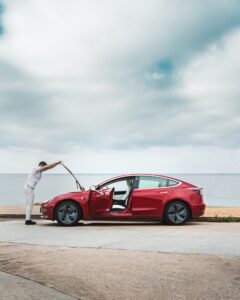 The Tesla Model 3 was introduced to the public in late 2016 and went into mass production from July 2017. However, the market launch in Europe did not take place until several years later, in February 2019 to be precise. This had the advantage that most of the teething problems had already been fixed.
Still, many Model 3 owners complain about a car, so it is not for nothing that Tesla has revised the Model 3 several times in recent years. The first models are no longer available in their form, as not only the drive concept but also the battery capacity has changed. Besides the classic Tesla Model 3 with rear-wheel drive (Standard Range Plus), two other models are currently available. The Long Range and Performance, these have all-wheel drive and a larger battery capacity in most cases.
Is the Model 3's battery the weakest point?
The Tesla Model 3's battery is seen as the weakest point, as there have been repeated problems with it. However, the issue does not apply to all models in the same way, as different batteries are used depending on the year of manufacture, production country and model.
Early models and base versions from the US use batteries from LG Chem, while more powerful models use a larger battery from the Panasonic Corporation.
Of particular concern is CATL's lithium iron phosphate (LFP) battery, which has been in base models imported from China since December 2020. It stands out due to deficits in range, low charge capacity and high self-discharge. This battery is also particularly sensitive to cold, which is noticeable when used in winter. Tesla has since been able to fix the problems with software updates.
Moreover, there are more frequent complaints about the battery; the problems often start with an error message on the display informing of reduced charging capacity. After that, the battery runs out quite quickly, and has to be replaced. Reports indicate that Tesla has since acted on this and provided battery replacement free of charge in most cases.
Points at the MOT inspection
The first Tesla Model 3s have now passed their MOT date and the first experiences are known. In general, the car passes the MOT without any problems, but it does appear that not all garages have the necessary knowledge and experience with the Tesla's technology. Among other things, the missing OBDII connection, which has only been in the footwell since mid-2020, causes discussions.
The heavy weight of the battery also affects the chassis, which is noticeable in the high wear of the wishbones and bearings.
Not infrequently, the lights also refuse to work; this was also a common problem with its bigger brother, the Tesla Model S.
And a typical problem for electric cars: the brakes are rarely used, leading to more rust. Even though braking performance does not necessarily suffer, it does not hurt to occasionally "brake" the brake discs by braking more forcefully. By doing so, you can prevent the brake discs/blocks from needing premature replacement. Tesla does recommend having the brake fluid checked and the interior filter replaced every two years. Lubricating the calipers every 20,000 km can also prevent problems.
Problems with faulty jacking points
Apparently, quite a few vehicles suffer from bent or cracked jack points. What Tesla initially downplayed as "cosmetic damage" could cause serious problems during an inspection. Indeed, lifting or jacking up a Tesla Model 3 can cause significant damage. This is because on the underside of the Tesla is the battery pack. If you lift it just like that with a car bridge or jack, the battery may just be damaged. A repair is costly because the entire battery module has to be replaced.
So it is worth looking under the vehicle before the next inspection. The damage to the jacking points apparently occurred during manufacture and cannot be attributed to improper use of a jacking point.
Control problems
Control problems have also been reported in several vehicles built in the second half of 2022 at the German plant in Brandenburg (and partly in China).
Motorists report that the steering showed "resistance in small increments", similar to the scroll wheel on a computer mouse. Restarting the vehicle also brought no solution. Initially, Tesla changed the steering gear on some car owners, which apparently did not improve the situation. Now, a software update should fix the unusual resistance on the steering wheel.
Experiences Tesla Model 3 owners
But what do the Model 3 drivers themselves say? That, of course, is often the best indicator. The most common criticisms mentioned to us were various defects on delivery, mainly paint damage and damage to the bottom plate. But scratches and dents on a new car are unfortunately not very uncommon.
However, the level of finish is not as high as you might expect when a new car is delivered. Scratches on the dashboard, incorrectly fitted steering wheels or falling gear lever cause annoyance. Fortunately, these are problems that are immediately obvious after delivery.
Problems that only surfaced later included the drive shafts breaking and various functions failing. The electronics occasionally cause concerns, including in terms of charging technology and range. In addition, owners complain about leaks in the interior, mostly in the boot or near the sunroof.
Model 3 recalls
Tesla has a voluntary recall issued to all Model 3 vehicles released between 2017 and 2020, as well as some Model S vehicles between 2014 and 2021. Tesla said that opening and closing the Model 3 trunk could damage the wiring harness that attaches the reversing camera, causing the camera to suddenly fail.
There were also production errors that caused several recalls. Among others, the brakes were not properly fixed and several chassis parts were incorrectly bolted.
Insufficient cooling of the processors could cause several vehicle systems to fail. Moreover, the speed unit was not displayed in (race) track mode, which could be remedied by updating the software.
Known weaknesses
- faulty battery, low charge & range
- high weight: increased wear of the chassis
- inspection: rusty brakes, faulty lights
- cracked/bent jacking points
- various defects on delivery of new car
Overall conclusion
As you have been able to read, a fair number of points have been mentioned but most of the problems occurred immediately upon (or soon after) purchase. Overall, most Tesla Model 3 drivers are very satisfied with their car.
Regardless of which variant one chooses, the Tesla's speed and driving comfort are praised. "It accelerates like the best and it brakes like a race car and goes through corners like a go-kart." About the Model 3's handling, drivers are almost unanimously positive. "Not to mention the AWD and handling. Yes, that really made me appreciate the Tesla."
Drivers are also fairly positive about the distances they can travel with the Model 3, especially when compared to other EVs. And any EV battery will degrade over time, that is a given and with Tesla it is no different. Yet after many kilometres on the counter, the capacity is still more than adequate. And with more and more (fast) charging points along the road, charging is a piece of cake!
Do you own a Model 3 or are you considering buying 1? Then feel free to share your experiences with us via the comment form below!
Jun 14, 2023 | Maintenance and polishing |
Your car, you can't live without it and you take care of it. At least you would think so! Regular maintenance is obviously very important but the way you drive is also important for the preservation of your car. Here are 10 bad driving habits that can cause damage to your vehicle and how to prevent them!
10 bad driving habits
- Driving through potholes: fortunately, in the Netherlands the potholes in public roads are not so bad but you still come across them sometimes. Big holes in the road. Hitting a pothole head-on at high speeds can damage a tyre, not to mention the toll it takes on your suspension, steering and alignment. Stay alert and consider road conditions to avoid potholes. If you cannot avoid a pothole without turning into another lane at the last moment, slow down instead. By doing so, you minimise the impact of possible damage.
- Racing over speed bumps. Like potholes, speed bumps have a negative effect on your car's steering, suspension and alignment when driven over them at high speeds. The purpose of speed bumps is to keep motorists and pedestrians safe. So think about your neighbours and fellow road users and brake when approaching a speed bump.
- Forgetting the handbrake. Did you know that you should use your handbrake every time you park? It doesn't matter if the terrain is flat or hilly. The gearbox can keep the vehicle from moving when in 'Park', but the only part really designed to keep the wheels in place is the handbrake. It is best to engage your handbrake before putting the gear in park to reduce the load on the transmission.
- Not stopping before switching from reverse to forward. It happens to all of us, we are in a hurry and sometimes switch to "Drive" while the car is still rolling in reverse. Keep in mind that every time you are impatient, the gearbox takes a hit. The transmission system relies on the brakes to stop the movement of the car so that it can shift smoothly between gears. So make sure you have come to a complete stop before changing direction.
- Running too long on low fuel. Did you know that petrol acts as a coolant in the fuel system? So if the tank is almost empty, parts can overheat and fail. The fuel pump, fuel system and catalytic converter can be damaged if you run out of fuel completely. It is recommended to fill up the car when it gets to a quarter tank of petrol.
- Ignoring dashboard warning lights. Don't ignore the dashboard warning lights when they appear, your vehicle is really asking for help! Pay attention to the engine control light, battery, coolant, airbag and oil warning lights. If you see a warning light appear, go to a garage or delve into the problem yourself.
- Improper use of the brakes. If you rest your foot on the brake pedal when going down a steep slope or in stationary traffic, the brakes may overheat. Brakes lose some of their stopping power when they overheat. Instead of braking with the pedal, try braking on the bike using the gears. Try shifting to a lower gear when driving down a steep hill and driving carefully with extra space between vehicles, using less throttle to slow down instead of using the brakes.
- Driving off hard or braking too hard/too much. If you have to brake hard, it is often for a reason. But sometimes sudden or hard braking can also be avoided by looking well ahead. Clearly, braking harder wears the brakes faster and fast acceleration uses more fuel.
- Running a cold engine. Starting the engine and letting it idle for a few minutes will warm it up and give the oil time to circulate. However, do not rev the engine when it is cold. This causes unnecessary wear on engine parts that have not had time to be lubricated with thorough oil circulation. It also causes abrupt temperature changes that can damage parts. Let the engine warm up before pressing the throttle, it will sound better and rev more smoothly.
- Driving with extra weight. We're not talking about the passengers here but clean out the boot, for example. No need to lug the golf clubs or hockey sticks with you when you go to the supermarket. Every kilo of extra weight affects fuel consumption, putting extra strain on the suspension, driveline and brake components. Lighten the load and give your vehicle a thorough cleaning so that you carry only what is most necessary.
We know that bad habits are sometimes hard to stop, especially driving habits for seasoned drivers. No matter how much time you spend driving every day, you want to take good care of your car and avoid unnecessary repair costs. So if you find yourself doing any of the bad habits mentioned above, think about the money you will save if you break them.
Jun 7, 2023 | Insurance |
Buying a new car is combined with taking out a car insurance. When taking out car insurance, you have a very wide choice. Not only do you choose between insurance policies from a large number of insurers; you also have a standard choice of all-risk car insurance, third-party insurance and third-party insurance with limited casco. What makes one car insurance a better choice than another? Which type of car insurance suits your situation best? In this article, you will read more about the factors to consider when buying car insurance.
Find the coverage that suits your situation
A new car insurance starts by looking for the type of cover that best suits your situation. Do you use the car daily, or only sporadically? Do you drive your car in big cities, or mainly on quiet roads? Do you drive your car to holiday destinations outside the Netherlands, or only in your own country? These are questions you can ask yourself to determine whether third-party insurance is sufficient for you. The value of your car also plays a part in this. A more expensive model of car you will normally want to protect better, than a car you wanted to replace anyway. In the former case, third-party insurance with limited hull or even all-risk car insurance may be the best choice.
We briefly list the differences:
- The Third-party insurance is the most basic car insurance. This insurance covers damage to others and provides assistance in case of damage. Additional cover varies by insurer.
- WA+ (limited casco) covers more damage. In addition to damage to others, consider fire and storm damage, burglary and theft, animal damage and window damage, for example.
- The name all risk says it all, all the risk will be covered. The main difference between all-risk car insurance and limited casco is that an insurer will also cover collision damage in case you are at fault in an accident. Vandalism will also be covered which is not the case with limited casco. But to be sure if this is also the case with your insurer of choice, we always refer you to the insurer for more info!
Place where you park your car every day
Something that is often forgotten: the place where you park the vehicle on a daily basis. If you park it in the shed near your own home, the chances of damage are relatively low. Do you park the car in a public car park at the end of the day? In that case, the likelihood of damage due to vandalism or rough weather, for example, quickly increases. This makes it an important factor in determining the type of cover that is most suitable for your vehicle.
Ataking out supplementary insurance alongside your basic policy
Taking out basic insurance for your car can be combined with various additional insurances. Consider, for example, passenger insurance; interesting for people who regularly travel in the car with others. Legal expenses insurance for traffic situations can also be an interesting additional insurance. This is especially true for people who drive in big cities. The likelihood of conflicts in traffic is generally higher here than on a quiet country road.

 EN
EN  NL
NL  DE
DE