No Results Found
The page you requested could not be found. Try refining your search, or use the navigation above to locate the post.

Insure your car all-risk, limited-casualty or third-party? When you buy a car, you need to think about this carefully and weigh up the risks. In this article, we explain the general differences, we write "general" on purpose because different conditions apply between providers. There are also various additional coverages you can choose. In the end, of course, it is also a matter of feeling, if you don't want to run any risk then all-risk car insurance is obviously better for your peace of mind. In this article, a brief explanation of the car insurance and additional covers.
The exact name depends on the insurer and so do the conditions. However, there are similarities between different providers.
 The Third-party insurance is the most basic insurance and covers damage to others and provides assistance in case of damage.
Most insaas also offer supplementary packages. coverages. Consider the following options:
First of all, everyone has to decide this for themselves, but there are of course guidelines. Most people insure a new car for the first six years all-risk. This is because the purchase value and daily value are high and repairing or replacing a damage or vehicle is expensive. After 6 years, it becomes a different story, because cars depreciate quickly. In that case, you can opt for limited hull insurance, for instance. Of course, make sure you have a buffer to be able to replace or repair the car in case of an accident due to fault.
As mentioned, all insurance types have different conditions, designations and additional cover. What suits you best can vary from one situation to another. Be well informed and get well insured on the road!
Do you still get cold shivers when you think back to the moment when you accidentally scraped your two-week-old car along the wall of the narrow underground car park?
Scratches in your car's paintwork are always annoying, but sometimes you can't do anything about them yourself: scratches occur when small stones hit the front of the car or a marten leaves its mark on the bonnet on its way to the engine compartment. If you have intentions of selling your car, scratches are undesirable and it is best to remove them yourself as much as possible.
You don't have to drive straight to the workshop for paint damage to your car. You can remove many small scratches yourself, especially if they only damage the clear coat. This applies to most everyday damage, for example to door handles or around the fuel filler cap. In this blog you can read which scratches you can remove yourself and how you can do this best.
What you recognise in your car as misano red pearl effect paint or metallic tenorite grey is the result of state-of-the-art technology: car paint consists of four layers which, together with the sheet metal, are only as thick as a human hair, about 1 millimetre. The actual colour layer is the thinnest at 0.015 millimetres.
If a scratch only damages the clear coat, you can polish it yourself with just a few tools. If the basecoat has already been damaged, you should only lend a hand yourself as an experienced hobbyist. For all other paintwork damage, trust the experts in your workshop or bodyshop. Two simple tests will show you how deep the scratch goes into your car's paintwork:
Ingredients:
And this is how it works:
Ingredients:
And this is how it works:
Be careful with deep scratches: if they already form cracks, there is a risk that the rim will break while driving. A simple cosmetic repair is not sufficient. Only a new rim can ensure safe driving.
Some parts are painted along. This is obviously more work to restore.
Ingredients:
And that is how it works:
Is the damage that bad and you want to totally replace a bumper or other body part? Then you can also look for a suitable second-hand part. We have outlined the pros and cons of second-hand parts in this article listed.
For scratched chrome parts, special cleaners and polishes are available from specialist dealers to remove the damage. If the windows are scratched, you should go to the workshop and have a professional stone chip repair done. If necessary, even very minor damage can be repaired with a stone chip repair kit.
The only reliable remedy for small scratches in the home is regular white toothpaste. Press the toothpaste onto a damp cloth and rub it over the scratch. Little by little, the toothpaste - and thus the scratch - will disappear. This is because there are small abrasive particles in the toothpaste which, together with small paint particles, penetrate the car paint and fill the scratch. If the scratch has not disappeared after the first procedure, repeat the process. Usually, the repair works.
Nail polish is also recommended time and again to repair scratches. But that is one thing. Firstly, the nail polish usually does not match the colour of the car paint. Secondly, in the summer, when it gets very hot, the nail polish can blister or crumble.
Small, fine scratches are one thing, deep scratches are another. A branch hangs too far into the driveway and the paint is damaged down to the metal plate or putty. Then it usually doesn't help to remove the scratch yourself. Now you have to take the car to the workshop to get it repainted.
These spots on the car are most likely to get scratched. But why is that?
Do you still want to hire professional help? Then consider the company AAS Day Recovery, for example. They can help you well with damage such as light car scratches removal. They will also use polishing to repair minor scratches which will make the scratch disappear.
As we have also written in other blogs, leasing a car can be a financially sensible choice. Keeping a car on the road is an expensive hobby, especially if you decide to buy one nice car. First of all, you then have to invest a large amount of money in the car of your dreams and then these days you have to pay more and more for fuel and there are several measures coming up that are going to put additional taxes on emissions. A good way to keep the cost of your car under control is to switch to an electric car. Buying an electric car is still on the expensive side but, of course, you don't have to buy an electric car to drive one. How about this? You can also get to private lease going to do. This is an interesting way not only to be able to drive sustainably, but also to make sure that you never face any major unexpected expenses. So this can be financially attractive!
 At the time of writing, buying an EV is still very expensive. Sure, there are subsidies and pots but still you often have to dig deep into your pockets. This is a reason for many people not to make the switch yet, even though they would like to. In this case private lease electric car from Univé, for example, is an interesting option. This is because you can lease an electric car for a period of five years for a fixed amount per month. You then spread your costs so you don't have to make a big investment all at once. Moreover, you do not have to worry that you will have to bear the costs of any repairs to your car. These are covered by the leasing company. So you have the joys of driving, but not the burdens.
If you are interested in an electric lease car, it is time to see which model you would like. You can choose from many well-known brands including Citroën, BMW, Audi or Tesla. Look carefully at how many kilometres you expect to drive per year. This is important when it comes to the range of your car. This is the number of kilometres a car can cover on a full battery. If you think you will only drive a few hundred kilometres a week, you can choose a car with a lower range. If you spend all day in your car, it is advisable to go for a more luxurious car with a higher range. So be well informed about the car's range to avoid having to recharge your battery every three hours.
Should you be keen to get a competitive deal, check out the 'second-hand cars' offered by Univé. These are electric used cars that are still in good condition. That way you drive just as well, but for a lower price. Ask Univé about the possibilities.
The BMW e90 was introduced in 2004 as a replacement for the successful e46 model. The new model had a more aggressive design, with a wider stance and larger wheels. The interior was also redesigned, with new materials and better ergonomics.
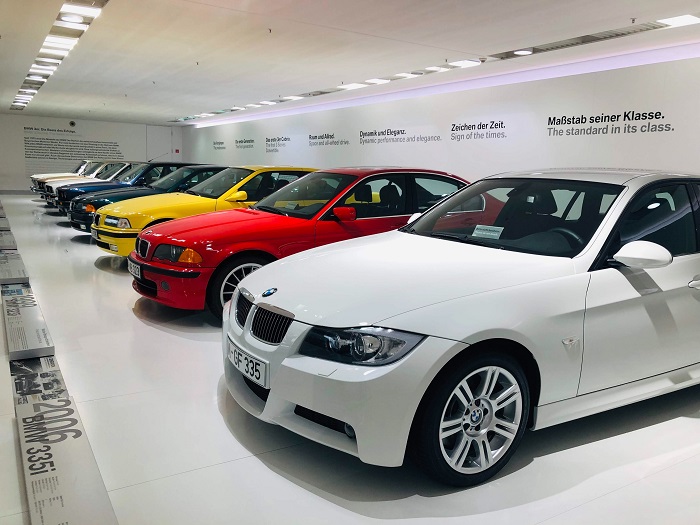
Upon its introduction in 2004, the BMW e90 quickly became one of the Bavarian carmaker's most popular models. With its stylish design, powerful performance and advanced technology, the e90 set a new standard in the D-segment. In the years since its debut, the e90 has continued to evolve, adding even more advanced features that made it one of the most innovative cars at the time.
Today, these features are standard on most new cars, but back then they were advanced technologies that made it easier than ever to stay connected on the road.
The latest generation of e90s are equipped with self-driving capabilities that allow them to park themselves and even change lanes automatically. This technology was still at an early stage, but was certainly innovative.
The e90 has always been a safe car, but recent generations have added even more safety features, such as blind spot monitoring and lane departure warning. These systems help drivers avoid accidents by giving them information about their surroundings that they might not otherwise have.
Like every BMW, this 3-series has a wide range of engines. From economical four-cylinders to the super fast M3 with an eight-cylinder. It came in both petrol and diesel, and a few more engines were added after the facelift in 2008. See the complete overview below:
The BMW E90 was available in different lines or packages with different features and specifications. Here is an overview of the main differences between the Business line, Executive line, M Sport line and High Executive line:
The Business line is the standard package for the BMW E90. It includes basic features such as air conditioning, electric windows and a sound system. It can also include alloy wheels and a leather-clad steering wheel.
The Executive line is a step up from the Business line and includes extra features such as leather upholstery, a multifunction steering wheel and an upgraded sound system. It may also include larger alloy wheels, park distance control and a panoramic sunroof.
The M Sport line is a performance package that includes a sports suspension, larger alloy wheels and sports seats with extra support. It also includes an M Sport steering wheel, M Sport body kit and M Sport wheels.
The High Executive line is the top package for the BMW E90 and includes a range of luxury features such as leather upholstery, a panoramic sunroof, an upgraded sound system and a full-colour head-up display. It can also include features such as park distance control, adaptive headlights and a larger infotainment display.
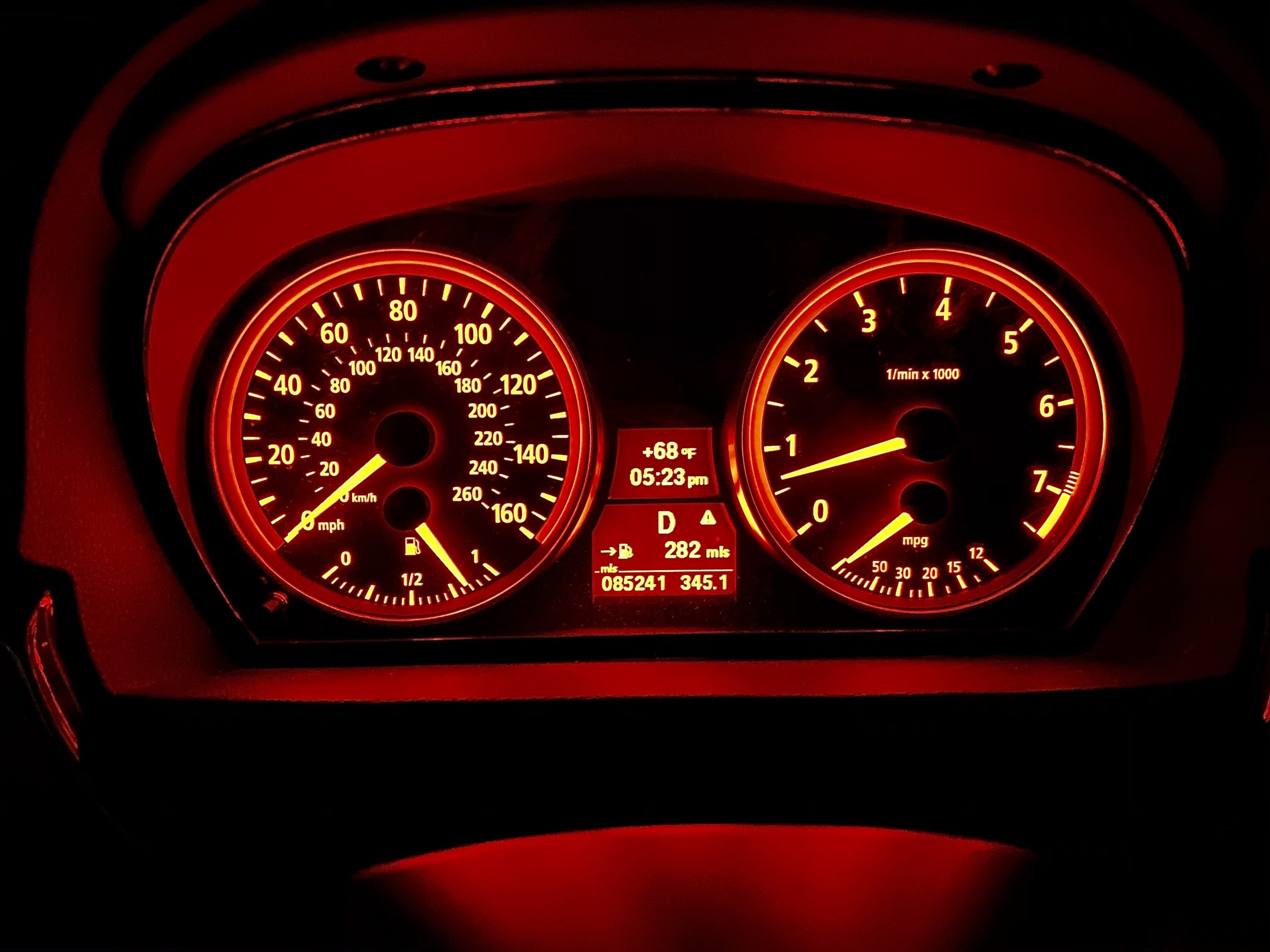
316i: 1.6-litre four-cylinder engine with 122 hp
318i: 2.0-litre four-cylinder engine with 129 hp
320i: 2.0-litre four-cylinder engine with 156 hp
323i: 2.5-litre six-cylinder engine with 204 hp
325i: 3.0-litre six-cylinder engine with 218 hp
328i: 3.0-litre six-cylinder engine with 233 hp
330i: 3.0-litre six-cylinder engine with 272 hp
335i: 3.0-litre six-cylinder twin-turbo engine with 306 hp
M3: 4.0-litre V8 engine with 420 hp (only available in the E90 M3)
316d: 2.0-litre four-cylinder engine with 115 hp
318d: 2.0-litre four-cylinder engine with 143 hp
320d: 2.0-litre four-cylinder engine with 163 hp
325d: 3.0-litre six-cylinder engine with 197 hp
330d: 3.0-litre six-cylinder engine with 245 hp
335d: 3.0-litre six-cylinder twin-turbo engine with 286 hp
Please note that engine availability may depend on the region in which the car was sold and the year of manufacture of the car.
The BMW N43, N45, and N46 engines are known to have a number of potential issues. Here are some of the most common problems owners have reported:
The N43 in particular is known to be unreliable. This is in the post-2008 facelift model.
If you experience any of these problems with your BMW N43, N45 or N46 engine, it is important to have it diagnosed and repaired by a qualified BMW mechanic to avoid further damage and expensive repairs.
There are several known problems with the BMW N52, N53, N54 and N55 engines. Here are some of the most common problems:
If you experience any of these problems with your BMW N52, N53, N54 or N55 engine, it is important to have it diagnosed and repaired by a qualified BMW mechanic to avoid further damage and costly repairs.
There are several known problems with the BMW M47 and M57 engines. Here are some of the most common problems:
The BMW E90 or E91 offers excellent handling thanks to its sporty suspension. This system consists of struts, lower wishbones, front and rear anti-roll bars and gas shock absorbers. This suspension system gives the E90 or E91 great body control without sacrificing comfort. Of course, the rear-wheel drive helps the sporty driving experience.
In terms of safety, the BMW E90 or E91 is equipped with numerous advanced safety features. These features include airbags, ABS brakes, traction control and stability control. The E90 or E91 also comes standard with a tyre pressure monitoring system that alerts the driver when one or more tyres are underinflated. The NCAP score was 5 stars.
The BMW E90 or E91 is fuel-efficient thanks to its efficient engines and aerodynamic bodywork. With the four-cylinder petrol engines, you can average 1 in 14 with a normal driving style. The six cylinders are not too thirsty either, 1 in 12 can be achieved. Finally, the diesels are very fuel-efficient; the 320d can do 1:20 and the 330d averages 1:15.

The advantages of a BMW E90 or E91 outweigh the disadvantages, making it a good choice for anyone looking for a used car. Now, the main advantages of the E90 are its economical price, stylish design, powerful engines and different equipment levels. Moreover, the exterior design is sleek and elegant with robust features, while the interior offers a chic space with quality materials and modern technology. In terms of performance, the E90 is equipped with reliable engines that provide sporty handling and advanced safety features. Finally, fuel economy is good for a car of this size. All these factors make the BMW E90/E91 an excellent choice for a used car.
What is it Difference between a P21W and P21/5W bulb? Have you had the same problem yourself? You want to replace the indicator light and with great urgency you have fetched a P21W bulb but the bulb does not seem to fit in any way. After a little quiet reading, you find out that you needed a P21/5W bulb. A small difference in text but enough difference to make you have to go back to the shop. Annoying! On this page, we explain the difference between the two bulbs.
A P21/5W bulb is a signal lamp and has multiple uses such as indicator, brake light or tail light. This bulb has 2 filaments, both a 21 watt and 5 watt wire in the same bulb. Here, the large 21 watt wire is for braking or the indicator, for example, and the smaller 5 watt wire is for the parking light. On the side of the fitting are 2 tabs/ pins that should fall into the holder of the car lamp.
Unlike the P21/5W bulb, the P21W bulb has only 1 filament of 21 watts. This bulb is also a signal lamp and has multiple applications such as indicator light, brake light or rear light. On the side of the socket are 2 tabs/pins that should fall into the holder of the car lamp.
Did you lamp PY21/5W or PY21W needed? Then you need not a white but a yellow signal light, the letter Y standing for yellow. Or too yellow in English.
The differences between a P21W and P21/5W bulb are as follows:
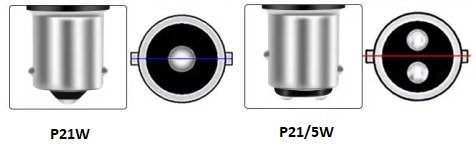
Difference between P21W and P21/5W lamp
Changing the bulbs is not very difficult and you can do it yourself. So it is important to determine whether you need a P21W or P21/5W bulb. This can often be easily found on the holder where the bulbs are fitted, but you can of course also just look at the old (defective) bulb, which will undoubtedly also indicate the type. Not sure? Then for most brands we also have a car lights page created where the right lamps can be found.
Through our webshop, you can easily order the bulbs you want. We have both the P21W and P21/5W bulbs of the Philips brand available from stock:
The page you requested could not be found. Try refining your search, or use the navigation above to locate the post.
 Nederlands Nederlands
  English (UK)
 Deutsch