Feb 14, 2023 | Maintenance and polishing |
The General Periodic Test (APK) is mandatory for all cars older than 3 years. The purpose of the MOT is to ensure that cars are in a good state of repair, thus preventing accidents. Thus, the MOT inspection is there to ensure safety on the road.
For the MOT inspection, different parts of the car are checked. It looks at the tyres, brakes, shock absorbers, steering, lighting, exhaust system, and also environmental requirements. If any problems are found during the MOT inspection, they must be fixed before the car is allowed back on the road. In this blog, we explain exactly which parts the car is checked for.
What is checked?
At the MOT, a car is assessed for the following components: road safety (brakes, suspension, shock absorbers, tyres, steering, lighting and bodywork) the environment (exhaust emissions) registration (mileage, vehicle certificate, identification number and fuel used).
 A number of changes to the MOT legislation have been introduced with effect from 20 May 2018. There will be checks for leakage of fluids (excluding water) and the operation of control systems for airbags, belt tensioners, tyre pressure (TPMS), electronic power steering and braking systems and stability and anti-lock braking systems. Soot filter One change draws the explicit attention of diesel drivers. The MOT will now check for the presence of a particulate filter.
What does the MOT cost?
The cost of an MOT inspection can range from €20 to €50, depending on the garage where you have the inspection carried out. Of course, this does not include the cost of upgrading parts of the car.
Is the tow bar checked at the MOT?
Yes, the tow bar is checked at the MOT. In the MOT inspection, it is checked whether the tow bar is in good condition and whether all mounting parts are present. It also checks whether the towbar can support the right forces. If the towbar is not in good condition, it is usually replaced or reinforced. Then, the towbar is checked again at the MOT. A hitch mounting So can be handy for transporting stuff, but at the MOT it has to be in order.
Feb 10, 2023 | Maintenance and polishing |
OBD stands for OnBoardDiagnostics. Through OBD, you can make contact with a car and exchange information between your car's on-board computer and the diagnostic system used. This allows you to search for fault codes and view other data, among other things. There are different types of OBD and diagnostic equipment that we would like to tell you more about.
History of OBD: OBD1
OBD1 has its origins in the 1980s. The system had been developed with the aim of bringing more efficiency to vehicle emissions. At that time, there were few requirements for the cars. Vehicles had to be fitted with a Malfunction Indicator Light and fault codes had to be stored in the on-board computer. Because there were so few requirements, OBD1 did not achieve its goal. It did, however, prove that car maintenance was made much easier by OBD, as the car was much easier to read. It became immediately clear what fault there was.
Today: OBD2
 The current version is the OBD2. From 2001, it is mandatory in Europe for petrol vehicles to comply with the new OBD2 protocols, and from 2004 it is also mandatory for diesel vehicles. So you can read your car anyway with a OBDlink scanner if your vehicle was produced after this time.
There are many more requirements for the current OBD version that car brands have to comply with. For instance, cars must be equipped with a 16-pin OBD2 plug so that the car can be read out. The software used is the same for all car brands, which made it possible to develop universal diagnostic equipment.
Diagnostic equipment
There are two ways you can read a car via OBD. You can do this with an OBD hand scanner or using a Diagnostic Interface. The OBD hand scanner is by far the easiest to use and this is therefore a popular tool. The OBD reader is equipped with pre-programmed software that allows you to connect the scanner directly to the car and read out the results. If you use a Diagnostic Interface, you need to install a software programme on your PC before you can read out the car.
Read your car yourself
With an OBD scanner, you can easily check your car readout. You do this by connecting the scanner to your car's OBD2 port. The scanner starts up automatically because it receives power from your car. Any errors found are displayed on the screen. You can delete the error yourself, but be careful about this. You will need to know how to fix the problem. If you don't know this, leave the error code and still take your car to the garage.
Feb 9, 2023 | Buying advice |
Is it time for another car or is it better to keep driving your current one for a while?
You have a car, but you are not sure if it is the right time to buy a new one. Are you going to drive less or more, could you use a bigger car because something has changed in your personal situation, does your current car need serious repairs or would you just like something new. Replace or drive on?
Let's get right to the point: there is no one-size-fits-all answer to that question. There are countless reasons to buy a new vehicle, but there are just as many reasons to stay in your current car. We examine three typical scenarios and try to offer advice in the process.
More or less mileage?
You work from home more often than before, start a new career further away from home, or perhaps you retire. Numerous factors can cause you to abruptly drive fewer or more miles than usual. So the car you currently have in front of your door may just no longer be the cheapest and smartest choice.
 If you used to cover a lot of miles, you may now have a diesel or LPG car. These have a much higher road tax, but the price at the pump is much lower. This advantage disappears if you travel considerably less, in which case it can only be advantageous to drive a petrol or hybrid vehicle.
Or is there even an electric option? It is a good idea to look into this and list the costs for each version.
How much will it cost me?
A somewhat inefficient petrol-powered car is very expensive if you want to travel a longer distance, and a cheaper vehicle - whether it runs on a different fuel or has a plug - is always preferable. With the handy ANWB car expenses tool you can quickly determine how much your current car costs at different mileages and whether it makes sense to switch to another one.
A bigger or smaller car?
Are you staying married or perhaps getting divorced? Are the children leaving the parental home or is there a child on the way? Do you plan to remodel and regularly fill your small car with far too large items from the hardware store or furniture shop? Or are you planning to drive more often and need more safety and comfort than your current compact car can provide?
Remember that a bigger car usually costs more to operate. They consume more, you pay more tax/insurance and maintenance also tends to be more expensive. Do you really need that bigger car, or can you borrow or rent a bigger car from time to time? Think critically about this.
Read tests and reports
For convenience, the ANWB but also other websites such as Autoweek, for example, have collected all relevant information on both new and used cars. You can quickly search for your possible next vehicle by focusing on estate cars or minimum boot size, for example. There are also usage statistics, expected monthly expenses and regular tests carried out by the ANWB. Of course, you can also delve into the extensive second-hand offer and ask for advice at a specialist garage. So delve into the available information before making your choice.
Still performing maintenance?
A car needs regular maintenance, especially as it ages, as parts may need to be replaced before they break down altogether. The current value of the car is only decreasing, but maintenance costs seem to be increasing. When is it wiser to go elsewhere and when is a car worth an expensive repair?
It is difficult to predict breakdowns and failures. You may find that just after spending €2,000 on replacing the timing chain, the engine unexpectedly breaks down three weeks later. This is obviously galling but unfortunately unpredictable. Therefore, some luck is always needed, but some points can also be accurately predicted. To illustrate: you know when the timing belt should be replaced. Moreover, the garage mechanic or inspector may have advised you during the most recent service or inspection that it is probably time to replace the brakes or exhaust system. It could be time for something else if there are numerous such repairs coming up. So map this out carefully.
However, the next vehicle also needs maintenance. You might as well be back at the garage right after the purchase, especially if you are buying back a used car. Even if the cost approaches or exceeds the car's current market value, a high garage bill should not be an excuse to throw away an old but reliable vehicle. You are aware of what you have, and it is essentially an excellent car. Even though another opportunity may seem attractive, keep in mind that the previous owner most likely also sold it for one of the above motives.
Perhaps private lease?
The manufacturer's warranty only covers repairs on new cars for the first few years. However, every car will eventually need maintenance and this will cost you money. If you want to avoid unpleasant surprises, consider leasing privately. The fuel is then added to a fixed monthly amount that you pay afterwards. This fixed monthly amount therefore already includes maintenance costs. Private leasing is starting to become more and more accessible to individuals, so it is definitely worth looking into!
Good luck with the choice!
Feb 9, 2023 | Timing chain, Timing belt |
Of the Chrysler Voyager, there are models with timing chains and also with timing belts. For versions with a timing chain only regular checks are required. In engines that use a belt to drive the camshaft, it is imperative to replace the timing belt regularly.
Chrysler Voyager timing belt or chain
Chrysler uses a low-maintenance timing chain to drive the engine in the RT generation petrol engines. The diesel-powered Grand Voyager V, on the other hand, has a belt that wears out over time. The manufacturer prescribes timing belt replacement for CRD versions every 200,000 km or every 10 years.
- CHRYSLER GRAND VOYAGER V (RT) 2.8 CRD, 120 kW, 2777 ccm, 10/2007 - present, timing belt, replaced every 200,000 km or every 10 years
-
CHRYSLER GRAND VOYAGER V (RT) 3.8, 142 kW, 3778 ccm, 10/2007 - present, Distributor chain
-
CHRYSLER GRAND VOYAGER V (RT) 3.3, 125 kW, 3301 ccm, 10/2007 - present, Distributor chain
-
CHRYSLER GRAND VOYAGER V (RT) 3.6, 208 kW, 3604 ccm, 10/2007 - present, Distributor chain
Chrysler 300
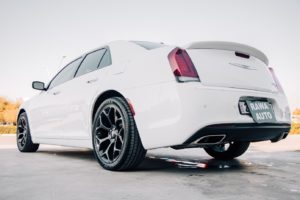 Most variants of the Chrysler 300 are equipped with timing chains. These require little maintenance and last a very long time. But there are also vehicles of this type equipped with belts. These vehicles require regular timing belt replacement.
The manufacturer Chrysler prescribes that the timing belt should be replaced after 168,000 km for the 300 model. Belt replacement intervals are prescribed for each engine type and year of manufacture. It is important to follow the same to avoid serious engine damage.
Chrysler PT Cruiser
When should the timing belt of the Chrysler PT Cruiser be replaced? When is the right time to replace the timing belt on the Chrysler PT Cruiser depends on both the engine and the year of manufacture of the vehicle. For many models of this type, the intervals are 96,000 km and 144,000 km. However, the mileage at which the timing belt should be replaced can also be quite different.
Chrysler Crossfire, timing chain or belt?
The Chrysler Crossfire is a sports car that is also available as a coupé station wagon and a roadster. It was built from 2003 to 2007. The engines of all models are equipped with a timing chain, making timing belt replacement unnecessary. Still, a timing chain is not maintenance-free. It too is subject to wear and tear. Therefore, a timing chain should also be checked from time to time. We recommend checking the timing chain regularly, especially in sports cars whose engines are more heavily loaded than those of a normal mid-size car.
More info on Chrysler? Then read on here:
Chrysler Home
Feb 2, 2023 | On the move, Safety |
According to Dutch traffic laws, you are obliged to secure a load or parts thereof. In any case, the load must be secured in such a way that loads cannot fall off the vehicle under normal circumstances. Normal circumstances also include poor road surface, sudden evasive manoeuvres or hard braking.
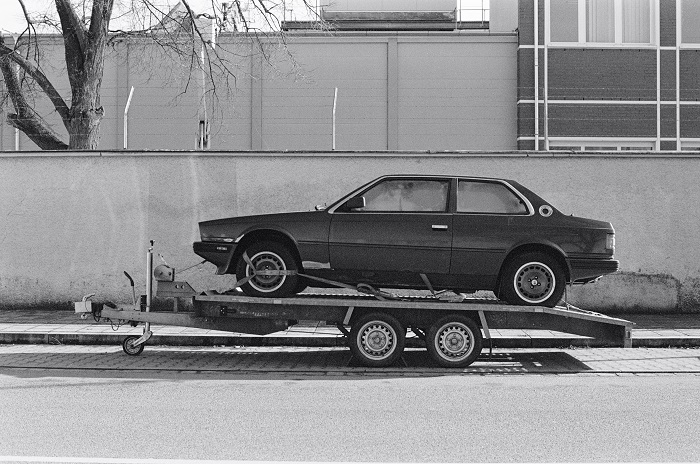
In what ways can you secure a load?
If you are going to transport goods in a trailer, for example, it is very important to use good equipment to secure your cargo. There are many companies, such as Lifting equipment expert, which have a wide range for securing a load. Here, you can think of cargo tensioners, lashing chains and lashing straps, for example.
Damage caused by an unsafely secured load to third parties
Should you not have secured the load, damage may occur. The first risk you face is damage caused by the load. Here, you can think about another road user's vehicle. If part of your cargo comes loose and hits another car, it can obviously be damaged. Another carrier's cargo may also be damaged. Of course, you will then also be liable for that, since you caused the damage.
Furthermore, of course, a road user can be injured by an unsafely secured load. This is the most annoying form of injury and an important reason to make sure your loads are always safely secured.
Damaged cargo
Should a part be damaged while transporting a load because it falls off the vehicle, for example, this can also be very annoying. However, the carrier is not always liable for the damage. If the client did not secure the cargo properly and sent the carrier on its way with this, the client itself is liable. This applies to damage to the cargo, but also to damage caused to third parties.
What do we mean by safe cargo securing?
A load is safely secured if the load will not slide during transport. Because of this, adequate cargo securing is essential for safe transport. This not only means that the door of your truck is properly closed, for example, but also that the cargo stays in place. So make sure you secure your cargo properly with lashing straps, for example. This is often forgotten, but can still cause a lot of damage if not secured properly.
Apart from securing cargo on the road, it is also important to properly secure cargo on water, rail and in the air. Wherever you are going to transport the cargo, make sure you use the right equipment and secure it in a safe way to avoid problems as much as possible.
How do you secure the cargo as safely as possible?
Are you going to purchase lashing straps? To ensure optimum safety, there are a number of safety rules for using these belts. First, it is important to remember that you cannot hoist with these chains. They are only suitable for securing a load.
Tyres should also never be stretched over sharp edges of the load. To prevent this, you can use corner guards or guides. This way, you ensure the safety of the load. Finally, it is also important to only use approved products, or have your new products approved by a certified party. So always make sure you use the right products that have been approved and that they are attached successfully to prevent damage to the load and to third parties!

 EN
EN  NL
NL  DE
DE