Nov 23, 2022 | Insurance |
If you own a car, you naturally take care of it. But sometimes an accident or collision is in a small corner. If you cause damage and claim it from the insurance company, in most cases this will affect the amount of your premium. If you build up claim-free years, you will receive a discount on your premium. This discount can be substantial. Sometimes you can also insure yourself for a reduction in your no-claim discount. Then the consequences will be less if you do have to make a claim with your insurer.
Own fault or not?
When claiming damages, it matters a lot who is at fault for the collision. If you have all-risk insurance and someone else hits you, the situation is obviously different from if you are the guilty party in a collision. In the latter case, the insurance will only pay out the damage to the other party if you are only third-party insured. With all-risk insurance, damage to your own car is also paid for. However, there is often an excess of sometimes several hundred euros. In all cases, you have to pay this amount yourself.
Changing insurance
 If you have claimed damages from Alpina or another car insurance policy then this is registered in the CIS, the Central Information System. This system can be consulted by all insurance companies. If you want to switch insurers, the CIS will be consulted. If this shows that you have claimed damage more often than average, you may be refused or a higher premium may be charged. You are also at risk of refusal if you have ever committed fraud or are known to be a defaulter of insurance premiums. You should also be aware that you cannot always take your accrued no-claims discount with you when you switch.
Assessment by an insurance expert
If you have damage to your car and want to claim it from the insurance company, you may have an expert come by. This is a representative of the insurance company. He will take the damage and assess the cost estimate of the garage that will repair the damage. It will also assess the claim form filled in by both parties or a report from the police. Only after the insurance company agrees can the car be repaired. Even in the case of a total loss, the insurer may send an expert to assess whether this conclusion is justified or not.
Damage to a leased car
If you have a leased car, you pay a fixed amount per month for this. This amount includes all-risk insurance. If you have damage, you can therefore often have the car repaired free of charge. It does not matter whether the collision was your fault or not. But again, of course, you are not supposed to report to the garage several times with self-inflicted damage. It is then likely that costs will be charged to you as a user. This is usually stipulated in the lease contract.
Which insurance is right for me?
If you are going to insure your car you will naturally look for a cheap car insurance. Nobody pays a high premium for fun. Always read the insurance conditions carefully, though. Sometimes a slightly more expensive insurance can be a better choice because it provides better cover, for instance. As a young person and as a novice driver, you always pay a higher premium. This is logical because the risk of damage is higher. Studies have shown this. The insurance company always estimates the risk of a claim and bases the amount of the premium on that.
Nov 18, 2022 | Tyres |
Shock absorbers are indispensable for good roadholding and therefore an integral part of any suspension in both cars and trucks. I can hear you thinking: what exactly is a shock absorber, suspension and suspension? And how do you recognise problems with these and how can they be solved? More background info on this page.
Suspension of the car
Suspension refers to everything to do with how the wheels are connected to the car's chassis. This includes the suspension system and shock absorbers. The complete system aims to support the car's weight and absorb and dampen shocks. As a result, the wheels of the car will reliably maintain contact with the road surface.
Spring system
If we then look further, the suspension system ensures that you can drive in a comfortable and safe manner and provides the (hopefully) good handling. The suspension system consists of the shock absorbers (or also called shock absorbers), springs and dampers.
Shock absorbers
Shock absorbers are part of the suspension system. The main function of shock absorbers is to ensure that vibrations and shocks are less noticeable while driving. They are thus absorbed. This allows the wheels to reliably make contact with the road and ensures comfort, good road holding and safety. A shock absorber is a cylinder containing a piston, which is connected to the wheel suspension via a rod.  To perform its function, a shock absorber must be able to absorb a certain amount of vibration. The amount of energy absorbed depends on the vehicle weight, spring stiffness and vibration frequency. The operation of hydraulic and hydropneumatic shock absorbers is based on two basic properties of the fluid: compressibility and viscosity. The principle of the hydraulic shock absorber is quite simple. A piston rod with a precisely calibrated valve system moves in the working cylinder filled with a special hydraulic fluid. The operating characteristics are individually selected for the best damping of each car's suspension.
Signals for faulty shock absorbers and suspension
As a driver, you need to be aware of the basic signals that indicate problems with the car's suspension. These signals can often be noticed while driving:
- Strong rocking of the car after passing a bump;
- Significant rocking of the car when braking;
- Uneven tyre wear;
- Leakage on the shock absorber (oil) or an oil slick on the ground;
- Pulling the vehicle to the side when the steering wheel is straight;
- Vibration on the body and on the brake pedal during braking
Do you recognise these signs? Then make sure you inspect quickly to see if anything is wrong and if you can (have) a defect discovered. Driving for too long and too many shocks that are not damped properly can lead to chassis damage and dangerous situations. The tyres will also wear unevenly and the car will be out of balance. Therefore, it is better to replace early to avoid repair and further damage. What can you do yourself? Visual inspection of the shock absorbers is always possible, they should be intact, not bent and/or dry. The axles should also be intact and in place. If there are leaks or other defects, the shock absorbers should be replaced. If in doubt, we advise you to make an appointment at a garage in your area.
What to do with worn shock absorbers?
Replacement is the most effective solution. When one shock absorber needs replacement, you do have to renew them as a pair. This is because when replacing one shock absorber, you have the chance of the car becoming unbalanced which is not good for comfort, wheels and safety. An overhaul is a pretty good way out, but with a few problems. But not all shock absorbers are renewable. That's the first thing, and the second is that it's not always easy to find a shop that knows how to do repairs properly. But it is possible. Suspensions can vary. In one case, for example, it's just wear and tear, which is typical when the car is used for a long time. And in another case, the car's wheel has hit a pothole in the road, which is especially dangerous at high speed. This is why different parts of the suspension can fail, as it is a whole unit. It is he first and foremost suffer when driving on bad roads. It is important for motorists to know in advance which suspension repair services are most in demand.
Information source:
Nov 17, 2022 | Buying advice |
Are you a car enthusiast? Then you naturally want to own a bolide that is unique. Whether it is a Ferrari, an Audi or a Mercedes Benz, most of us would like to be in the proud possession of an exclusive car someday.
Fortunately, you can find a wide range of exclusive cars. But finding the right exclusive car can be trickier than you thought beforehand. In this blog, we give you a helping hand by sharing some tips to help you successfully purchase an exclusive car.
Differences between buying a normal and exclusive car
 First of all, it is good to know the differences between buying a normal car and buying an exclusive bolide. When looking at exclusive cars, the biggest difference is, of course, the price. If you want to show off a unique car, you obviously have to be prepared to spend (a bit) more. It is also very important to inspect the car well to avoid surprises later on, because the more expensive the car is, the higher the repair costs will often be. So know well what you are buying and make sure the car is in good condition, or that it has no defects. If you don't have the necessary (technical) knowledge, preferably take someone with you who does. That way, you know what to look out for and what the possible pitfalls are.
Purchase through regular channels?
There are several ways you can buy an exclusive car. For instance, you can choose to buy the car through regular channels, such as marketplace or a car dealership. However, the danger with this is that you don't know whether the car is truly exclusive. You may then end up not being satisfied with your purchase after all. Moreover, you also run the risk of the car being stolen, or something else being wrong with it. Therefore, it is wise to buy an exclusive car from a registered garage or preferably a specialist.
Consider buying through a specialist
Our advice would be to buy through a specialist. A specialised car dealer has a lot of knowledge and can give you good advice and help you find the car of your dreams. There are of course many specialists like this in the Netherlands, such as a Engineroom.co.uk. This way, you can be sure you are dealing with people who know their stuff and that makes the journey to purchase a lot more pleasant anyway.
3 reasons for buying an exclusive car
A car is much more than a luxury item; a car is an asset, one that can prove to be an investment for the future. If you're about to take the plunge to buy your dream car, here are some reasons that might put you over the top.
- Luxury cars have high trade-in value: Whatever luxury brand you prefer, one thing you can be sure of is that luxury cars usually retain their value better than the average vehicle. Cars depreciate over time, but luxury cars usually have a higher trade-in value. In some cases, they may even increase over time. However, it is important to remember that caring for your car also plays an important role in terms of its value, so make sure you pay attention to the essential maintenance of your car.
- Safety features on luxury cars are usually better: Luxury car manufacturers take safety seriously, which contributes to the higher price tags. Safety features like blind spot warnings, extendable steering wheels and Hill Start Assist can save you an accident. While you may pay more for the car at first, the savings these safety features can bring in terms of insurance costs and medical bills can be significant.
- Comfort and beauty: there is no denying that the most luxurious bolides often also excel in both looks and comfort. With the help of your Jaguar, Porsche or BMW, driving to your holiday spot on the Cote d'azur is often a lot more comfortable.
If you have set your sights on treating yourself to a luxury vehicle, don't write off the idea based on price alone. It is important to look at the bigger picture and consider the ways in which your luxury car can be an investment in the future. It may seem like a lot of money to spend now, but think of the ways it can reap rewards later.
Good luck and most of all have fun riding!
Nov 16, 2022 | On the move |
Would you like to be able to transport your bike by car so you can cycle wherever you want? If so, a bike carrier is the answer. Bike carriers come in all kinds, but how do you know which one is right for you? The tips in this article will help you make an informed choice.
-
How many bikes do you want to transport?
First, consider how many bikes you want to be able to transport with the bike carrier. One, two or even more than that? On bike carriers (such as the bike carriers from Heuts) that are attached to the car's towbar or tailgate can usually hold one or two bicycles. On the roof, however, several (lightweight) bicycles can often be easily transported. 
-
Which bikes do you want to transport?
In addition, you need to think about what kind of bikes you want to be able to transport. For example, there are bike carriers that cannot handle heavy electric bikes. Bike carriers on the towbar can usually carry the most weight, and are therefore often suitable for electric bikes. Bike carriers on the tailgate and roof can carry less weight and are mainly used for transporting city or sports bikes.
-
Where do you want to place the bike carrier?
A bike carrier is mounted on the towbar, on the boot or on the roof of the car. Would you like a bike carrier on the towbar? First check what the maximum nose weight of the towbar is. Is it important to keep the boot of the car accessible? Then choose a bike carrier on towbar with a tilt function or consider a bike carrier on the roof. Would you like to transport your bikes on the roof? Be aware that height and air resistance will increase while driving.
-
How can you connect the bike carrier?
When buying a bike carrier, it is important to pay close attention to the electrical connection of the bike carrier to the car, so that the car lighting continues to function as it should. The connection is usually a 7- or 13-pin plug. Here, it is important that the bike carrier has a similar connection.
Nov 6, 2022 | Buying advice |
The fourth generation of the Skoda Octavia premiered in November 2019. The vehicle model, considered a popular alternative to the VW Passat, is available as a sedan or station wagon. The fourth Skoda Octavia has been continuously developed over the past few years but are teething problems and issues (as with its predecessor, the Octavia III) therefore out of the question? Sadly, no! Even in its early years, the Skoda Octavia IV did not leave a flawless impression. Car owners suffer from several weaknesses and faults that both estate cars and sedans bring with them. It does not matter whether the models have petrol or diesel engines or hybrids. Although this Skod is well known and Skoda drivers generally consider it a solid and reliable car, this model also has its weaknesses. On this page, some things car owners should definitely look out for.
Common complaints about the Skoda Octavia IV
Here is a brief list of common complaints about the Skoda Octavia IV:
- Numerous error messages & electronic problems
- Software updates required
- Dazzling chrome strips in the interior
- Forgotten transport locks
Conclusion: electronics are this car's weak point. With the Skoda Octavia IV, drivers get a solid vehicle that impresses with stable technology. It remains to be seen how the model will perform at periodic inspections in the coming years. However, it is clear that the electronics are one of the Skoda Octavia IV's biggest weaknesses.
Fan noise
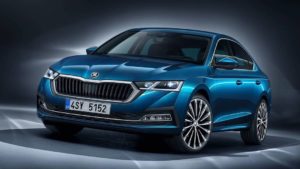 It is not unusual for the cooling fan to continue running for a few minutes after the Skoda Octavia IV has been switched off. However, some motorists' concerns that there might be a problem are unfounded. The trailing edge was already a debated issue with the predecessor and nothing has changed in the fourth generation. If the car is switched off while the particulate filter is being cleaned, the fan continues to run for a while to complete the process. No reason to panic!
Oil sensor and oil level problems
Investigations have revealed that some Skoda owners also have problems with the oil sensor. An error message then appears on the screen advising drivers to go to the workshop. The fault is apparently known to Skoda and is not based on a faulty oil sensor, but on a software error. An update may help.
The oil sensor is needed to inform that an oil change is necessary. Also in this context, we heard about several error messages because the message did not go out after checking and topping up the engine oil. If this happens, the dipstick should be pulled out and reinserted to clear the message.
Noise pollution from forgotten transport locks
In fact, this "problem" is not unique. Several Skoda Octavia IV owners reported unusual driving noises while driving, such as rumbling or rattling of the chassis. As it turned out, the dealers had forgotten to remove the transport locks of the shock absorbers. The rubber buffers are often used to limit the suspension travel of new cars and increase the ride height to prevent damage during transport by train or ship. Buffers are usually recognisable at first glance by having a visible colour, such as yellow or blue.
Design and finishing
Sounds crazy, but many Octavia owners are bothered by the chrome strips on the inside of the doors. Why? Depending on the sunlight, the strips can become so shiny from the sun's rays that they work to dazzle and therefore pose a safety risk. Some owners have even already covered the trim strips with film to avoid the annoying glare. In some models, for example the "Ambition", the strips are black anyway.
In terms of quality, some motorists criticise the finish of the door and window mouldings. What is particularly annoying is the skewed alignment of the two chrome strips on the window, which is clearly visible on some vehicles between the front and rear doors. The use of hard plastic in the car can look slightly cheap but then the Skoda Octavia IV is considerably cheaper than the clearly better-finished VW Passat.
Various electronic problems and error messages
Numerous Skoda Octavia IV owners report various electronic problems and error messages appearing on the display. The front assistant, which warns the driver of approaching dangers, is often affected.
There are also complaints about error messages related to the cruise control, parking aid and emergency braking system, for example.
This also applies to the "eCall" emergency call system, airbags and navigation system. The car can still be driven as normal but drivers should be prepared for the annoying error messages and warnings. It is still unclear whether various software updates (sometimes through recalls) will help fix the errors.
Tip: it may help not to start the car immediately, but to turn on the ignition for a few seconds before starting the engine. Some owners have had good experiences with this and report that it has reduced the number of error messages (including Bluetooth or CarPlay problems).
Recall: software updates needed
Some Skoda owners were contacted by the manufacturer because an intervention on the vehicle was necessary. This was a "product optimisation" and, in most cases, the software was updated to version 1668 and, in some cases, the screw connection of the headlights was repaired.
User experiences Skoda Octavia IV
- I have an Octavia RS DSG TDI dated 01/2022 and actually want to return the car immediately. I have driven Skoda for a long time (previously Octavia III RS and Superb) and have always been satisfied. Even the finish of the Octavia 4 is a disgrace. The gaps between the doors, the trims and between the rear wing and the bumper are substandard. In long right turns with bumps, I always hear a grinding noise which cannot be the intention.
- The electronic problems that often occur while driving are sometimes clearly dangerous. I have started writing a logbook to show the extent in the garage. It is almost impossible to make three trips without an error message appearing.
- In the best of weather, several sensors suddenly fail on the highway. The speakers remain silent and with them the failure of the radio, SmartLink music, hands-free system, SOS emergency call and all sensors reporting through the speakers (rebooting the entertainment system does not help here).
- Parts of the touchscreen are often completely dead, making it impossible to control the air conditioning, for example. Google Maps navigation via SmartLink becomes completely grainy after 2-5 minutes and has to be restarted again and again. Although the system is online, it does not display any traffic jams or obstructions.
- If you have to start reversing immediately after starting, the image from the reversing camera is often not available until everything is ready.
- Dialing in to the user profile sometimes does not work and you drive as a guest (all radio station memories and other settings are gone). Manually switching to the main user often succeeds only after several attempts. The response and precision of the touchscreen is not fine and leads to numerous operating errors and incorrect entries and a lot of frustration.
- Besides the persistent faults mentioned, I have already had many other things fixed by the dealer, for example, a wrongly installed horn button/airbag cover, a wrongly installed sound generator or wiper water channels that caused a vibration in the whole windscreen/dashboard area and a loose 230V socket in the rear.
Conclusion
- Numerous error messages & electronic problems
- Software updates required
- Dazzling chrome strips in the interior
- Forgotten transport locks
Conclusion: electronics are this car's weak point. With the Skoda Octavia IV, drivers get a solid vehicle that impresses with stable technology. It remains to be seen how the model will perform at periodic inspections in the coming years. However, it is clear that the electronics are one of the Skoda Octavia IV's biggest weaknesses.
Many drivers report numerous error messages and problems with assistance systems no longer working. On the other hand, mild criticism of the workmanship is almost negligible. The good news is that there are now several updates to the software that seem to bring partial success. It is also useful to wait a few seconds between turning on the ignition and starting the engine to avoid error messages.
The Skoda Octavia IV has been available since 2020. Perhaps you have had your own experience with this car in recent years? Then tell us about your experiences via the comment function. Thank you very much!
Want to read more about Skoda? Then read on here:
Skoda home

 EN
EN  NL
NL  DE
DE