Dec 5, 2022 | Buying advice |
Due to the shortage of chips, among other things, fewer cars are being produced. Car dealers often face model shortages in 2022, which means consumers sometimes have to wait months before they can actually drive a car they have bought.
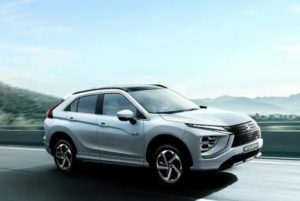 We were recently alerted to the new platform Mitsubishi-kopen.co.uk from Mitsubishi Netherlands which lists cars available directly from stock. This "Direct drive"models from different Mitsubishi dealers are collected together on the website. This gives you, the buyer, a nice overview of where which model is ready to go immediately. Handy anyway!
Instantly drive a new Mitsubishi
It will also provide space for models that are in stock as standard. For now, that is the Eclipse Cross PHEV, but here very soon the new Mitsubishi ASX added.
What about these models again? Here we will briefly discuss:
Eclipse Cross PHEV
The Eclipse Cross PHEV offers the best of 2 worlds. On the one hand, you can drive fully electric (for daily commutes), with the flexibility of a petrol engine for longer journeys. Unlike most hybrid vehicles, the Eclipse Cross PHEV has no less than two electric motors and all-wheel drive as standard. This ensures a quiet, comfortable driving experience with smooth acceleration and optimum traction and grip in all conditions.
A calculation example to get a better idea. Paris is only 475 km away from Utrecht, well within reach of the Eclipse Cross PHEV with a full drive battery and a full tank. On the way back, you only fill up once and, if you wish, you can fully recharge the drive battery at one of the many charging points you can find along the road these days.
Mitsubishi ASX
The ASX is available with a traditional petrol engine, as a parallel hybrid and as a plug-in hybrid. The standard petrol engine is already good for fine performance and is even lively when the sport mode is chosen. The hybrids not only provide lower consumption, but also better performance. This is because the electric motor's contribution provides more agility at low speeds and more power at high speeds (faster intermediate sprints). The plug-in hybrid is the most expensive version because of its large battery, but it is by far the most fuel-efficient and therefore the most economical per kilometre.
The new generation has a more mature character and more modern equipment (luxury and safety). Moreover, the hybrid engines provide lower consumption, better performance and more comfort.
Dec 5, 2022 | Buying advice |
Renault's all-new SUV is the Renault Austral, a family SUV with full hybrid system and packed with tech gadgets. Is it enough to compete with rivals? And is the Buy Austral a good idea?
 In the Netherlands, the Austral is available as a so-called 'mild-hybrid' with a new 1.2 three-cylinder turbo engine with 130 hp and 48-volt support, and a full-hybrid engine with an output of 200 hp. Interestingly, a plug-in hybrid version has not been chosen.
Specifications Renault Austral
A look at the figures shows that the Austral is right in the middle of the family SUV landscape in terms of performance. With a total power output (petrol and electric) of 199 hp and a 0-100 km/h time of 8.4 seconds, the Austral lags behind, say, the more powerful Kia Sportage hybrid, but it will be faster than, say, the Ford Kuga hybrid.
It also comes with a hefty 2 kWh battery pack to power the hybrid system's electric motor; this is larger than the batteries used by the competition, and should allow you to drive longer on electric power at city speeds.
Consumption Austral
Thanks to the electric motor and large battery pack, the Hybrid achieves consumption of 4.6 l/100 km (1 on 21.7), while the mild hybrid does 5.2 l/100 km (1 on 19.2).
The Austral always starts from standstill electrically and can (in theory) drive without engaging the petrol engine. However, this depends on whether you go easy on the throttle and whether there is enough charge in the battery. Most of the time, however, you notice that after a solid wave of initial electric acceleration, the engine kicks in to provide more power to keep up with traffic.
If you want some extra power on the go, such as when overtaking or merging on the motorway, the Australian's gearbox unfortunately takes a bit too long to shift into a gear, leaving a gap between your demand for power and speed. The Sportage hybrid does respond a lot faster in such situations.
Steering and handling
The steering seems nicely weighted and pleasantly precise for family SUVs, but the Renault Austral goes one step further by offering the option of all-wheel steering (4Control). This drastically reduces the turning circle to 10.1m (the much smaller Captur requires 11.1m), making the Austral easy to manoeuvre in city traffic.
The Austral's suspension is soft, making it comfortable. In sport mode, sporty drivers can indulge themselves because then the car shows a surprisingly dynamic side. You can choose from a drop-down menu how much room you want from the assistance systems to bang through corners hard. Our advice would be to avoid the larger 20-inch wheels, though, as they transmit the impact of potholes and rough roads at low speed. The smaller 18-inch wheels should solve this problem and should also cause less road noise.
Interior and technical gadgets
If you like big screens, you will no doubt have a fondness for the Austral. You get a 12-inch digital multimedia screen in the centre console. The design of the dashboard resembles that of the Megane E-Tech Electric. Fortunately, Renault opted for real buttons for the main functions, which makes the controls more logical. Think of various climate functions.
Of course, using a Google-based voice control system, you don't have to touch the screen itself. You can give the Austral voice commands to adjust the air conditioning, control the navigation or even change the driving mode, for example, if you want. This would even be our preference for convenience and safety while driving.
The same compliment can be used to describe the rest of the interior, which has many soft finishes, with cheaper plastics well hidden from the driver's field of vision. The plastics used in the rear do tend to be of the harder variety but that is also common among competitors and not distracting.
The driver's seat is widely adjustable and there is plenty of head and legroom in the front for occupants. Helped by the sliding rear seats, there is more legroom in the back than in the rear than, say, the Sportage. The boot is quite spacious, holding 499-1525 litres (Nissan Qashqai: 504-1447 litres).
Conclusion
The 130 hp version of the Renault Austral will be on showrooms from this month (December 2022) and starts with prices starting from 36,480 euros. For 2000,- more, you have the Esprit Alpine model (the new name for R.S. Line), equipped with choice extras such as all-wheel steering and the fine Harmon Kardon sound system. For now, no electric version of the Austral is planned.
All in all, according to connoisseurs and various test reports, it is a quiet and comfortable SUV with very few downsides. Will this kick-start the Renaulution for Renault? Or will it only happen once the electric versions of the Renault 4 and 5 appear? We will keep an eye on it.
Nov 28, 2022 | Buying advice |
While petrol and diesel prices shoot through the roof, we still continue to enjoy driving on the road together. It is therefore not an unnecessary luxury to take a critical look at your car's consumption. Here is a list of the 10 most fuel-efficient cars currently available. These are petrol cars without a charging port (but often with a mild hybrid electric motor).
Remember that this is the fuel consumption as given by the factory, so this may be different when you tear through the streets like a Schumacher. But however you look at it then the following cars will still be the most economical choices:
Most fuel-efficient cars, overview of petrol consumption and CO2 emissions
- 1 Toyota Yaris Hybrid/Mazda 2 Hybrid CO2 86 g/km Consumption 3.8 l/100 km 1:26.3
- 2 Renault Clio E-Tech Hybrid CO2 145 g/km Consumption 4.2 l/100 km 1:23.8
- 3 Toyota Corolla 1.8 Hybrid CO2 101 g/km Consumption 4.5 l/100 km 1:22.2
- 4 Honda Jazz Hybrid CO2 102 g/km Consumption 4.5l/100km 1:22.2
- 5 Fiat 500 1.0 Hybrid CO2 105 g/km Consumption 4.6 l/100 km 1:21.1
- 6 Suzuki Swift 1.2 Smart Hybrid CO2 106 g/km Consumption 4.7 l/100 km 1:21.1
- 7 Toyota Aygo X CO2 108 g/km Consumption 4.7 l/100 km 1:21.2
- 8 Hyundai i10 CO2 109 g/km Consumption 4.8 l/100 km 1:20.8
- 9 Toyota C-HR 1.8 Hybrid CO2 110 g/km Consumption 4.9 l/100 km 1:20.4
- 10 Suzuki Ignis 1.2 Smart Hybrid CO2 110 g/km Consumption 4.9l/100 km 1:20.4
1: Toyota Yaris Hybrid/Mazda 2 Hybrid
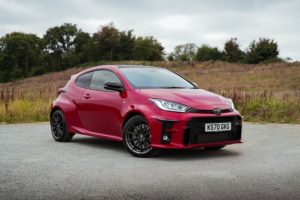 In first place we find the Toyota Yaris Hybrid/ Mazda 2 Hybrid, which, according to the figures, with a consumption of 1 in 26.3, is a very economical car indeed (without charging cable!). A shared spot as this car is marketed by both Toyota and Mazda as the exact same model.
2. Renault Clio E-Tech Hybrid
A nice car to look at and also nice and smooth with 143 hp. According to the specifications, it should be possible to drive 1:24, not bad.
3. Toyota Corolla 1.8 Hybrid/Suzuki Swace 1.8 Hybrid
A shared place for the Toyota Corolla and the Suzuki Swace which both share the same powertrain. consumption comes down to 4.5 l/100 km.
4. Honda Jazz Hybrid
A full hybrid but this time without a plug from the Honda brand. This little Jazz is surprisingly spacious and has a consumption of just 1 in 22.2.
5. Fiat 500 1.0 Hybrid
Seen a lot on the road and still a favourite with many people, the Fiat 500. This car has very low fuel consumption, 1 in 21.1, thanks to its mild hybrid engine. Of course, if that's not enough, you can also opt for the all-electric Fiat 500e.
6. Suzuki Swift 1.2 Smart Hybrid
A beautiful car to look at and very economical at the same time. By the way, this model has the same powertrain as the Suzuki Ignis that we come across at spot 10.
7. Toyota Aygo X 1.0 VVT-i
The Aygo, who doesn't know it. And this is not the only Toyota in the list, either! It is a relatively small and light car and because of its fuel-efficient engine, you end up with 1 in 20 but in practice this turns out to be even more favourable.
8. Hyundai i10 1.0i
A small and light car with consumption of 1 in 20.8. Very economical and that without electric assistance.
9. Toyota C-HR 1.8 Hybrid
This Toyota is the biggest car in the list, so how is it possible that it still made it into the list? This is mainly because Toyota is a forerunner in developing hybrid technologies and they are now reaping the benefits. The Toyota CH-R ranks 8th with 1 in 20.4.
10. Suzuki Ignis 1.2 Smart Hybrid
And the straggler of this list is the Suzuki Ignis. This car also features mild hybrid technology which means the petrol engine is supported by a small electric motor. In this case, that yields consumption of 1 in 20.4.
Nov 25, 2022 | Buying advice |
Every year, the Consumers' Association does a survey on what the most reliable car brands are. Of course, this is a nice list to have to hand when you are looking for a new car! These days, cars are brimming with electronics and, unfortunately, this can also often result in dashboard lights starting to come on (or, of course, an icon on your all-digital dasboard).
Read on quickly about what came out of the Consumer Association survey.
Most reliable brand
As you are no doubt often told at your uncles' and aunts' birthdays, Japanese or South Korean cars are solid buckets. And they are right! In the top 10, there are no fewer than 9 brands from Japan or South Korea, not bad!
 By 2021, Mitsubishi still the frontrunner now is that Suzuki (stood at 2 last year). Suzuki has 5 models on the road that score higher than 7.4, most notably the Celerio, Ignis, Swift, SX4 and Vitara. Here is the complete list:
| Brand |
Grade |
| 1. |
Suzuki |
8,5 |
| 2. |
Mitsubishi |
8,4 |
| 3. |
Subaru |
8,3 |
| 4. |
Toyota |
7,9 |
| 5. |
BMW
Honda
Mazda |
7,6 |
| 8. |
Kia
Lexus |
7,5 |
| 10. |
Hyundai |
7,2 |
| 11. |
Seat |
7,1 |
| 12. |
Mercedes-Benz |
7,0 |
| 13. |
Dacia
Skoda |
6,9 |
| 15. |
Volvo |
6,8 |
| 16. |
Opel |
6,6 |
| 17. |
Audi |
6,5 |
| 18. |
Nissan
Peugeot
Volkswagen |
6,4 |
| 21. |
Fiat
Ford
Renault |
6,1 |
| 24. |
Citroën |
6,0 |
Which car comes out best in the survey?
If we look at which car is the most reliable, it comes down to the Mitsubishi ASX. A fine car to look at but therefore also very reliable according to those surveyed. This is a compact SUV from the Japanese brand and has been on the road since 2012. According to the Consumers' Association, only 1 per cent of ASX drivers broke down last year, other less urgent repairs were also almost non-existent.
The conclusion?
Want a nice reliable car? Then go for a Japanese or South Korean model! For years, these cars have proven to cause few problems that allow you to hit the road without any worries. Want to read more or take part in next year's survey? Then visit the site of the consumer association.
Nov 23, 2022 | EV |
That more and more people are driving electric should be obvious. Because of this increase, it also happens regularly that the public charging points in the neighbourhood are increasingly occupied. As a result, you cannot charge your electric car, which means you cannot go to work the next day. Very annoying, of course! However, there are ways to solve this of which the most obvious is: by installing a charging station (or charging stations with multiple cars) be installed at home. As there are several variants of the posts on the market, you can fully adapt the charging post to your situation. Before you can start using the charging station, however, some work needs to be carried out. But what work should you think about before installation?
The models and their own work
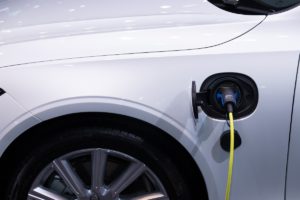 If you want to have your charging stations installed, it is first important to know which model you are buying. There are free-standing models, which you need to place in the ground, and also wall-mounted charging stations. It depends on the available space which model you choose. Once you have chosen the model, you can also see what additional work is required for installation. For a freestanding variant, for example, you need to do some digging. You will need to place the pole in the ground and the cables will also have to go through the ground to your meter box. So this can take extra time compared to the wall-mounted boxes that you can use as charging points.
Making the distribution board safe for use
During installation, changes should also be made to the distribution board. The number of groups is often not enough to connect all electrical appliances and a charging station can carry a lot of load. A professional will therefore install an extra group and modify the meter box in such a way that it is safe enough for you to use all electrical appliances at the same time. This will prevent you from still being unable to charge your car or from not having all the conveniences in the house and everything around it. However, it does involve extra work to take into account.
No unexpected extra charges with recharging
Once you have installed the charge post, you can use it immediately. Using the corresponding charging card, which is linked to your bank account, you activate the post. You connect the corresponding cable between the charging station and the car and it will immediately start charging. As soon as your electric car has a full battery, the post will switch off again. The security on each charging station ensures that no one else can use your charging station, so you won't incur unexpectedly high costs. All you can do is enjoy the conveniences you get with your charging station.

 EN
EN  NL
NL  DE
DE