Jul 4, 2022 | EV, Peugeot |
The electric car finally seems to be on the verge of a breakthrough, offering significant environmental benefits, especially in urban areas. Innovative business models are emerging that should boost consumer acceptance and overcome remaining obstacles, such as high battery costs, green electricity supply and charging infrastructure.
Several European countries, as well as the US, Japan, China and others, have recently announced plans for the introduction of electric vehicles. These plans include tax incentives, funding for research into batteries and electric vehicles and plans for the construction of charging infrastructure. Major cities such as London and Paris have announced electric car-sharing schemes, while government departments and companies with large fleets are purchasing electric vehicles.
Are electric cars better for the environment?
Research has shown that electric cars are better for the environment. They emit fewer greenhouse gases and air pollutants than petrol or diesel cars. And this takes into account their production and the electricity needed to keep them running.
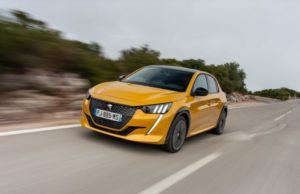 If you are thinking of buying or leasing an electric car, check out some online leasing offers for the best cars and prices. You can choose a Tesla, but also an electric car from another well-known brand. Think for example of the Peugeot 208 private lease.
The great advantage of electric cars is the contribution they can make to improving air quality in towns and cities. Since they have no exhaust, pure electric cars do not produce any CO2 emissions when driven. This significantly reduces air pollution.
Electric cars have been inaccessible for a long time due to the high cost of acquisition. However, it is clear that the price is getting lower and that they are being purchased more and more often. If you then also opt for private leasing, the purchase price is no longer a problem at all.
How does electric car production affect the environment?
However, a lot of energy is used in making electric cars. Even if you include the manufacture of batteries, electric cars are still a greener option. This is because of the reduction in emissions that occurs during the life of the car.
Emissions from the production of an electric car are usually higher than those from an ordinary car. This is due to the manufacture of lithium-ion batteries, which are an essential part of an electric car. More than a third of the lifetime CO2 emissions of an electric car come from the energy used to make the car itself. As technology advances, this is changing for the better.
Reuse and recycling of batteries is also a growing market
Research into the use of used batteries is looking for ways to reuse batteries in new technologies such as electricity storage. One day, we could all have batteries in our homes used to store our own energy. Opportunities like this will reduce the lifetime environmental impact of battery manufacturing.
Integrated concepts for transport and energy
To be a success, the electric car must be marketed as part of a total transport and energy concept and not as a stand-alone technology. For millions of vehicles to be connected to power grids without harming the environment, there needs to be an integrated approach to electricity supply and demand to ensure the use of green electricity sources. All in all, things are moving in the right direction!
Jun 30, 2022 | Financial |
Administration. Hardly anyone is really fond of it right now. Privately, no, chores involving paperwork we almost all put off as long as possible. This is of course true of administration at work. Generally, we find it a lot of work and we don't see the point of it. You can have a good discussion about the latter.
The amount of time it takes, there's no need to argue about that: yes, it often involves a lot of hours. But did you know that in many cases you can reduce these enormously?

Less work on the fleet
In many companies, the vehicle fleet is something that involves a lot of administration. Whether it be vehicles owned by the company, which are only used during the course of a business, or vehicles that are used for the purpose of business, the
working time is driven, or to lease cars, which go home with employees at the end of the day, extra work in the form of trip recording is (almost) always there.
Much of that work stems from the requirements of the tax authorities. tripregistration. The tax authorities would like to know exactly which journeys are made with a business
car are driven and under what heading these trips fall. Not because they are necessarily so curious, but because they want to know whether the vehicle is also used privately. If that is the case, an additional taxable benefit is calculated on an employee's gross income. If you don't want an additional taxable benefit, you can still drive 500km privately before this takes effect. This is actually a wash, most people do drive 500km privately per month. So then you are bound by the additional taxable benefit.
How does addition work (in brief)
The addition for your lease car is calculated as follows: percentage addition x catalogue value - own contribution (if you have one).
an example:
Your lease car has a purchase value of €30,000, and an additional taxable value of 25%, and you have an own contribution of €1,500 per year.
The taxable addition is then: 25% of €30,000 - €1,500 = €6,000 addition per year.
For the net addition, this amount is multiplied by the applicable income tax rate. For example, if the income tax rate is 37%, then in the above example, the net addition is 37% of €6,000, i.e. €2,220 per year
To know for sure whether a vehicle is being used privately or not, every kilometre driven in it will have to be recorded. Unless it is immediately decided that the
additional taxable income is going to be paid anyway, which can be the case, for example, with lease cars that employees are allowed to use at their own discretion. Trip registration can be quite time-consuming and
But you don't have to! Nowadays, you can also automate it almost completely. A built-in system based on GPS will then take over the mileage registration
and delivers an overview that meets all the requirements of the tax authorities. This will cost both the director and the administration department a lot less time and effort!
What else can be automatic?
No longer having to keep such records manually saves a lot of time and frees up employees to do other things. It inspires
Perhaps we should look further. Are there more things we can do (semi) automatically in the area of administration? Often, yes. What exactly, that is often
Depending on the sector in which a company is active. But the fact is that increasing automation can certainly reduce some of our administration, and we are reaping the rewards.
all the fruits of it.
Jun 22, 2022 | Timing belt |
Does your Honda have a timing belt or chain and what is the interval for replacing the timing belt? On this page an overview of the different Honda models. As you can see, especially the older models are still equipped with timing belts, like the Civic, Accord and CRV. The new Honda models are almost all equipped with a chain.
A belt needs to be replaced at regular intervals, while a chain is generally good for the life of the engine and requires no maintenance.
Interval replacement timing belt Honda
Click on one of the following pages for an overview of when the timing belt needs to be replaced per Honda model:
Honda timing belt or timing chain?
| 2008 to 2014 Accord V6 3.5 |
Belt |
| 2008 to 2014 Odyssey pilot and Ridgeline V6 3.5 |
Belt |
| 2006 to 2007 Accord V6 3.0 |
Belt |
| 2006 to 2016 Civic |
Chain |
| 2005 Accord 3.0 |
Belt |
| 2003 to 2011 Element |
Chain |
| 2003 to 2016 CR-V |
Chain |
| 2003 to 2004 Accord 3.0 |
Belt |
| 2003 to 2016 Accord - 2.4 |
Chain |
| 2003 to 2004 Odyssey and Pilot V6 3.5 |
Belt |
| 2002 Civic 1.7 |
Belt |
| 2002 Accord 2.3 |
Belt |
| 2002 Accord 3.0 |
Belt |
| 2002 Passport 3.2 |
Belt |
| 2002 Odyssey 3.5 |
Belt |
| 2001 Civic 1.7 |
Belt |
| 2001 CRV 2.0 |
Belt |
| 2001 Prelude 2.2 |
Belt |
| 2001 2.3 Accord |
Belt |
| 2001 Passport 3.2 |
Belt |
| 2001 Odyssey 3.5 |
Belt |
| 1999 to 2000 Civic 1.6 |
Belt |
| 1999 to 2000 CRV 2.0 |
Belt |
| 1999 to 2000 Prelude 2.2 |
Belt |
| 1999 to 2000 Accord 2.3 |
Belt |
| 1999 to 2000 Passport 3.2 |
Belt |
| 1999 to 2000 Odyssey 3.5 |
Belt |
| 1998 Civic 1.6 |
Belt |
| 1998 CRV 2.0 |
Belt |
| 1998 Prelude 2.2 |
Belt |
| 1998 Odyssey and accord 2.3 |
Belt |
| 1998 Accord 3.0 |
Belt |
| 1998 Passport 3.2 |
Belt |
| 1997 Civic 1.6 |
Belt |
| 1997 Del sol 1.6 |
Belt |
| 1997 CRV 2.0 |
Belt |
| 1997 Accord 2.2 |
Belt |
| 1997 Odyssey 2.2 |
Belt |
| 1997 Prelude 2.2 |
Belt |
| 1997 Accord 2.7 |
Belt |
| 1997 passport 3.2 |
Belt |
| 1996 Civic 1.6 |
Belt |
| 1996 Del sol 1.6 |
Belt |
| 1996 Accord 2.2 |
Belt |
| 1996 Odyssey 2.2 |
Belt |
| 1996 Prelude 2.2 |
Belt |
| 1996 Prelude 2.3 |
Belt |
| 1996 passport 2.6 |
Belt |
| 1996 Accord 2.7 |
Belt |
| 1996 Passport 3.2 |
Belt |
Jun 19, 2022 | EV |
In the first phase, which was characterised by a relatively low percentage of electric cars, charging mainly took place at home or in other private places such as office buildings. Charging services were mainly paid per minute or per hour and a large number of charging stations could be used free of charge, as low charging volumes meant relatively low costs for the operator of the charging station. Generally, the infrastructure of the charging station was "simple", i.e. not connected to any cloud-based service.

In the second phase, the supply was increased (since)
During the second phase, electric car sales began to increase rapidly. Mode 3 enabled the use of smart charging infrastructure and the focus shifted to public charging stations. Currently, most regions in Europe and the US are in this phase. Smart charging allows digital services to be equipped with more complex payment options and features for balancing charging volumes and flexible access management. Charging station operators have emerged to offer these features and have great control over the ecosystem. Consider Shell.
The 3rd development phase of the charging station market
In the third, long-term phase, electric vehicles play a key role in the power system. To protect the power system from the new demand for electricity due to the high penetration rate of electric cars, operators must respond to the needs of transmission system operators and distribution system operators. And thus provide ancillary and balancing services. This new demand would create great opportunities for operators who can now start acquiring the necessary electric vehicles and charging stations to offer these valuable V2G services.
Taking the above phases into account, Charge Passes are becoming increasingly relevant
As described above, it is probably only a matter of time before the majority of cars are electric. And if your company fleet already has a considerable number of electric cars, it is of course important to be able to keep track of expenses and declarations. The company Travelcard makes this possible. With the Travelcard charge card you can charge at a network of more than 250,000 charging points. A charging card makes driving an electric car easy and economical. For example, you can choose to use the charging card to pay for tolls and vignettes.
Jun 14, 2022 | Timing belt |
Do you own a Kia and wonder if it has a timing belt or timing chain? Most Kia cars have a chain and therefore no timing belt. Only the following models have a belt:
- Timing belt Kia Picanto 1 litre petrol (2009-2011)
- Timing belt Kia Carnival 2.9 diesel (2001-2009)
The distribution chain is largely maintenance-free, while a replacement interval applies to the distribution belt. If you want to be sure, we always recommend consulting the instruction booklet to find out whether your car has a distribution belt or a distribution chain.
When to replace a Kia timing belt
 Do you have one of the aforementioned Kia models with a timing belt? Make sure that the belt is replaced on time. If the belt wears out and snaps, you'll be worse off than before. Check the service booklet to see if you can find information about the last replacement date. If it is not there, see if there is a sticker under the bonnet with the last date or mileage when the belt was last replaced. If you do not know when the belt was last replaced and cannot find a sticker, it is wise to have the timing belt replaced immediately.
- KIA PICANTO (SA) 1.0 (45 kW, 999 ccm, 04/2004 - 04/2011)
- At every 135,000 km or every 9 years
-
KIA PICANTO (SA) 1.1 (48 kW, 1086 ccm, 04/2004 - 04/2011)
- At every 135,000 km or every 9 years
-
KIA PICANTO (SA) 1.0 (46 kW, 999 ccm, 04/2004 - 04/2011)
- At every 135,000 km or every 9 years
When to replace a Kia timing chain
That a distribution chain lasts a lot longer than a belt should be clear, but a chain can also cause problems. In general people say that a chain can last up to 300,000 km but in practice it can happen that the chain stretches which can cause a rattling noise. So it is important to have the car checked regularly and to inspect the chain properly during the maintenance to prevent possible problems and damage.

 EN
EN  NL
NL  DE
DE