Jun 4, 2022 | Various, On the move |
What do you need to consider when driving with a trailer? Whether it's a cart, caravan, folding caravan or trailer; before you start driving there are a few things you need to bear in mind. On this page you will find a list of useful tips before going on holiday with a trailer behind your car.
Checklist for the trailer
- Is the load properly distributed and secured?
- Do you have an extra number plate for the trailer?
- Is the trailer tyre pressure correct?
- Is the trailer properly hitched and coupled?
- Is the breakaway cable securely fastened?
- Does the electrical connection between vehicle and trailer work?
- Are the trailer lights working?
- Have you released the handbrake and turned the nose wheel up?
- Have you adjusted your car's rear-view mirrors properly?
- Aren't the car's headlights set too high when fully loaded?
Drive with the right towbar
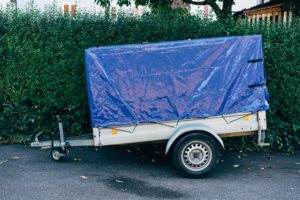 If you are travelling with a caravan for the first time and need a new towbar, you can easily buy one online or through a garage and have it installed. Many vehicles are fitted with a towbar as standard, but this is not the case with all cars. A detachable model is also an option and has the advantage that you only attach it as soon as you want to use it. Want more info on a hitch mounting? Then read on this page.
Driving with a trailer: change in driving behaviour
When driving with a trailer for the first time, you will notice a change in driving behaviour. The car is, of course, overall longer, which means that parking has to be done differently. When turning, the car will swerve and also when reversing, you have to practise driving correctly. When it is windy, tall caravans and trailers can catch wind more easily and start to sway. At such times, the motto is to drive carefully and more slowly. The ANWB offers further tips for driving in windy and stormy weather.
Secure the load
It is important to distribute the load on the trailer evenly and secure the load properly with lashing straps and nets to avoid danger to fellow road users (and yourself, of course!). There is no legal obligation to cover all loose cargo. However, you should prevent loose cargo from causing danger or hindrance by the cargo falling off or blowing off. On the government website in article 5.18.6 section 2 of the Vehicles Regulation state the requirements on how to cover cargo:
"Loose load which by its nature cannot be secured to or on the vehicle shall be properly covered if danger or nuisance arises or is likely to arise due to falling or blowing load."
How fast can you drive with a trailer?
And one of the most popular questions: how fast can you go with a trailer? The maximum speed with a trailer depends on the weight of the trailer. Under 3500 kilos, you are allowed to drive 90 kilometres per hour on motorways. When the weight exceeds 3500 kilos, the maximum speed is 80 kilometres per hour.
If you want to drive abroad with a trailer, always enquire in the country concerned about the maximum permitted speed. So if you are going on holiday with a trailer or caravan, it is important to be aware of this and to look it up and check it in advance for each country. Below is a list per country.
| Country |
Maximum permitted mass |
Permitted speed |
| Belgium |
<3500 kg |
120 km/h |
|
>3500 kg |
90 km/h |
| Germany |
- |
80 km/h |
|
TUV approved + pace 100 |
100 km/h |
| France |
<3500 kg |
130 km/h |
|
<3500 kg and rain |
110 km/h |
|
>3500 kg |
90 km/h |
| Luxembourg |
- |
90 km/h |
| Netherlands |
<3500 kg |
90 km/h |
|
>3500 kg |
80 km/h |
| Austria |
<750 kg |
100 km/h |
|
>750kg and total weight >3500kg |
60 km/h |
|
trailer is heavier than car |
70 km/h |
| Portugal |
- |
100 km/h |
| Spain |
<750 kg |
90 km/h |
|
>750 kg |
80 km/h |
| Switzerland |
- |
80 km/h |
Oh yes, what driving licence do you need?
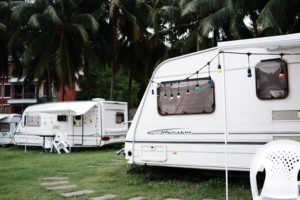 To pull a trailer, you need driving licence B, BE or B+. Which driving licence you need for your trailer, caravan or semi-trailer depends on the permitted maximum mass. This is the empty weight plus the maximum load. For example, a trailer may have a maximum permitted mass of 750 kilos. If the trailer itself weighs 150 kilos (empty weight), you may still add 600 kilos of cargo (load capacity). It is therefore not about the actual weight. Check the website of the central government for the official guidelines.
If you follow these tips, you will drive safely on holiday with the trailer behind the car. Enjoy your trip!
Jun 1, 2022 | Car interior, Damage |
Help! I have a rattling sound in the car. Is something rattling or ticking in your car, but you don't know exactly where the sound is coming from? On this page we list possible causes of irritating noises in the car and how you can solve it.
Where does the car rattling sound come from?
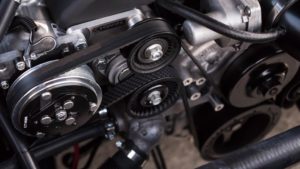 Rattling and ticking noises from the engine and chassis are annoying, sometimes dangerous - and solving the problem is often work for the garage. But before you panic, it is advisable to go through the car thoroughly and clean it up. Remove all loose objects in the car, boot. Also look under the seats, in the compartments and near the spare wheel. Is everything tidied up but can you still hear the irritating noise? Then we can take a closer look and start looking for many possible causes. We have divided the possible rattling, rattling and ticking noises by component. Hopefully this will put you on the right path to a solution.
Noise from drive belt
Metallic clicking: only shortly after starting - Possible cause: hydraulic tappets with insufficient oil pressure - Solution: not necessary if the noise disappears after a few seconds. If the clicking persists, a tappet is faulty; on to the workshop.
Grinding clutch noise: Audible when pedal is depressed - Possible cause: Defective thrust bearing - Solution: Replacement (workshop).
Rattling or rattling clutch: Only audible when idling - Possible cause: Broken drive plate torsion springs - Solution: Replace clutch immediately (workshop work).
Rattling gearbox: Unusual noise at idle, difficult to distinguish from clutch rattling - Possible cause: Large gear backlash, axial play of the shift bushing - Remedy: Noise depends on component tolerance and is usually harmless.
Knocking noise: audible and perceptible when load changes - Possible cause: loose or worn motor bearings - Solution: tighten or replace broken bearing.
Crying and singing: Only noticeable while driving - Possible cause: Worn bearings in transmission or differential - Solution: Replace. However, diagnosis is a workshop matter, as is repair.
Tapping: only audible when the bonnet is open - Possible cause: Working noise of the injection nozzles - Remedy: Not necessary.
Buzzing: Immediately after the ignition is switched on - Possible cause: Operating noise of the fuel pump - Remedy: Not necessary.
Noise from chassis and brakes
 Buzzing and roaring: noticeable in bends - Possible cause: wheel bearing on one side defective - Solution: first locate the defect. If it hums when cornering to the left, a wheel bearing on the right is probably affected; if it pops on the right side, damage to the left side must be assumed. Exact diagnosis: jack up the car and turn the steering wheel. With the other hand, grasp the control arm or support. If vibrations can be felt there, the culprit has been found. Exchange is a workshop affair!
Clatter in bends: only audible when driving fast, especially with varying load and on wet road surfaces - Possible cause: noises caused by the ESP control process starting up (the corresponding warning lamp comes on at the same time) - Remedy: avoid the limit range.
Creaking and rumbling: Noticeable in bends - Possible cause: The wheel-side joints on the drive shafts are defective - Solution: Replace the relevant drive shaft; Diagnosis and repair is a workshop business!
Grinding noise: Only audible when braking - Possible cause: Carrier plate of the worn brake pads rubs against the brake disc - Solution: Replace brake pads immediately, never continue driving! Often a new brake disc is also needed.
Rumbling: a constant companion on bad roads - Possible cause: usually faulty rubber on stabilisers, strut bearings or axle suspensions, shock absorbers themselves may also be affected. Diagnosis is a workshop matter! - Solution: replacement of affected components by a garage.
Squeaking noise from the brakes? We have written a separate blog for this. Click here for possible causes of squeaking brakes.
Disturbing noises in the interior
Rattling in the rear: audible at every pothole - Possible cause: tools, wheel nuts or other objects roll around in the spare wheel bin; the trough is a large resonance body, acts as an amplifier - Remedy: remove all loose objects; alternatively, wheel bolts or tools can be wrapped in rags or foam.
Creaking: heard when clutching - Possible cause: pedal hinges have dried out - Solution: Lubricate the hinges with silicone spray. Never use oil or grease as this will damage the plastic pedals.
Rattling in the dashboard: Usually only audible while driving, especially on bumpy roads - Possible cause: Cable harnesses hit ventilation ducts or other components - Solution: Cover cable with soft foam or secure with cable ties. With today's cars, with their complex electronics and built-in dashboards, this is usually a job for the workshop.
Creaking noises: Frequently occurs near plastic trim (doors, A, B, C pillars) - Possible cause: Plastic trim scrapes over paintwork - Solution: Line the contact points of the plastic parts with felt strips. - Alternative: Lubricate with silicone spray or wax, then the surfaces slide together more easily.
Squeaky seats: Regardless of passenger weight - Possible cause: backrest adjustment or other connecting parts without lubrication - Solution: lubricate backrest adjustment. But sometimes only complete disassembly with subsequent lubrication of all connection points helps (workshop work!).
Droning/vibrating door panels: Especially with bass-heavy music - Possible cause: The door speakers make the panels vibrate - Solution: Remove the door panels and check the speaker fixings. Disconnect the trim with foam mats (available at hobby shops) and fit with new locking clips.
Cracking noises: The dashboard and the centre console are particularly affected - Possible cause: Plastic caps rub against each other - Solution: Place felt strips underneath to prevent abrasive noises.
Exhaust noises
Rattling/rattling from below: Especially with varying load and when driving over potholes - Possible cause: Rubber bracket of the exhaust system cracked - Solution: Install new rubber bracket; only possible (pit/lift required).
Rattling and ringing from the centre of the car: audible both when accelerating and coasting, often depending on engine speed - Possible cause: defective catalytic converter (ceramic core broken) or heat shield plate cracked. - Also common: chambers of the front or rear silencer are shaken loose - Solution: knock off the exhaust from front to back with a fist. This makes it easy to expose the source of the noise (pit or lifting platform required). Replace faulty part.
Clinking or ringing: When engine is running, often audible also when vehicle is stationary - Possible cause: loose or broken clamps - Remedy: Visual check or ticking; Tighten loose clamp, replace broken parts.
Hissing, blowing sounds: Usually from around the engine compartment - Possible cause: Hairline cracks in the exhaust manifold - Solution: Replace the manifold (workshop).
Bodywork noise
Loud creaking: especially when driving over potholes - Possible cause: dry door locks - Solution: adhesive lubricant on the door handle and lock mechanism eliminates the creaking.
Clattering noises: usually only audible at higher speeds - Possible cause: Plastic covering on bumpers or floor covering has come loose and is clattering in the wind - Solution: Check that the relevant parts are tight and retighten if necessary.
Whistling or hissing: Especially audible near the A- and B-pillars - Possible cause: Wind noise caused by the doors hanging crookedly and no longer closing properly, or damaged door rubbers - Solution: Align the hinge plates of the doors with the A pillar (lots of experience required). - For professionals only: Carefully bend the window frame inwards when the window is down, so that the seals are tighter on the body and seal better.
Continuous creaking and squeaking: the noise comes mainly from the area around the doors and sunroof - Possible cause: dry and brittle seals on the doors and sunroof. Doors and roof lining act as large resonators that amplify the sound and make localisation difficult - Solution: lubricate all seals regularly with a silicone-based maintenance agent and keep them supple.
Flapping wipers: Occurs mainly in light rain - Possible cause: the wiper rubbers are worn - Solution: replace the wiper blades.
https://www.winparts.nl/blog/mijn-auto-maakt-een-ratelend-of-tikkend-geluid
May 28, 2022 | Engine oil |
In the following text, we describe how to measure the oil level of the Opel Karl and how to fill in the correct oil when the oil light comes on.
Which Opel Karl engine oil?
The various engines of the Opel Karl should always be filled with engine oil approved by the manufacturer - we recommend a 5W30 oil for most Opel Karl engines.
Always ensure that your chosen oil can be used in your vehicle by checking the year of manufacture of your Opel Karl and engine data. If in doubt, it is best to check your car's instruction manual.
How to measure the oil level on Opel Karl (oil light on)
 If the oil light (note: not the low oil pressure warning light) comes on in your Opel Karl, drive slowly and at low speed to the nearest petrol station, garage or hardware store so you can measure the oil and top it up if necessary.
- Make sure your vehicle is as horizontal as possible (not on a slope or hill).
- Then switch off the engine.
- Then wait for about 3-5 minutes before checking the oil level. This allows the engine oil to drain back from the pipes.
- Now you can open the Opel Karl hood.
- In the engine compartment, you will find the so-called oil dipstick of the Opel Karl. Pull the dipstick out of its holder.
- Now clean the dipstick with a cloth, handkerchief or toilet paper.
- Now place the clean rod back in the holder.
- Now pull out the stick.
- The oil level must be between the "minimum" and "maximum" marks.
If this is not the case, the vehicle should always be filled with suitable Opel Karl engine oil.
Instruction on how to refill engine oil Opel Karl
- Buy suitable oil for your Opel Karl.
- Open the bonnet and check the oil level (instructions above).
- Now slowly fill a small amount (approx. 100ml) into the Opel Karl oil nozzle.
- Now wait a few minutes before measuring the oil level again.
- Do not restart the Opel Karl until the engine oil level is between the "Min" and "Max" marks.
Also check the oil level at the next Vauxhall Karl inspection or an upcoming oil change to make sure everything is in order.
May 28, 2022 | Maintenance and polishing, Peugeot |
Peugeot 108 maintenance, what will be carried out and what do you need to consider? The Peugeot 108 is the smallest vehicle from the French car manufacturer and has been on the market since 2014. As befits a small car, the 108 not only has an attractive purchase price, but it is also extremely economical to maintain. On this page you will find more information about the test, which service work is required according to the test plan and an estimate of the costs.
Remember to keep the service booklet up to date, so that your Peugeot 108 is not only well looked after and technically in good condition, but it is also important to have the booklet in good order in the event of a guarantee claim or sale.
Important points Peugeot 108 maintenance
Important points during the inspection of the Peugeot 108:
- What are the maintenance intervals?
- What is the scope of the work?
- What are the costs for a Peugeot 108 inspection?
- What opportunities are there to save money on maintenance?
Of course, all the information in this guide is an estimate. You can also find various details about the Peugeot 108 service in your service booklet and in the user manual!
Intervals maintenance Peugeot 108
 The inspection intervals for the Peugeot 108 depend on the engine. With the 1.0-litre engine, it is recommended that it be serviced every 15,000 kilometres or every 12 months. For the 1.2 litre petrol engine, on the other hand, the inspection schedule recommends 25,000 kilometres or 12 months. The service due date is also indicated by the car's service display, so you always know when your car is due for service.
Make sure that every service (or repair) is recorded in the service booklet. With the service book, you always have a service record of your car to hand, which is very useful for any warranty services, but also when you sell your Peugeot.
The following work is usually carried out during a service on the Peugeot 108:
- Change oil, oil filter and oil drain plug
- Checking engine emissions
- Checking the engine and gearbox for leaks
- Checking the height of the clutch pedal and adjusting if necessary
- Visual inspection of chassis (tyres, springs, shock absorbers and suspension)
- Visual inspection of the bodywork, paintwork, floor plate and exhaust system
- Checking glazing
- Functional testing of all lamps and headlamps
- Check locks and hinges and lubricate where necessary
- Checking the brake fluid
- Brake system check and function test
- Check coolant and windscreen washer fluid, top up if necessary
- Check battery and voltage, replace battery if necessary
- Read out fault memory, correct any faults and delete them
- Test drive and check driving behaviour
- Reset maintenance display (reset inspection & oil change)
Additional service work, but not compulsory annually
- Replaceollen filter every 2 years
- Change brake fluid every 2 years
- Perform an electronics check every 3 years
- Replace spark plugs every 3 years or after 60,000 / 90,000 km
- Carry out an intensive chassis check including shock absorber test every 3 years
- Change air filter every 4 years, earlier if necessary
- Change coolant every 4 years
- Check condition of V-belts, tensioner and tensioner pulley every 4 years, replace if necessary
- In the case of the 1.0 petrol engine: visual check of the timing chain after 120,000 km at the latest (additional cost!)
- For the 1.2 petrol engine: replace the timing belt including tensioner and water pump after 165,000 km at the latest (every 10 years at the latest - extra cost!)
Maintenance expenditure on Peugeot 108
If no extraordinary work is required, the Peugeot 108 inspection is generally cheap. The average costs for maintenance according to the inspection plan, including an engine oil change, are around €220-270. However, if after a higher mileage, various wear parts (e.g. brake discs and pads or spark plugs) need to be replaced, the service costs rise considerably. You can save on maintenance by, for example, buying your own engine oil and taking it to the workshop. Consult with the workshop beforehand, because not all garages are waiting for this. You can also request quotes for maintenance from various garages in advance. The hourly rates can sometimes differ considerably and it can therefore be worthwhile to look beyond the first garage.
How to minimise maintenance costs on Peugeot 108
Apart from engine oil, you can also get many other spare parts in best brand quality at very reasonable prices in various online shops. Parts such as air, interior or oil filters, windscreen wipers, spark plugs, car batteries, brake system parts, shock absorbers, chassis springs and the like can easily be ordered online. All these parts can then be fitted to your Peugeot 108 during the inspection at a specialised workshop. You will save a lot of money compared to buying parts at the workshop. If you decide to buy this yourself, it is advisable to indicate this to the garage in advance so that they know about it. The garage may not be keen on this! It is also important that you order the official parts so that you can be sure that everything fits your Peugeot properly.
May 26, 2022 | Car interior |
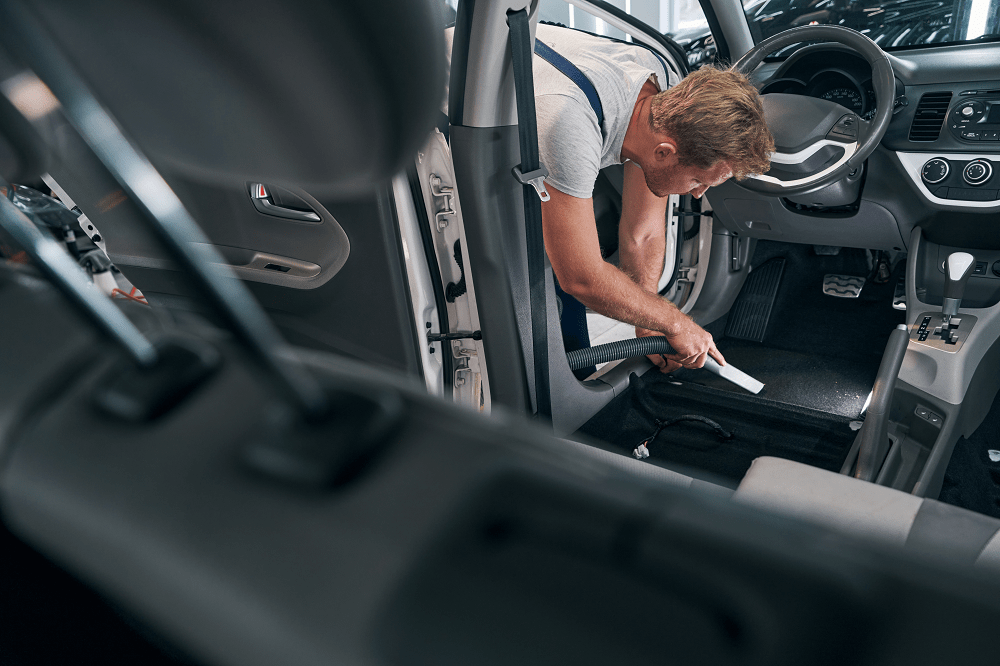
Do you drive a French-branded car, then chances are it is a Peugeot? If so, you will be able to agree that these cars offer a good driving experience and have a beautiful design. Especially the new models, the Peugeot 208 and 508 are very successful in our opinion! In this article, we will start with a piece of Peugeot history, then we will delve deeper into good car mats for this French brand. There is nothing more irritating than worn car mats. With older cars, such as youngtimers, you often have to deal with worn car mats. So if you have a nice Peugeot 407 that could use some new car mats, read on so you know what to look out for when buying new mats.
The History of Peugeot
The history of this French car manufacturer is a history of pioneering designs, technical breakthroughs and technological firsts. It is a story of remarkable motorsport successes and road racing cars.
Its history goes back more than 200 years when Pierre's family converted a flour mill into a steelworks. Jean-Pierre's two sons, Jean-Pierre II and Jean-Frederic founded PEUGEOT Freres which was a steel foundry.
The steel produced was used to make saw blades, watch springs and lightweight crinoline socks that revolutionised 19th century fashion.
Peugeot's first car clearly showed its origins in the bicycle and coachwork industries. In 1890, Armand Peugeot, Jean-Pierre's grandson, using bicycle expertise, built a lightweight tubular chassis and combined it with a Daimler two-cylinder engine to produce the first Peugeot car with a petrol engine. And so the first Peugeot was born and fortunately the outspoken lion is still among us.
Give your Peugeot a set of new mats of high quality
Are the current mats in your Peugeot worn out? Or do you simply want to upgrade the interior with stylish new car mats? Then in both cases you will be happy with the offer car mats Peugeot. The range of car mats is large. For each car model of the brand Peugeot there is a fitting set of car mats available. But not only the range of car mats is good. You will also appreciate the quality of the mats available. The mats are all made of the best materials. Therefore the quality is very good. In practice, the mats are even better in quality than the original Peugeot car mats. With a new set of car mats of high quality you really give your car an upgrade and the interior looks fresh again.
Which material do you choose?
The car mats available for Peugeot cars come in various designs. Diversity is obviously reflected in the shape and dimensions. After all, each car model has different dimensions. But even for each car model, you can choose from different types of car mats. The diversity of car mats in this case relates to the material of the mats. You can buy Peugeot car mats in different materials. Do you want to give the interior of your car an exclusive look? Then car mats made of velour might be a good option. On the other hand, are you looking for a set of car mats with high resilience? Do you need mats that can handle the necessary resistance? Then rubber car mats are a better choice.
Importance of a good set of car mats
The purchase of a new set of car mats can have different reasons. Some people simply want to upgrade the interior of the car. It is then about the look of the mats. But also the practical aspect should not be forgotten. It is very important to have a good set of car mats in your car. The mats protect your car against moisture and dirt. This can prevent rust and other forms of damage. In addition, the mats contribute to safety. The importance of a good set of car mats should never be underestimated.

 EN
EN  NL
NL  DE
DE