May 10, 2022 | Buying advice, Financial, Sales |
It is common knowledge that cars quickly lose their value after purchase. Are you still looking for a car that retains its value? Below is a list of 10 cars that depreciate the least after 3 years. This research was carried out by the British consumer association WhatCar. As expected, most of them are more expensive cars, so you have to pull out your wallet to get a car of value from the top 10!
Depreciation of car
Depreciation is probably not at the top of your list of concerns when buying a new car, but it is certainly important to think about as it is usually more than all the fuel, tax and maintenance bills put together.
10: Range Rover
The latest generation Range Rover has just gone on sale and like its predecessor, it is a hugely comfortable, refined and desirable luxury SUV. Demand is high and waiting times are long, making it easy to understand why the new Range Rover is expected to hold its value so well. After three years, this car is expected to retain 75.3 percent of its new value.
9: Mercedes CLA Shooting Brake
 Thanks to its high tailgate and narrow boot, the CLA Shooting Brake is far from the most practical estate car, but thanks to its attractive interior, powerful engines and good driving experience, it has a lot of appeal. After three years, the value will still be around 75.8 percent of the new value.
8: Volkswagen California
This van has become increasingly popular recently and is always a safe investment. After three years, this popular motorhome is still worth 78.1 percent of its new value.
7: Range Rover Evoque
 At seven is the Range Rover Evoque with 79.3 per cent. As with the full-size Range Rover, demand for the 'mini-me' Range Rover Evoque is very high. It helps that it drives well, is nice inside and also reasonably practical. The entry-level version of the 2.0-litre D165 diesel engine retains its value best.
6: Porsche Macan
With 80.5 per cent, the Porsche Macan is in sixth place. The Macan is one of the most entertaining sports SUVs on the market, but when equipped with air suspension, it can transform from a comfortable cruiser into a beast at the push of a button. Add to that a high-quality interior and the sought-after Porsche emblem, and it's not hard to see why it's on this list.
5: Porsche 718 Boxster Syder
At 5 is the Porsche 718 Boxster Syder with 81.3 per cent value retention after 3 years. All Boxsters are great to drive, but the Spyder version is especially compelling thanks to its bespoke suspension and the glorious sound the 4.0-litre in-line six-cylinder makes. Yes, it will cost you a lot of money upfront, but you'll get a lot of it back when you sell it.
4: Volkswagen Multivan
The Volkswagen Multivan is in fourth place with 82.8 per cent. The Volkswagen Multivan is one of the more expensive choices in the MPV class, but it is a vehicle that holds its value very well, especially in the 1.4 TSI eHybrid Life version.
3: Porsche 718 Cayman
 With 83.6 per cent, the Porsche 718 Cayman is in the top 3. The Porsche 718 Cayman is great to drive, especially with the 4.0-litre engine in the GTS and GT4, which revs up to a heady 8000 rpm. However, the latter is the model that retains its value the best, offering 20 hp more than the GTS.
2: Lamborghini Urus
 The Lamborghini Urus is one of the most exotic SUVs on sale, combining stunning speed with enough functionality to be useful every day. And it even makes financial sense, as the car is very stable in value. This car ranks 2nd with a value retention of 85.9 after 3 years.
1: Porsche 911
 At number 1 is the Porsche 911, the king of value retention. After 3 years, this car is still worth 86.3 of its new value. In every respect, the Porsche 911 is an exciting sports car. The GT3 variant takes things to another level, however, as it combines sublime handling with extreme performance and has one of the best sounding engines ever built. All of this means that demand greatly exceeds supply, and it has the highest trade-in value of any car for sale today.
Which car is on your list? Let us know in the comments!
May 9, 2022 | Buying advice |
Small cars like the Kia Picanto are popular in city traffic. They are compact and economical, which makes them ideal for daily use for many people. Since 2004, Kia has offered a practical car with the Picanto, which is often at the top of the lists of best-selling cars in the Netherlands.
Known problems Kia Picanto
 The Kia Picanto has some weaknesses. Whether it is problems with the engines, known defects at the TÜV or the gearbox as a weak point: there are a few points car owners should watch out for. We clarify what these are with the following guide.
The CarWiki.de team has identified the classic weaknesses and clearly presented them. Would you like us to use your experiences? You have had problems with the Kia Picanto (e.g. during the inspection) and would like to tell us about it? Feel free to use the comment function at the end of the message. Thanks a lot!
Problems with the Kia Picanto III Type JA (since 2017)
The third generation of the Kia Picanto has been sold in Germany since 2017. Unlike its predecessor, the model is only available as a five-door. With 1.0 MPI as inline three-cylinder naturally aspirated engine, 1.2 MPI as inline four-cylinder naturally aspirated engine and 1.0 T-GDI as inline three-cylinder engine with direct injection and turbo, there are three engine versions to choose from.
A five-speed manual transmission is installed as standard, with four- and five-speed automatics available at extra cost on some models. In June 2020, Kia introduced a facelift for the Picanto. The engines of the Kia Picanto have so far shown no weaknesses. Atmospheric engines in particular show no defects even at high mileage. With direct injection, dirty injection nozzles can develop over the years. Then the injectors should be replaced to avoid problems.
The same goes for the transmission, whether it is switch or automatic. Increased clutch wear, which is not unusual for small cars in city traffic, poses no problems for the Kia Picanto. However, those who opt for the automatic should expect higher fuel consumption. According to official figures, consumption increases by up to one litre per 100 kilometres, depending on the engine and transmission. So far, there have been no recalls for the third generation of the Kia Picanto.
Problems with the Kia Picanto II Type TA (2011 to 2017)
The second generation of the Kia Picanto was sold in Germany between 2011 and 2017. The model was available in three- and five-door versions. In addition to the classic petrol engines, there was also a drive that could be operated on LPG. In addition to the standard five-speed manual transmission, the model with 1.2 CVVT petrol engine was also available with a four-speed automatic at extra cost. A minor facelift was carried out in 2015.
The second Kia Picanto has its problems with the main inspection, as numerous problems and defects can make the TÜV appointment an insurmountable hurdle. The main focus is on the steering joints, which wear out after only a few years. Similarly, the low-beam headlights often remain without function. The exhaust system and the operation of the brakes, especially the handbrake, are often inadequate. Furthermore, the Kia Picanto is known for increased oil loss in the engine and transmission, which causes problems at the first TÜV appointment.
The breakdown statistics from ADAC show a mixed picture, as older vehicles in particular are affected by various breakdowns. The battery (2012 to 2014) and spark plugs (2012 to 2014) are the most common causes of breakdowns. Numerous car owners have reported problems with the air conditioning system, which does not always seem to work properly. It remains unclear whether these are defects or whether the air conditioning system in general does not provide sufficient cooling capacity. Also various rumbling noises, among others due to defective wheel bearings, as well as blind, foggy headlights were frequently reported to us.
Recall actions: Corrosion on the brake and fuel loss
The second Kia Picanto was recalled twice. In vehicles produced from 2011 to March 2012, the mechanism of the rear brake calipers could corrode and become stiff. This in turn led to the parking brake no longer being fully released, resulting in overheating and driving stability problems. The second recall concerned models built between 1 February 2011 and 30 June 2012. Here, increased wear of the outer coating on the fuel filler and expansion hoses could not be excluded. In the worst case there was a loss of fuel and possible fire risk.
Problems with the Kia Picanto I Type BA/SA (2004 to 2011)
The first Kia Picanto celebrated its market launch in April 2004. At the time, there was a choice of a petrol and a diesel engine, with the petrol engine being a four-cylinder in-line, while the compression-ignition engine was a three-cylinder. Both models were available with a five-speed manual transmission as standard, but a four-speed automatic was also available for the petrol version at extra cost. A facelift took place in December 2007, as a result of which the diesel engine disappeared from the range.
Most car buyers chose the Kia Picanto with a petrol engine, so this is where most information is available. Some owners were not spared an engine failure. The cause is known to be the crankshaft pulley, of which the fastening screws were too short. After all, Kia performed a free service using optimised components. However, that was not the only problem with the crankshaft. The sensors also caused headaches time and again. Both crankshaft and camshaft sensors often fail. In this context, motorists should be aware of the P0340 error code. In the ADAC analysis statistics, the Kia Picanto performs well to very well, but the low number of registrations doesn't allow for a meaningful evaluation. We found out that the batteries, the components of the ignition system and knock sensors are also causing more and more problems.
Although there is no information on the 4-speed automatic, the 5-speed manual transmission has a number of weaknesses. On the one hand, the clutch is exposed to increased wear due to the many trips in city traffic, which leads to clutch damage over the years. On the other hand, some gears, especially reverse, can often only be engaged reluctantly and with greater effort. In this context, the gear change mechanism should also be checked for any damage. In the worst case, the journey ends with gearbox damage due to torn clutch cables. With the first Kia Picanto, we heard more about this problem.
The owners of the first generation Kia Picanto criticise, among other things, the poor quality of the small car, which is reflected in annoying noises and rattling, wobbly seats. Furthermore, the sound quality of the standard sound system leaves much to be desired. The window controls often give up the ghost, mostly for electrical reasons.
Recalls: material fatigue and stuck brakes
The first Picanto from Kia has had two recalls. Material embrittlement in the area of the fuel filler pipe may cause fuel leakage in some vehicles. For this reason, the part had to be replaced with an improved version. The second action concerns the mechanics of the rear brake calipers, which become stiff due to excessive corrosion. In addition, it could not be excluded that the parking brake was blocked. The handbrake cable or the complete calipers had to be replaced in the workshop.
Buying advice Kia Picanto
The country is full of Kia Picantos. It is one of the best-selling Kia's of the past 10 years. This is reflected in the range of second-hand Picantos on offer. The Kia Picanto is a very fuel-efficient car. Keep in mind that the factory specifications are very rosy though and can almost never be met. The second generation of the Kia Picanto is very popular as an occasion car. Understandably, as it is still an appealing car, with a smooth appearance and many other, good features. On top of that, it is also a very good quality car. The Picanto is extremely reliable; it is simply a rarity when this Kia lets its driver down. It only sometimes happens that there is no voltage on the ignition coils. Then the engine just won't start. This is not due to the ignition coils, it is certainly not a serious problem, but a wire break in the battery cable. The roadside assistance solves that on the spot. If the windscreen wipers repeatedly break down because of a blown fuse, it is because of a short in the wiring loom under the dashboard. The Wegenwacht moves that wiring harness, leaving it 'free', replaces the fuse and, in principle, it doesn't happen again. It also seems to be the case that in poorly maintained Picantos, the timing chain can cause problems around 60,000 kilometres. All the more reason to ensure proper maintenance according to the booklet and to want to see proof of this when buying a used car.
May 3, 2022 | Buying advice |
The Renault Clio has been one of the most popular small cars in the Netherlands for more than 30 years. The model, now in its fifth generation, is available with three or five doors. From the third generation, an estate car was also available (since 2008). At times, the Clio even competes with the Volkswagen Golf: in February 2020, the little Frenchman was Europe's best-selling car. In 2018, the Clio was number 2 as the best-selling car in the Netherlands. This popularity is mainly due to its modern look, innovative technology and low price, but unfortunately reliability is still sometimes lacking. Since its premiere in 1990, the Renault Clio repeatedly shone with numerous defects, weaknesses and recalls. You can sometimes lose track of things. For this reason, we have compiled a detailed overview of the latest Renault Clio models and their respective problem areas. This page lists common problems. If any items are missing, please let us know via the comment form at the bottom of this page so we can add to the page.
 Problems Renault Clio V (from 2019)
In March 2019, the French carmaker presented the fifth generation Renault Clio. Compared to its predecessor, the latest series is somewhat shorter and flatter, making the model look even more sporty and modern. Nevertheless, the available space in the interior has grown thanks to the larger wheelbase. There is a choice of trim lines, as well as petrol and diesel powertrains. A hybrid model is also available.
Electronics problems are not uncommon
Modern technology has its pitfalls. And the Renault Clio V is no exception. It is not unusual for owners of the little Frenchman to complain about various electronic problems that cripple the system and affect its functionality. Whether it is a complete failure of the multimedia system, erroneous messages from the emergency brake assistant or problems with the start-stop system, the Clio often does what it wants. The reversing camera doesn't always work either. Sometimes a software or GPS update in the workshop helps, but sometimes it is also due to a weak battery causing the problems.
Recall: problem with the gearbox?
In early 2020, Renault announced a possible problem with the stop/brake switch on the Clio's automated gearbox. Due to a malfunction, it was possible to shift from P to R despite the brake not being activated. In Germany, some 240 vehicles had to go to the workshop, where the corresponding switch was checked and replaced if necessary.
Problems with Renault Clio IV (2012 to 2020)
Unlike its predecessors, the Renault Clio IV was only available as a five-door. The estate model (Clio Grandtour) was launched in March 2013. The French small car used the Renault-Nissan platform B as its technical base, which was also used in the previous models, but was revised for the fourth generation. A facelift in 2016 brought some changes, including modern LED headlights. The Renault Clio RS is especially popular, with its turbocharged petrol engine producing up to 200 hp.
As with its predecessor, the axle suspension also causes problems for the fourth generation. The brakes have been known as a weak point for several years and now the emissions test has been added to that. Feedback from numerous Clio owners has revealed criticism of the overall build quality of this car. From creaky seats to paint damage on delivery to sharp trim panels, everything comes up. Stove performance leaves much to be desired, according to many Renault drivers. Belt tongues can scratch the plastic if used carelessly and versatile rattling noises while driving complete the list of flaws.
Recall: from brake hoses to backrests
The Renault Clio IV has had numerous recalls. The brake hoses were at risk of being damaged, forcing Clio drivers to visit the workshop. It was possible for the brake hoses to abrade on the front wheel arch linings if they were not fitted properly. In addition, the possibility of the brake shoes moving when applying the parking brake and the pistons coming loose from the brake cylinder could not be ruled out.
Another recall concerned Renault Clio RS and Renault Clio GT special models. On these vehicles, the upper part of the roof spoiler could come off, posing a danger to other road users. The rear seat backrest also caused concerns. In an accident, it could not be ruled out that the hinge shaft in the frame of the rear seat might break, increasing the risk of injury to the occupants. Breakage of the right front brake caliper attachment, failure of the headlight height adjustment and possible damage to the front wheel hubs were also the reasons for further recalls. This does not put the Clio IV in a good light but if all goes well, many of these issues have been resolved by the recalls.
Problems with Renault Clio III (2005 to 2013)
In 2005, Renault continued the Clio success story with the third series. The model was available with three and five doors and was complemented by an estate car (Clio Grandtour) for the first time in 2008. In the same year, a minor facelift followed, which mainly included new engines and an adjustment to the numerous equipment lines. An extensive facelift followed in May 2009 to bring the Renault Clio into line with the current design line of the French. Like its successor, the third generation featured a sporty variant. The Renault Clio RS put no less than 201 hp on the tarmac.
The chassis as a weak point
The suspension of the Renault Clio III is known as a major weakness. Defects in the shock absorbers are not uncommon and are also regularly criticised during the main inspection. With increasing mileage, the problems steadily increase. The formation of rust is also a major problem in older vehicles. So paying close attention to soot is a must! Worn axle and steering joints manifest themselves through rumbling noises and spongy steering behaviour that is no longer precise and safe.
In terms of lighting, the Renault Clio III cannot shine. There is no area where the little Frenchman does not attract attention. Whether it is dipped headlights, indicators or rear lights: action is needed everywhere! The experts at specialist garages know that this Clio is well above average when it comes to defects. So pay close attention to the lighting and, if necessary, have it checked by a garage.
Don't worry about failure
When it comes to breakdown statistics, the Renault Clio doesn't stand out particularly, so motorists needn't worry about a sudden stop. This is especially true for vehicles built after 2008. Until then, the Clio was known for flat batteries, faulty crankshaft sensors and noticeable ignition coils. Various problems with the engine control only occurred in the first year. Furthermore, the Renault Clio is not often seen by the ANWB.
The braking system under criticism
Many Clio drivers have said that the little car's braking system causes problems. After everything stayed fine for the first few years, the defects piled up in the following years. High wear and tear is just one thing. Porous brake lines, failing parking brakes and problems with the brake discs cause further problems, especially during general inspection. Like the Clio IV and V, the Renault Clio III has not been trouble-free over the years and has experienced many recalls. This includes, for example, the possible malfunction of the automatic transmission, noticeable by display errors or independent shifting. Replacing the control unit solved the problem.
The gearbox often caused problems. Incorrect programming of the control unit could cause the automatic transmission's shifting processes to fail. In addition, the deformation of the torque converter could lead to shifting problems and even to the complete blocking of the transmission. Brake light switch failures and blocking of the air conditioning compressor, which could lead to tearing of the power steering drive belt, were also the cause of a recall. Furthermore, the third generation of the Renault Clio suffered from defective valve keys, which in the worst case could even cause engine damage. A check of the valve keys was completed after a few minutes, a necessary replacement took several hours.
List of known defects of the Renault Clio
- electronics problems
- weak axle stands
- weak shock absorbers
- worn-out brakes
- rattling sounds in the interior
- worn steering joints
- lighting defects
Conclusion: small car, big problems
The Renault Clio is not known as a carefree car for its owners. Especially with increasing age, the number of defects increases. That's when the great fear sets in at every inspection. Will it make it or do we have to come back again? In many cases, it comes down to the latter. And that also means that the repair costs go up. When buying a used Clio, it is worth investigating the known weak points. Otherwise the supposed bargain can quickly become a bad bargain.
May 2, 2022 | Financial |
Have you bought a new car? Whether it's a brand new car or a cool second-hand one, before you can actually drive your new car on the road, you need to
Make sure it is properly insured. But how do you find a suitable WA insurance? We list the most important things you need to watch out for here, so you can have a safe
feeling can enjoy driving.
Different types of insurance
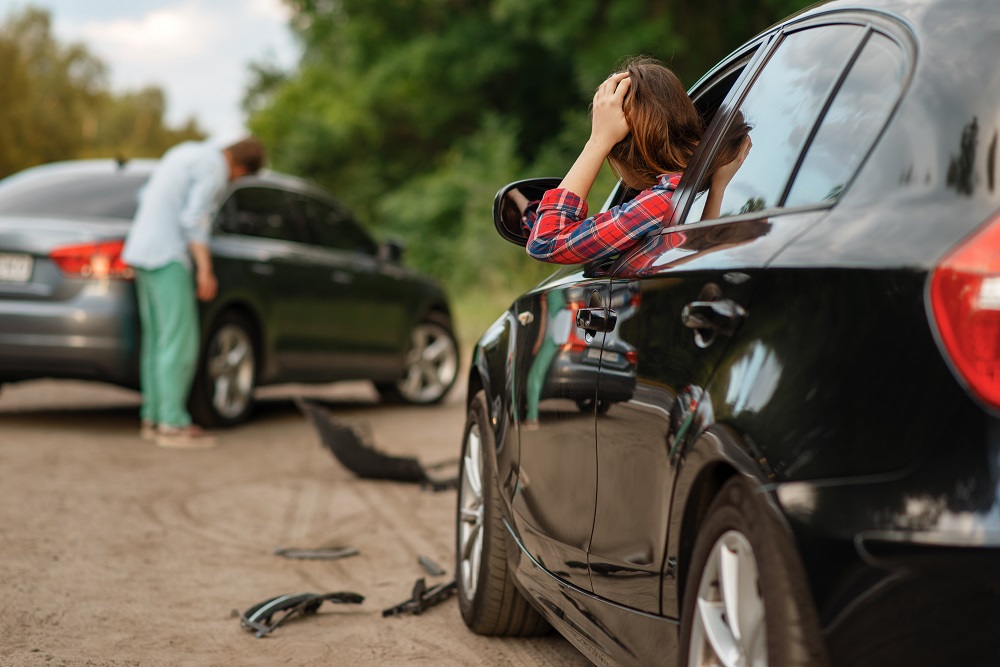
As soon as the car is registered in your name, it is important to insure it immediately, so that you can hit the road without any worries. You can choose from a basic third-party insurance (or
civil liability insurance), a WA+ (limited casco) with a slightly higher coverage, or the complete all-risk insurance.
In the Netherlands, it has been determined by law that every car owner must have at least a standard third-party insurance. If you do not have this, you are not allowed to drive. With a WA
This insurance covers you against damage caused by your car to third parties. As an accident can happen at any time, you should at least take out this insurance. It is wise to look at the current value of your car. Insuring an older car under all-risk is not often done, because the premium exceeds the value after a few years. That is why it is wise to have a good look at the car insurance that fits your situation. This prevents you from paying too much premium.
From WA to all-risk
In addition to the standard third-party insurance, there are also more extensive car insurance policies. You can also ask your insurer for additional packages, such as extra coverage for legal assistance or a passenger insurance. The three most chosen car insurances are the following:
- Third-party insurance is the simplest insurance that every car owner in the world must have.
Netherlands at least. A third-party insurance only covers damage you
caused by your car to third parties. Most suitable for older cars.
- A WA+ (limited casco) gives you a more extensive coverage. With this you are not
covered only for the damage you cause to others, but also for damage you
for example during a collision with your own car. Suitable for young used cars with
with a high daily value.
- All-risk insurance is the most comprehensive car insurance. The advantage of this
comprehensive insurance is that it even covers you for damage that you yourself have caused.
caused to your car. For example, if you have accidentally
against it. It also allows you to be reimbursed for the new value during the first to
through the third year. This insurance is most commonly chosen for new cars up to
6 years old. Then it is wise to calculate the difference between all-risk and WA+.
Always check with your insurer what exactly is covered by your car insurance, so that you know exactly what will be reimbursed and you don't have to face unexpected surprises.
There are no surprises. There is a difference between the conditions of different providers. It is therefore wise to read up on them before taking out a contract.
May 1, 2022 | Buying advice |
Often considered the Golf's little brother, the Volkswagen Polo has become increasingly mature in recent years. It is longer and wider than ever, with a larger wheelbase, which means even more head and legroom for driver and passengers. A larger boot of 351 litres creates enough space for any shopping trip or adventure. No wonder the new Polo has won several awards and topped the lists of best-selling cars (as at 1 in 2018). The VW Polo is popular as a used car but before you buy one, it's worth looking into its potential problems and buying advice. More info on this page!
What should I look for in a used Volkswagen Polo?
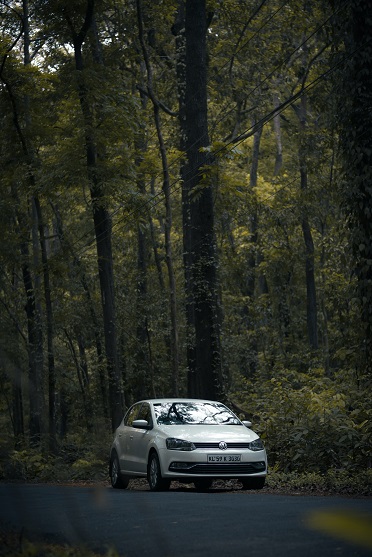 As with all used car purchases, check for signs of accident damage, such as uneven panel openings. Also look for any parking damage, such as wear and tear on bumpers and kerbs, as only the higher specification versions have front and rear parking sensors. If you happen to buy an entry-level S model, bear in mind that you can't connect your smartphone to the infotainment system without the App Connect option, so look carefully at the car's spec sheet before you buy.
Is a used Volkswagen Polo reliable?
The VW Polo is an eternal favourite. Like the Golf, the little car has been selling like hot cakes for years. This success can only have something to do with its reliability. The Polo is certainly not a bad car, but even the top seller doesn't leave with a clean slate. After all, the current, fifth model generation has so far been virtually free from defects.
VW Polo 4th generation (2002-2009) defects
A fourth-generation Polo is already at least 11 years old. No wonder the problems can pile up, especially with a neglected one. The fourth-generation Polo (9N, 9N2 and 9N3) does not always come out well in expert reports. The German "TÜV report 2014" mainly notes defects in the axles and drive shafts, as well as complaints about the foot and parking brakes. From the sixth year onwards, there are additional problems with the brake hoses. The successor, on the other hand, has so far been almost free of defects, only the driveline oil loss is quite high, according to the report. A similar picture of the small car from Wolfsburg emerges from its breakdown frequency. It was only after the 2005 facelift, which brought extensive technical improvements and a much more modern front end instead of the Lupo face, that problems decreased noticeably, according to the ADAC. In its statistics, the Polo is listed with a few peculiarities: Petrol models built until 2003 experienced fairly frequent failures in the intake manifold pressure sensor. There was a special goodwill arrangement for skipping engine distribution chains on the 1.2 TSI and 1.4 TSI until model year 2009. Flaws in the lambda sensor (petrol engines up to 2006), faulty pencil coils (petrol engines from 2005 onwards) and broken coolant temperature sensors (petrol engines 2002/2003) also caused problems.
VW Polo 5 from 2009-2017 (6R & 6C) problems
The almost immaculate Polo V has been on the market since 2009 and a facelift took place in April 2014. When it comes to the engines, the Polo covers quite a broad performance spectrum for a small car. Depending on the year of manufacture and version, the fourth-generation petrol engines deliver between 40 kW/55 hp and 132 kW/180 hp. The diesel engine range is thinner and varies from 47 kW/64 hp to 96 kW/130 hp. With the 5th generation of the Polo, the values for the petrol engines are between 44 kW/60 hp and 162 kW/220 hp in the Polo R WCR. The oil burners achieve between 55 kW/75 hp and 77 kW/105 hp. A bi-fuel variant for use with liquefied petroleum gas (LPG) has also been added to the range (60 kW/82 hp and 63 kW/86 hp).
Certain Polos manufactured between May 1, 2017 and October 12, 2018 were subject to a recall related to a design flaw with the rear seat belts; the weight of the middle passenger sliding to the side while changing lanes at high speed can dislodge the belt from the person sitting next to them. Contact a local VW dealer to make sure the car you're considering has a spacer between the two buckles that fixes this problem.
In the Netherlands, thousands of Polos were called back to the garage because of problems with the hand brake. According to the RDW, a certain adjusting nut can come loose. In that case, the handbrake would not work, with all possible consequences. This concerns models built between 12 October 2017 and 22 October 2018. Ask your local VW dealer if yours also has this so the garage can adjust the handbrake and secure the adjusting nut with a so-called counter nut.
There is a risk of oil entering the brake booster of some Polos made between 8 October 2019 and 6 February 2020 through various vacuum lines. The entire system should be checked by a VW technician in case there is oil in the system, and parts should be replaced if so. Contact a local dealer for more information.
If you're looking for speed, go for a special 220bhp WRC model. If you're looking for economy, go for the 1.2 TDI BlueMotion. There are also turbocharged four-cylinder TSI engines and bi-fuel, i.e. LPG drive. Tip: 1.2 TSI with 105 hp and DSG gearbox - there is no greater driving pleasure in this class. But there are also potential problems, the timing chains of 1.2 and 1.4 TSI. The problem is not new to VW: if it rattles during a cold start, take it to the workshop, otherwise there is a risk of engine damage! Jerking DSG automatic transmission makes starting and manoeuvring more difficult, a garage can fix this with new software. The idle speed of the 1.2 TSI is too low and some turbo engines lose power. Faulty spark plugs and headlights are also often reported, as are running tyre pressure monitoring systems.
VW Polo VI (AW) 2017 to present
The Polo VI with type designation AW is the sixth generation Polo that was presented in June 2017. This model is based on the new MQB A0 platform. After the Seat Ibiza (6F), the Polo VI is the second vehicle on this platform that will also be used for other models from Seat, Volkswagen, Audi and Skoda. In the autumn of 2020, the Polo was visually redesigned with the switch to the 2021 model year.
As often happens at the start of a new series, the Polo VI (type AW) also had a few recalls. Belt buckles, steering and misaligned drum brakes were affected. These problems should now all be fixed as a goodwill or warranty gesture. If you own one of the early years, be sure to inquire whether everything has been repaired to specification! Electrical problems are increasingly common in new cars, which have many more electronics fitted than in the past. Unfortunately, the Polo VI (type AW) is no exception. Defects in the start-stop function, failure of the automatic windscreen wipers or malfunctions in the central locking system are well known. However, these are problems that in terms of cost can almost always be fixed quickly and positively as part of the vehicle warranty or as a goodwill gesture. Paintwork defects have also been reported. Paintwork can become loose over a wide area, especially on the tailgate. This often happens after visiting a car wash, so hand washing might be a good idea!
The Polo VI (type AW) has the most modern TSI petrol engine or the familiar 1.6 TDI diesel. Basically, all problems that occurred with the previous versions should be eliminated here. Elongated timing chains are a thing of the past, the engines run with a timing belt drive. However, the belt should be checked regularly and replaced if necessary (costing around €500). As usual with direct-injection engines, coking may occur. It may then be necessary to clean the intake manifold or EGR valve. With turbochargers, you should also expect damage after many kilometres. Only the future can tell how robust the current generation of Polo engines really are, especially in the powerful Polo GTI.
Conclusion problems with the Polo IV, V and VI
The Polo V (6R & 6C) and the Polo VI (type AW) in particular are both truly excellent, high-quality cars. The good suspension guarantees not only an extremely successful compromise between comfort and sportiness, but also high safety reserves. All engines are extremely economical and generally have a long service life if the prescribed service and maintenance work is carried out correctly. In general, the last two generations of the Polo model are therefore a good choice when buying a used car. Normally, almost all wear and spare parts can be found online at very reasonable prices. If you don't want to do it yourself, we recommend going to an independent workshop, especially for older Polo vehicles. There is hardly a mechanic who does not know the technology of the VW Polo! What about your experience? Is your Polo struggling in an area we haven't covered yet? Leave a comment and help other polo drivers in our community!

 EN
EN  NL
NL  DE
DE