May 24, 2022 | Buying advice |
With the Toyota Aygo, the Japanese car manufacturer has offered a practical city car since 2005. The small car is especially economical and compact, but offers little space inside. Moreover, some owners miss performance and that is unfortunately not the only weakness...
In the past, the Toyota Aygo has had several problems, be it loss of coolant, weak brakes or worn clutches. There are a few issues that car owners should keep an eye on. On this page you will find an overview of known problems. Do you have any additions? Feel free to let us know at the bottom of this page.
Most common Toyota Aygo
- Loss of coolant in the petrol engine
- Wear of brake discs
- Increased possibility of rust formation
- Faulty couplings
- Water penetration in the interior
- Weak lighting
- Occasional problems with the Bluetooth connection
Problems Toyota Aygo X (from 2022)
 In November 2021, the Japanese carmaker presented the third generation of the popular small car, which will be sold as the Toyota Aygo X. The model has grown considerably compared to its predecessors and stands higher on its wheels, so we are talking about a crossover.
The 1.0-litre three-cylinder petrol engine with 72 hp continues to provide the drive. In addition to the five-speed manual transmission, a continuously variable transmission is also available as an option. The Toyota Aygo X celebrated its market launch in spring 2022. So far, there are no known recalls or classic weak points but this may come with time.
Problems Toyota Aygo II Type AB40 (2014 to 2021)
The 2nd generation of the Toyota Aygo followed in spring 2014. Again, the small car is almost identical to competitors such as the Citroën C1 and Peugeot 108. The only available one-litre three-cylinder was revised; a diesel engine was no longer available.
With the five-speed manual gearbox and the five-speed automated manual gearbox, there was again a choice of two gearbox variants.
In 2008, a facelift was carried out. There were optical adjustments, but also changes to the drive train. The petrol engine received a new injection system and the compression ratio was increased. This increased the power from 69 PS to 72 PS.
Classic problems with petrol engines
Even with the overhauled three-cylinder petrol engine, the problems with loss of coolant could apparently not be solved. The drive still attracts attention with leaking water pumps, leading to loss of coolant. Only from 2018, with the optimised drive (identification 1KR-VE), the problems became less.
Therefore, car owners should keep an eye on the engine temperature and the coolant level. Oil spills are not a problem with the Toyota Aygo and the small car also passes the emissions test with flying colours. Although the vehicles drive mostly in city traffic, the exhaust systems are unobtrusive. With frequent short trips, condensation often collects here, which can lead to rust.
Nevertheless, it is important to give the Toyota Aygo a good kick every now and then. This recharges the batteries and burns off any carbon deposits. The annual oil change should be observed, because the engine oil gets diluted when driving frequently in the city, which worsens the lubrication and causes consequent damage.
The brake as a typical weak point
The Toyota Aygo is known by garages for its defective brake system. From the first appointment, the little car stood out with a high degree of wear on the brake discs.
Rust was also a weak point in the first generation from 2014. Good ground protection is recommended. The chassis poses no problems and the steering and drive shafts are solid.
The lighting of the 2nd generation is a weak point, so check this regularly. Nevertheless, this Toyota Aygo is well known to the inspection authorities.
Recalls: from electronics problems to manufacturing defects
With the first models, it was not excluded that a poorly routed wiring harness would wear out, causing the lighting equipment to fail. Therefore, Toyota launched its first recall.
In addition, a fault in the mechanics of the headlamp meant that the manufacturer intervened. The problem prevented switching between low and high beam or vice versa. Another recall was necessary because a manufacturing defect in the seam of a rear seat belt led to an increased risk of injury.
Problems Toyota Aygo I type AB10 (2005 to 2014)
The first Toyota Aygo was built and sold between 2005 and 2014. The small car shared a common base with the Citroën C1 and Peugeot 107. A three-cylinder petrol engine with a one-litre displacement and camshaft adjustment, also known as a VVT-i, provided propulsion. An inline four-cylinder diesel engine was available only briefly until 2007.
Initially, a five-speed manual transmission was responsible for power transmission, followed later by an automatic transmission. In late 2008, Toyota implemented a facelift with minor visual changes. The engines became more environmentally friendly. The second facelift followed in spring 2012. The appearance and efficiency of the engines were again improved.
Petrol with loss of coolant
The three-cylinder petrol engine in the Toyota Aygo bears the identification 1KR-FE and has proved stable so far. The technology developed by Daihatsu poses few problems. Instead of the timing belt, a timing chain used, which is actually maintenance-free and durable. In addition, the consumption is less than five litres per 100 kilometres.
Nevertheless, the petrol engine has its weakness. After only a few years, the water pump in many vehicles started to leak, leading to a loss of coolant. So be alert for this, think of water stains on the floor, but also coloured deposits (usually red or blue) in the engine compartment.
A greater loss of coolant can lead to overheating of the engine, resulting in further consequential damage. In the worst case, defective cylinder head gaskets or even warped engine blocks cannot be excluded. Major engine damage is possible, so check the coolant level regularly.
Problems with the inspections
During inspections, there are several points that require attention. While the chassis, including the steering system and drive shafts, usually remain unaffected, rust tends to blossom with age. Car owners should take timely countermeasures here to avoid serious problems.
The lighting is regularly criticised; both the low beam and the rear lights are conspicuous by their defects. The brake discs are also considered a typical weak point, and from the fifth year at the latest, the function of the brakes also decreases. As with the chassis, corrosion on the brake pipes is a problem.
Few complaints to the Wegenwacht
The Toyota Aygo is doing well in the breakdown statistics. And this despite the fact that there are obviously several breakdown points. Besides broken exhaust pipes (2007 to 2010), dead batteries (2008 to 2014) and faulty clutches (2007, 2009) are the main problems. As a result of the clutch problems, damage to the transmission was not uncommon.
The shift rod can easily come loose on 2007 vehicles, and 2009 models also have defective alternators and headlights. Faulty starters (2007) complete the list of the most common causes of malfunction.
Recall actions Aygo I
The Toyota Aygo has had several recalls. Some vehicles had, among other things, problems with the electronic accelerator pedal, which became stiff and stuck when pressed. This meant that accidents could not be ruled out. This has been solved by Toyota.
In addition, in some models of the Toyota Aygo, the starter kept running even after the engine had successfully started, leading to overloading and subsequent failure. A cable fire was also a possibility, so workshops added a time-controlled relay that automatically cuts the power after 90 seconds.
In vehicles from the year 2007, a connection between the fuel tank and the filler neck was fitted which did not meet the set requirements. This can lead to a loss of fuel. Poor adhesion of the rear ventilation window completes the list of recalls.
May 24, 2022 | Buying advice, Renault |
With the presentation of the Renault Captur in 2013, the French carmaker broke new ground and launched a compact SUV for the first time. The Captur was a great success: some 1.2 million units were sold worldwide, and you can regularly see the Captur on Dutch roads.
We can reveal right now that this Frenchman is a very fine and reliable car. It is a spacious, modern, sporty and elegant SUV with a comfortable high entry. On this page, we take a closer look at the Captur, read on quickly.
Renault Captur hotspots and problems
 What weak points and problem areas should Renault Captur drivers keep an eye on? On this page you'll find a collection of known issues and recalls. Do you have any points that should be added? Please let us know using the comment form at the bottom of this page!
Problems Renault Captur II (from 2019)
In mid 2019, Renault introduced the 2nd generation of the Captur, based on the Renault-Nissan CMF-B platform. This technical base is used in the Renault Clio V and the Nissan Juke, among others. The appearance of its predecessor is similar, but the space has grown. With the RS Line, Renault is also offering a sporty model of the Captur.
Software & electronics as a weak point
The new Renault Captur is causing annoyance to some owners because the electronics in this car often do what it wants. For some Renault drivers, the daily odometer automatically resets to zero, while for other owners the automatic start-stop system does not work. In addition, the lighting likes to go out of control and the tyre pressure monitoring system does not always work properly either. A software update usually helps get rid of the annoying problems.
Recall actions Renault Captur II
The 2019 Renault Captur has several recalls to its name. Following an investigation at the Federal Motor Transport Authority, it remains unclear whether it is the first or second generation of the compact SUV. Intervention by the manufacturer is necessary due to a problem with the alternator, among other things, which can lead to a short circuit and therefore a possible fire hazard. The Renault Captur is also notable for poor steering, which can lead to a failure of the power steering. A bad glue joint, which can cause the glass panoramic roof to come loose, also forces Renault owners to go to the garage.
Problems Renault Captur I (2013 to 2019)
Since June 2013, the first generation Renault Captur has been sold in this country. The compact SUV shares its technical base with the Renault Clio IV, which is not always an advantage. The chassis is not designed for the high weight, which is reflected in the problems. A facelift followed in the summer of 2017, but this brought only visual changes and qualitative optimisations in the interior.
Captur axle suspension as weak point
The Renault Captur's chassis is considered the biggest weakness of this compact SUV. Already during the first general inspection, investigation inspections complained about the axle suspension. This is where the Captur scores well below average.
Decreasing battery with age
When it comes to roadside assistance, you can hit the road with peace of mind with the Renault Captur. Only rarely does roadside assistance need to get stranded Captur models back on the road. Still, there are typical areas of concern such as a declining battery, especially on 2013 and 2014 vehicles. It is worth checking the battery regularly and replacing it if there is even the slightest sign.
Problems with the lighting
The first Renault Captur models were equipped with classic halogen lighting, which was often noticed during general inspections. Known defects include misaligned dipped headlights and faulty headlights. During the facelift in summer 2017, the compact SUV received LED daytime running lights, and LED headlights are also available at extra cost. This should make those concerns a thing of the past.
Recall actions Captur I
The first generation Renault Captur has had hardly any recalls. It started with the inaccurately mounted wheel arch linings, which also caused problems on other Renault models. The sharp-edged plastic parts may have rubbed against the brake hoses, causing damage and loss of braking power.
Another recall was required due to a faulty calibration in the engine control system. This underestimated the amount of sulphur emitted from the fuel. The start of the desulphurisation phase was delayed, which ultimately led to reduced effectiveness of NOx after-treatment. Reprogramming the injector controller solved the problem.
Other recalls included the headlight height adjustment, which could fail, a reduced function of the left front seat belt and a possible break in the front wheel hub.
Known issues with the Renault Captur
- Software & electronics problems
- Poor axle suspension
- Decreasing foot brake
- Problems with the lighting
- Rust under the tailgate handle
- Battery as the main failure point
Conclusion: A trouble-free car!
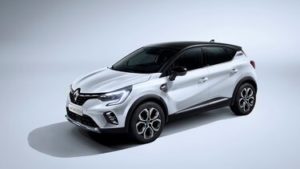 Granted, the Renault Captur has been on the market for less than 10 years, so it is difficult to make a long-term prognosis of the compact SUV's reliability. One thing is certain, so far the Frenchman has only been able to convince. Both testing bodies and Renault drivers are satisfied.
Buying a new Renault Captur?
A Buy Renault Captur new? That seems like a great idea to us! The CAPTUR is available in many versions. For sportiness, go for the R.S. Line version. If you prefer to save on running costs, go for the CAPTUR Hybrid or the CAPTUR Plug-in Hybrid. If you value luxury and comfort more, the Initiale Paris version is the best choice!
It is a spacious, modern, sporty and elegant B-segment SUV. It has a comfortable high entry that also provides wider and better visibility on the road. Do you regularly drive with a trailer or caravan? The CAPTUR has a maximum towing weight of as much as 1,500 kg, depending on the engine.
In addition, this car is fully customisable with numerous options, paint colours (including two-tone) and accessories.
May 16, 2022 | Buying advice, Volkswagen |
VW Up maintenance, what's involved? With a city car like the VW Up, it makes perfect sense to regularly check and maintain the car. In order to keep the car in the best possible technical condition, Volkswagen has set up a maintenance programme for the VW Up that exactly defines the maintenance intervals at which the vehicle needs to be inspected. On this page you will find an overview of valuable tips for all VW Up drivers.
VW Up Maintenance: Costs and Saving Tips
 Since the VW Up is considered the ideal entry-level model, it is often driven by novice drivers. The Internet is used as a source of information because beginners usually have little experience with inspection. Many questions are asked about maintenance, especially in online forums, but unfortunately the quality of the answers often varies. Therefore, we have tried to provide a complete overview on this page.
In particular, we address the following questions in detail:
- What does an inspection of the VW Up cost?
- How does an inspection work and what is serviced on the VW Up?
- What are the service intervals for the VW Up? How often should it be inspected?
- Are there ways to save on inspection costs?
If you have any suggestions, questions or suggestions for improvement, please use the comment form at the bottom of this page.
Volkswagen Up maintenance - how often should the vehicle be inspected?
As a VW Up owner, you probably wonder the most when and how often the car needs to be inspected in the workshop. The Volkswagen test plan provides practical answers by prescribing specific service intervals for the Up. These also need to be strictly adhered to in order not to jeopardise the manufacturer's warranty.
The oil change service is usually calculated by the service interval display on your VW Up on-board computer, which also informs you in time of an upcoming engine oil change. On older VW Up models, an illuminated oil lamp lets you know that an oil change is necessary. This should be the case with the Up! always after 15,000 kilometres or after a year, whichever comes first. Unlike other Volkswagen models, the VW Up does not have a long-life service, which allows for a flexible oil change after 2 years or 30,000 kilometres. Since the VW Up is based on the QI4 programme, when it comes to inspection intervals, oil changes and inspection intervals will have to take place every 15,000 kilometres or every year.
What is done during the inspection of the VW Up?
Since every VW Up is subject to different loads and therefore wear and tear of the components varies, we assume normal use. Because of this, various additional activities may occur during your inspections if your VW Up has been driven under unfavourable conditions. According to the Volkswagen maintenance programme, the following work will be carried out on your VW Up:
Oil change service:
- Oil change including replacement of oil filter
- The oil drain plug is replaced and, if necessary, the engine oil change interval is reset in the on-board computer
- Visual inspection of the Up and note of oil change service in the service booklet
Minor inspection (every year / every 15000 kilometres):
- General functional test of the VW Up (engine, chassis, steering, brake system, body electronics, etc.)
- Fluid check: cooling water, brake fluid and windscreen wiper fluid to be refilled
- Filter change (interior + oil if required)
- Only if the intervals overlap: change the engine oil and also replace the oil drain plug
Optional:
- Replacing the filters (dust filter, pollen filter)
- Checking the electronics and detailed monitoring of all vehicle functions
- Brake fluid changed
- Wear parts such as spark plugs have been replaced
- For vehicles with semi-automatic ASG transmissions, a transmission oil change is also necessary.
- Test gas filters and gas hoses (on LPG Ecofuel models)
- Checking the air conditioning and air-conditioning fluid
At the latest from 90,000 kilometres driven, additional work is needed on the VW Up, which can of course increase the price of inspections slightly. The brakes, clutch and spark plugs in particular (VW usually specifies fixed intervals for these on the Up) are parts that need replacing sooner or later. In principle, we advise all VW Up drivers to request a cost estimate for the inspections. If additional work is found during the visual inspection, the VW Up owner's consent should be obtained before the work is carried out.
How much does the VW Up cost?
Of course, the cost of inspections is interesting. As there are large price differences, it is difficult to quote a fixed price for this. The cost of an inspection basically consists of the work (hours) and material costs. There are of course big differences here, as hourly wages and material prices differ from workshop to workshop for various reasons. However, it is often the case that you often pay less at an out-of-town workshop than at a workshop in a big city. Moreover, independent workshops are generally cheaper than authorised Volkswagen workshops. Our following price estimates are, on the one hand, based on random surveys we have conducted ourselves and on our own experience with similar Volkswagen Group vehicles. We always recommend contacting your preferred garage for a specific quote on VW Up maintenance.
For a pure oil change service on the Volkswagen Up, you will pay between €80 and €150 at an independent workshop. However, you will only reach the lower end of the price of around €80 if you buy your own engine oil in advance and bring it with you to the workshop. Remember that not every garage is waiting for this and inquire in advance whether it is possible to bring your own oil. At the VW dealer, in the worst case, you will even pay around €200 for a simple oil change. At this page We have made an overview of the engine oil which is suitable for the Volkswagen Up!
The cost of inspections on the Volkswagen Up: The price of an annual inspection and oil change on the Volkswagen Up is usually between €350 and €450, while the price of an inspection on the e-Up! due to the omitted oil change is around €250
After 90,000 kilometres, the chance of major repair and renewal work on your VW Up increases. These can of course increase the inspection costs. In general, you should make sure to note every service in your service book. Carefully kept service logs can later prove to be important for the warranty and value of the car.
How can I save money on the inspections of the VW Up?
There is no doubt that good VW Up maintenance has already saved you money in the long run by preventing defects and preserving the value of the vehicle. While the need for maintenance and inspections is obvious, no one is eager to spend unnecessary money on maintenance. Being proven bargain hunters ourselves, we have discovered potential savings that we are happy to share with you.
As we mentioned above, you can order your own motor oil online and take it with you to the oil change service. This is guaranteed to save you money. The price difference between webshops and the workshop is sometimes serious, so don't ignore this possibility! But there is also a huge potential for savings with other fluids, filters and spare parts. Original Volkswagen parts are expensive in the workshop, at online shops or car shops you can get equivalent parts accepted by VW at significantly lower prices. However, there is a risk of choosing cheap goods, so don't skimp on quality.
Changing the timing belt and water pump on the VW Up
Even with a small car like the VW Up, sooner or later you will have to replace the timing belt if you want to avoid expensive engine damage. Usually, the water pump is replaced as well. Read on this page more about replacing the timing belt.
How much does it cost to replace the timing belt on a VW Up?
Replacing the timing belt on the VW Up! is a time-consuming repair that involves dismantling much of the engine in its individual parts. Due to the high workload, the cost is between €400 and €550. Volkswagen does not provide official information on the interval for replacing the timing belt. However, after 120,000 kilometres driven, the mechanic should check the condition of your Up!'s timing belt. Under normal circumstances, however, the first change may only take place after around 200,000 kilometres.
- VW UP 1.0 i all variants = No unambiguous interval. Check at 120 000 kilometres and replace if necessary after 240 000 kilometres and a maximum of 10 years.
May 15, 2022 | Buying advice, Ford |
 When the Ford Fiesta appeared on the market in 1976, the history of a car classic began. The small car has been one of the most popular cars in the Netherlands for 45 years. The Ford Fiesta has been produced more than 15 million times worldwide and the eighth generation of the model is now rolling on the roads. However, the Fiesta did not always bring driving pleasure alone. Inspection problems, defects and recalls were not uncommon for this Ford. Whether it's broken springs, loss of cooling water or broken clutches: the Fiesta doesn't always come out well as a used car. On this page, we have tried to list the Ford Fiesta problems, weaknesses and recalls for each model. Do you have any additions? Please let us know using the comment form at the bottom of this page.
Problems Ford Fiesta VIII (from 2017)
The eighth generation Ford Fiesta was presented to the public in November 2016. Compared to its predecessor, there are only a few exterior changes. The technology has been optimised and improved so that drivers can look forward to more comfort. In September 2021, a model update of the eighth model series was presented, which will be released in early 2022. The eighth series Ford Fiesta stands out in tests due to various teething problems and weaknesses. First, the driver's seat attachment came loose, then the steering wheel started to crack. Here, the eighth generation joins its predecessors, who all had similar problems. In the current model, it is the guide rail of the central steering wheel that causes the noise. Experiences of Fiesta owners reveal further points of criticism: vibrations in the interior spoil the driving pleasure, and the interior trim of some vehicles, the boot cover and the seals of the panoramic roof also come loose.
The door edge protectors break easily. In the area of the hinges, some motorists have already discovered peeling paint which, if not treated, leads to rusting. Engine problems have also been reported, with Ford citing a quality problem with the oil pump drive belt as the reason. Do you want to know what the interval is for replacing the timing belt? Then go to this page.
Recalls: brake boosters and seat belts
The eighth series Ford Fiesta had some recalls in the first few years. Models built between December 5 and December 20, 2017 had a problem with the brake booster. A steering column that was not built to the required specifications resulted in unusual noises and even failure of the steering. Other vehicles produced in spring 2021 suffer from a defective seat belt retractor. It is possible that the system does not work under heavy braking. A visual inspection is carried out in the workshop and, if necessary, a new retractor is fitted. Another recall: on the rear seat, the screws for the rear seat locks and the central belt retractor were not properly screwed in. In the event of an accident, there was a risk of injury. For this reason, vehicle owners had to go to a specialist dealer to have the screws tightened with the necessary torque. In new hybrid models, it was possible that the ground connection of the traction battery would come loose. There was therefore an increased risk of fire. The car owners concerned then had to go to the workshop, where the connection was tightened to the correct torque.
Problems Ford Fiesta VII (2008 to 2017)
Although the seventh model series of the Ford Fiesta inherited the base plate of its predecessor, there were numerous changes in terms of appearance and drive. The Fiesta will be full of quality, as the first power steering ESP were standard. A facelift followed in 2013, which changed both the technical and visual aspects. Various studies showed that the seventh generation Ford Fiesta had numerous defects. The track rod ends were worn out or defective after just a few years, later the steering itself also caused problems. The axle bearings are also often criticised. After five years, the number of broken springs increases dramatically. The lighting is weak because it breaks down too often or is not aligned properly, especially in low beam. The brakes are often too weak or unevenly worn. Here, however, the younger models are affected more often than the older generations. The exhaust system causes problems in all vehicles. Exhaust rust and cracked exhaust manifolds are a typical weak point of the Ford Fiesta.
However, research has also shown that many Fiesta owners are happy with their car. However, there is also criticism about the workmanship quality. The seat rails are wobbly (from 2009) and the window controls tend to fail. Moreover, radio crashes are not uncommon. The lighting is known as a weak point and it is always worth having the right bulb as a spare in the boot. In terms of driving pleasure, the dual-clutch transmission is a point of criticism. It causes ugly jolts when shifting gears.
Recall: coolants, seat belts
There are several recalls on the seventh series Ford Fiesta. Among others, models with 1.0 l EcoBoost/Duratec engines are affected because they are equipped with a defective engine intake duct. The cause is a manufacturing defect, which could cause the connection pin for the fuel vapour recovery to become clogged. This has led to problems in complying with emission regulations. Some models produced between September and November 2014 had to go to the workshop due to defective seat belt buckles in the rear. Speaking of seat belts, the passenger seat belt anchor was not properly tightened on the Ford Fiesta produced between February and August 2016. These problems have been fixed by the garages if all goes well.
Some Ford Fiesta models equipped with a 1.6 Ecoboost (petrol) engine were called to the workshop because of a problem with the coolant level. During development, a sensor that registers the coolant level was omitted. For this reason, it could not be ruled out that the engine was getting too little coolant and could therefore overheat. The workshop retrofitted the sensor and the necessary software. Due to mounting anomalies on 2011 model year vehicles, two brake lines ran into each other. The worst case scenario involved damage, loss of fluid and loss of braking power. As a result, some motorists had to go to the workshop to fix the problem. On vehicles with 1.4/1.6 TDCi diesel engines, a brass plug came loose, allowing hot exhaust gases to flow into the engine compartment. As a result, the plastic cover of the radiator fan became hot, leading in extreme cases to the components melting together. Not the last recall: fixing screws for the rear axle fasteners that could potentially crack, faulty welds on the rear axle and an increased fire risk due to an overheated control module for the glow plugs (on diesel engines) complete the list of recalls.
Problems Ford Fiesta VI (2001 to 2008)
The sixth model series was available in five-door and three-door versions. During a facelift in October 2005, the bumpers and headlights, among other things, were changed. There were also changes to the interior and to the optional extras. Unlike its predecessor, the 2002 Ford Fiesta causes few problems at the general inspection. Chassis and steering are solid, even though there are exceptions. And with the years, the life span of some components does come to an end. There is especially criticism on the lighting, which often lets the driver down.
Autobucket knows: the small car is a relatively reliable companion even in old age, but it sometimes gives up, especially when poorly cared for. The causes of failure are diverse and cannot be confined to one area. Whether it is the fuel pump, the clutch or the ignition system, occasionally the roadside assistance has to be called in to help stranded Fiesta drivers. Some components are slowly reaching the end of their service life. Hoses become porous, which can become dangerous. Currently, ventilation systems are particularly affected, which is only half bad. Problems are also looming with the wiring harness. However, the ignition cable has long been a known weak point that calls the breakdown service on the spot.
The sixth generation Ford Fiesta saved on anti-corrosion precautions. This is noticeable nowadays, because it is almost impossible to find a model without corrosion. Especially the models from the years 2004 and 2005 are affected. If you want to buy a used car, you should pay attention to the classic weak points, including the doors, wheel arches and brake lines. Of course, the exhaust is also included.
Recalls: from power steering to fuel leaks
The sixth generation of the Ford Fiesta did not remain unscathed either. These include vehicles with 1.6-litre diesel engines. Defective fuel lines allow large amounts of diesel to escape. In addition, the drive belt (of the power steering pump) could become loose in some vehicles, causing the power steering to fail.
Problems Ford Fiesta V (1999 to 2001)
The fifth-generation Ford Fiesta is still a popular car for young novice drivers. Rust is a well-known problem in the fourth and fifth Ford Fiesta. Ford has apparently waived the necessary precautions in this car, causing chassis parts to be affected by rust. But rust is not the only hurdle that the Ford Fiesta has to overcome, the braking system is also criticised as its function on both the front and rear axles decreases significantly. The handbrake also causes problems as it usually only works poorly or on one side. The bearings and hinges are also worn out over the years. If you take a test drive, watch out for rumbling and spongy handling.
The oil cap on the Ford Fiesta is considered a classic mis-development. Why? The cover wears out over the years and then no longer closes properly. If it falls off while driving, the engine oil also spills out. This usually ends up not only in a dirty engine bay, but also in major engine damage. Because when the light comes on, it is often already too late. Therefore: regular checks are important!
Most common problems with Ford Fiesta
- worn track rod ends & joints
- creaking steering
- Spring break after five years
- loss of cooling water
- cracked exhaust manifold
- decreasing brakes on both axles
- rust problems in many series
- many defects in the lighting
- main failure areas: starter, battery & spark plugs
- For older models: unscrew oil cap.
Conclusion: the Fiesta, a car with quality problems?
With the Fiesta, Ford offers a solid, sporty small car (ST versions). Its sales figures and long history speak for themselves. The classic car is still popular. However, our research shows that this was not always the case in the past. The Ford Fiesta was also known for quality problems and faltering development. After the Ford Fiesta became a hit in its early years, Ford leaned on this success. The result: quality deteriorated and the competition gained the upper hand. At least the faux pas could be made up in the following years. Shortly after the turn of the millennium, the Ford Fiesta returned to its former strength. Rust and expensive engine damage are (almost) no longer a problem these days. It is mostly criticised for broken joints, weakening brakes and often faulty lights. The Ford Fiesta is now in its eighth generation. It has already brought countless people to their destinations. Feel free to write a comment and tell us about your good and bad experiences with the popular Fiesta.
May 10, 2022 | Engine oil, Peugeot |
On this page you will find information about the Peugeot 207 engine oil. We show you how to measure the oil level of the Peugeot 207 and how to pour suitable engine oil into the oil filler hole when the oil lamp lights up. In addition, we examine some types of oil that are suitable for the engines of the Peugeot 207.
Which Peugeot 207 engine oil?
 Looking for a suitable engine oil for the Peugeot 207? At the bottom of this page you will find an overview of all models and the corresponding oil. Always make sure that the oil you choose is suitable for your vehicle, given the year of manufacture of your Peugeot 207. In many cases, 5W-30 or 0W-30 is suitable, but to be sure, you can best look it up in your service booklet or via the table at the bottom of this page.
Measuring the oil level in Peugeot 207 (oil light on)
If the oil warning light (note: not the low oil pressure warning light) comes on in your Peugeot 207, drive straight to the nearest petrol station, garage or DIY store (albeit at low speed and revs). And buy a new and suitable engine oil.
- Make sure your car is not on a slope or hill.
- Then switch off the engine with the ignition key or the start button.
- Wait about 5 minutes before checking the oil level. This allows the engine oil to flow out of the engine and back into the oil sump.
- Now you can open the bonnet of the Peugeot 207.
- In the middle of the engine compartment you should see a pull-out dipstick.
- Pull the dipstick out of its holder.
- Clean it with a handkerchief.
- Then replace the cleaned oil dipstick in the holder.
- Now pull it out of the hole again.
- The oil film must be in the centre of the "Min" and "Max" marks.
Should this not be the case, it is always necessary to top up with engine oil suitable for the Peugeot 207.
Instructions for topping up engine oil on the Peugeot 207
- Buy the right oil for a Peugeot 207 of your type.
- Open the bonnet and check the oil level (see instructions above).
- Then carefully pour a small amount into the Peugeot 207 oil nozzle.
- Now wait a little before measuring the oil level again.
- Do not continue driving until the engine oil level returns to normal (indicated by the marks).
At your next Peugeot 207 inspection or an upcoming oil change, also test the oil level to make sure it is correct.
Overview engine oil Peugeot 207
| Engine oil PEUGEOT 207 |
| Peugeot 207 1.4 (2006-2009), 0W-30 or 5W-30, capacity 3.75 litres (1st refill), 2.5-2.75 litres (service refill) |
| Peugeot 207 1.4 (2009-2011), 0W-30 or 5W-30, capacity 3 litres, filter 0.25 litres |
| Peugeot 207 1.4 (2012-2014), 0W-30 or 5W-30, capacity 3 litres, filter 0.25 litres |
| Peugeot 207 1.4 16V (2006-2009), 0W-30 or 5W-30, capacity 2.5-2.75 litres |
| Peugeot 207 1.4 16V (2009-2011), 0W-30 or 5W-30, capacity 3 litres, filter 0.25 litres |
| Peugeot 207 1.4 16V (2012-2014), 0W-30 or 5W-30, capacity 3 litres, filter 0.25 litres |
| Peugeot 207 1.4 16V VTi (2007-2011), 0W-30 or 5W-30, capacity 4 litres, filter 0.25 litres |
| Peugeot 207 1.4 16V VTi (2012-2014), 0W-30 or 5W-30, capacity 4 litres, filter 0.25 litres |
| Peugeot 207 1.4 HDi (2006-2009), 0W-30, capacity 3.75 litres |
| Peugeot 207 1.4 HDi (2009-2011), 0W-30 or 5W-30, capacity 3.75 litres, filter 0.5 litres |
| Peugeot 207 1.4 HDi (2012-2014), 0W-30 or 5W-30, capacity 3.75 litres, filter 0.5 litres |
| Peugeot 207 1.4 HDiF DPF (2009-2011), 0W-30 or 5W-30, capacity 3.75 litres, filter 0.5 litres |
| Peugeot 207 1.4 HDiF DPF (2012-2014), 0W-30 or 5W-30, capacity 3.75 litres, filter 0.5 litres |
| Peugeot 207 1.6 16V (2006-2007), 0W-30 or 5W-30, capacity 3.25 litres, filter 0.25 litres |
| Peugeot 207 1.6 16V Turbo (2006-2009), 0W-30, capacity 4.25 litres, filter 0.25 litres |
| Peugeot 207 1.6 16V Turbo (2009-2010), 0W-30, capacity 4.25 litres, filter 0.25 litres |
| Peugeot 207 1.6 16V VTi (2007-2009), 0W-30 or 5W-30, capacity 4.25 litres, filter 0.25 litres |
| Peugeot 207 1.6 16V VTi (2009-2011), 0W-30 or 5W-30, capacity 4.25 litres, filter 0.25 litres |
| Peugeot 207 1.6 16V VTi (2012-2014), 0W-30 or 5W-30, capacity 4.25 litres, filter 0.25 litres |
| Peugeot 207 1.6 HDi 16V (66 kW) (2006-2009), 0W-30, capacity 3.5 litres, filter 0.4 litres |
| Peugeot 207 1.6 HDi 16V (66 kW) (2009-2011), 0W-30 or 5W-30, capacity 3.75 litres, filter 0.5 litres |
| Peugeot 207 1.6 HDi 16V (66 kW) (2012-2014), 0W-30 or 5W-30, capacity 3.75 litres, filter 0.5 litres |
| Peugeot 207 1.6 HDi 16V (80 kW) (2006-2009), 5W-40 or 5W-30, capacity 3.5 litres, filter 0.4 litres |
| Peugeot 207 1.6 HDi 16V (80 kW) (2009-2011), 0W-30 or 5W-30, capacity 3.75 litres, filter 0.5 litres |
| Peugeot 207 1.6 HDi 16V (80 kW) (2012-2014), 0W-30 or 5W-30, capacity 3.75 litres, filter 0.5 litres |
| Peugeot 207 1.6 HDiF 16V DPF (66 kW) (2009-2011), 0W-30 or 5W-30, capacity 3.75 litres, filter 0.5 litres |
| Peugeot 207 1.6 HDiF 16V DPF (66 kW) (2012-2014), 0W-30 or 5W-30, capacity 3.75 litres, filter 0.5 litres |
| Peugeot 207 1.6 HDiF 16V DPF (80 kW) (2009-2011), 0W-30 or 5W-30, capacity 3.75 litres, filter 0.5 litres |
| Peugeot 207 1.6 HDiF 16V DPF (80 kW) (2012-2014), 0W-30 or 5W-30, capacity 3.75 litres, filter 0.5 litres |
| Peugeot 207 RC (2009-2010), 0W-30, capacity 4.25 litres, filter 0.25 litres |
|
| Engine oil PEUGEOT 207 COMPACT |
| Peugeot 207 Compact 1.1 (2009-2011), 0W-30 or 5W-30, capacity 3 litres, filter capacity 0.25 litres |
| Peugeot 207 Compact 1.1 (2012-2012), 0W-30 or 5W-30, capacity 3 litres, filter capacity 0.25 litres |
| Peugeot 207 Compact 1.4 (2009-2011), 0W-30 or 5W-30, capacity 3 litres, filter capacity 0.25 litres |
| Peugeot 207 Compact 1.4 (2012-2012), 0W-30 or 5W-30, capacity 3 litres, filter capacity 0.25 litres |
| Peugeot 207 Compact 1.4 16V VTi (2009-2011), 0W-30 or 5W-30, capacity 4.2 litres, filter capacity 0.2 litres |
| Peugeot 207 Compact 1.4 16V VTi (2012-2012), 0W-30 or 5W-30, capacity 4.2 litres, filter capacity 0.2 litres |
| Peugeot 207 Compact 1.4 HDi (2009-2011), 0W-30 or 5W-30, capacity 3.75 litres, filter capacity 0.5 litres |
| Peugeot 207 Compact 1.4 HDi (2012-2012), 0W-30 or 5W-30, capacity 3.75 litres, filter capacity 0.5 litres |

 EN
EN  NL
NL  DE
DE